
The hanbok is a traditional Korean clothing. It’s been depicted in illustrations since the time of the Three Kingdoms during 57 BC to 668 AD. It was often used to signal a person’s social status as well.


For women, the hanbok consists of 2 parts. The top (Jeogori) and skirt (chima). The top is long sleeve and covers the shoulders closely. The top has become shorter over time showing off more of the skirt. The skirt, is floor length in somewhat of an A-line shape. Underneath, a netting skeleton is wore to achieve the shape.
For men, the hanbok consists of 2 parts as well. The top (Jeogori) and pants (baji). The top is longer than the women’s and almost robe like. The pants are loose fitting. Today, when visiting the Palaces, many of the men were wearing a hat called a gat. Back in the Joseon dynasty, only the noblemen wore these.
Both man and women wear a belt (twii) and all these major components have remained largely unchanged until today. The tops were initially fastened in the middle then to the left and now mostly on the right.
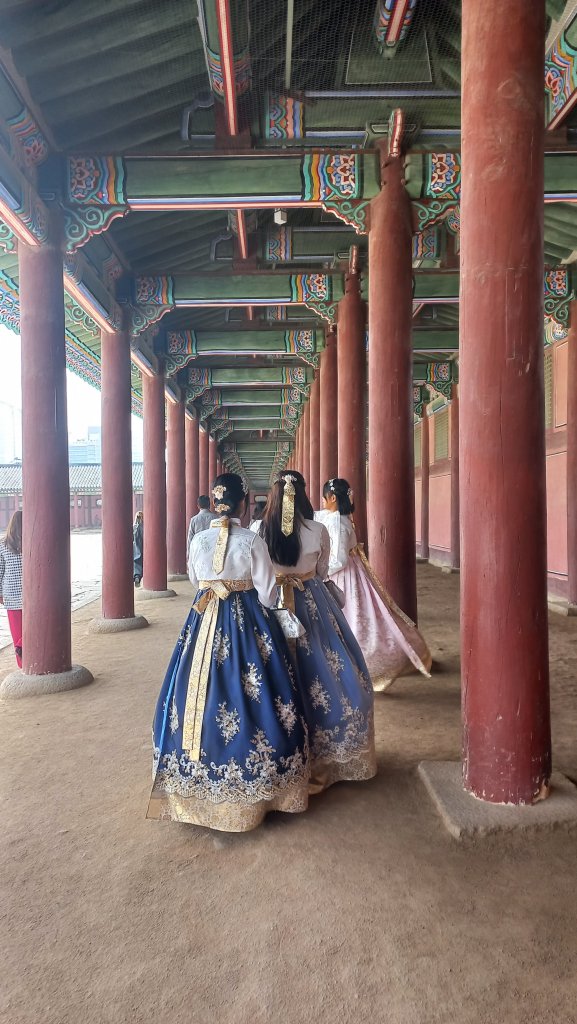
You will see so many people wearing hanboks in the Palaces
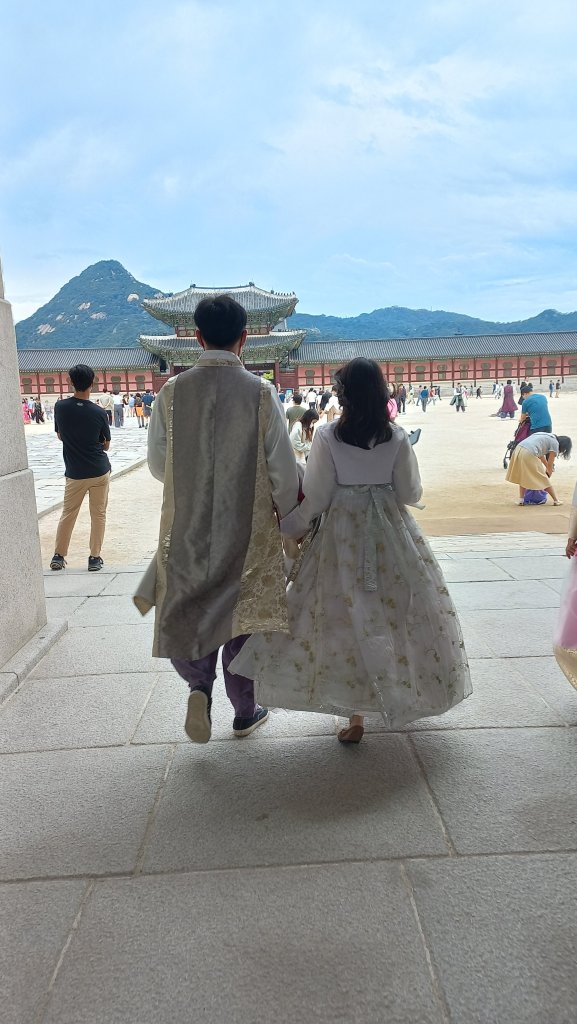
I loved this couple in their colour matching hanbok entering the Gyeongbokgung Palace

Me in a Hanbok consisting of a top, belt, skirt, underneath the skirt is a tube of hoops.
Of course as from these, there were different robes for different occasions.
Today, the hanbok is worn on special occasions such as weddings, birthdays and holidays (such as New Year). For tourists and locals, you will see plenty in the Palaces in Seoul where free entry is granted to anyone who is wearing a hanbok. For tourists, these can be rented from one of the many rental stores surrounding the palaces. You will get the full experience of getting to select all the elements of your hanbok. There is such an array of beautiful colours and styles to choose from. Getting your hair done is also part of the package and I think some places also offer make up services.
I’m always wary when travelling, is it culturally appropriate to wear traditional clothing? In South Korea at least, it is encouraged as a way to keep the traditional culture alive and also to welcome visitors at the chance of getting closer to the culture.
Hanbok On Stage
Two of the biggest pop groups out of South Korea (Blackpink and BTS) have also donned modern style hanboks for performances.


Hanbok Inspired Runway
Back in 2015, Karl Lagerfeld created the Korean inspired collection featuring bright colours, decorated blazers and rounded shoulders.
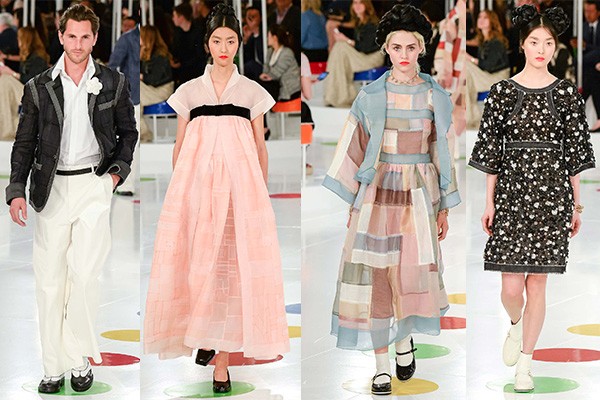

With increased popularity from Korean cultural exports from TV shows, movies and K-pop music, South Korean fashion designers have also been reinventing the hanbok to become more easily worn everyday. I think that these designs are very modern and for women could be worn in the office. It’s also admirable that they want to modernise a part of their culture especially something that is quite traditional.
What do you think? Have you heard of hanboks before? Could you see yourself wearing a modern version of it day to day?


 Lingo in Transit
Leave a comment