
Kyoto, the city that offers both modern day and tradition in close proximity to each other. A popular city for visitors when travelling to Japan, Kyoto is one of my favourite cities so far that I’ve been to in Japan. Offering outdoor peace and not as busy and shopping heavy as Tokyo or even Osaka, if you’re looking for a peaceful place- Kyoto is it. The itinerary here is for first timers in Kyoto who want to see the main attractions. I’ve grouped them together so that you won’t be travelling from one side of the city to the other side. Bear in mind that Kyoto is quite big and it will likely take about 30 minutes from the city centre to some of these sites either by train or bus (or walking).
Day 1
Take the train to Fushimi-Inari Station where you can easily walk to the Fushimi Inari Shrine. Entry is free and it is advised to go early if you want to beat the crowd and tour buses. Walk through the Torii Gates in this area of quietness and nature. If you decide to walk all the way up to the top and around, set aside about 2 hours. There are lots of stairs but not very challenging. If visiting in the warmer months, I would advise to put on insect repellent!

Fushimi Inari Shrine
After your visit, eat lunch nearby or head back onto the same train line and go a few stops later to Shichijō Station to visit the Rengeō-in (Sanjūsangen-dō) Temple. Inside, there are 1001, life sized wooden statues of Kannon, the goddess of Mercy. The temple hall is Japan’s longest wooden structure at 120 metres. There is no photography allowed inside but you can find some pictures on google. Entry is 600yen.

Rengeō-in (Sanjūsangen-dō) Temple.
Hope back onto the same train line and go one stop to Kiyomizu-Gojō Station where you will get off and walk to the Kiyomizu-dera. It’s a fair walk and uphill too with plenty of souvenir and snack stores. Kiyomizu-dera is a temple with a wooden terrace that overlooks Kyoto. It was founded in 780 on the site of the Otowa Waterfall, which you can still go to at the base of the wooden terrace. There is a small entry fee.

Kiyomizu-dera
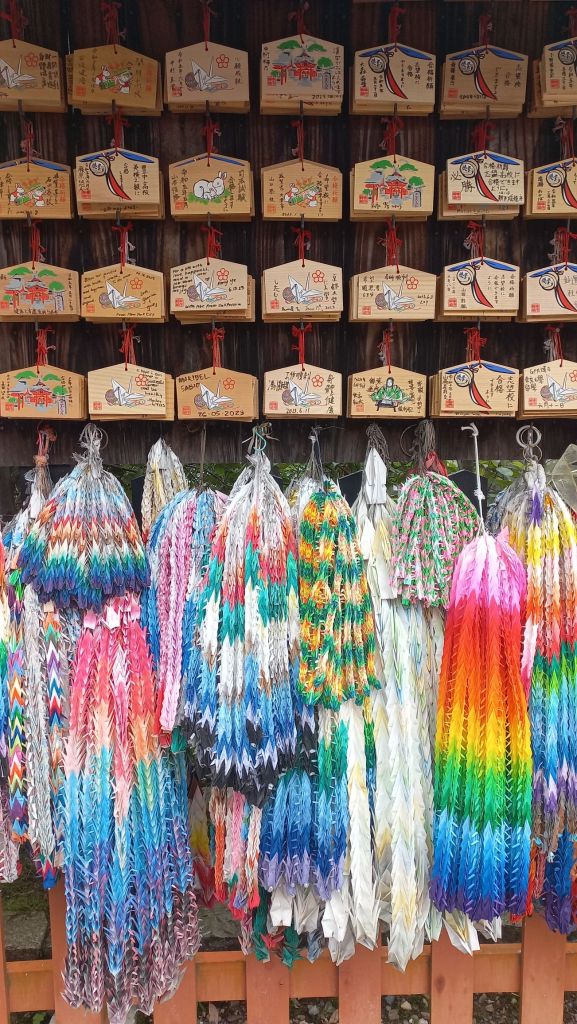
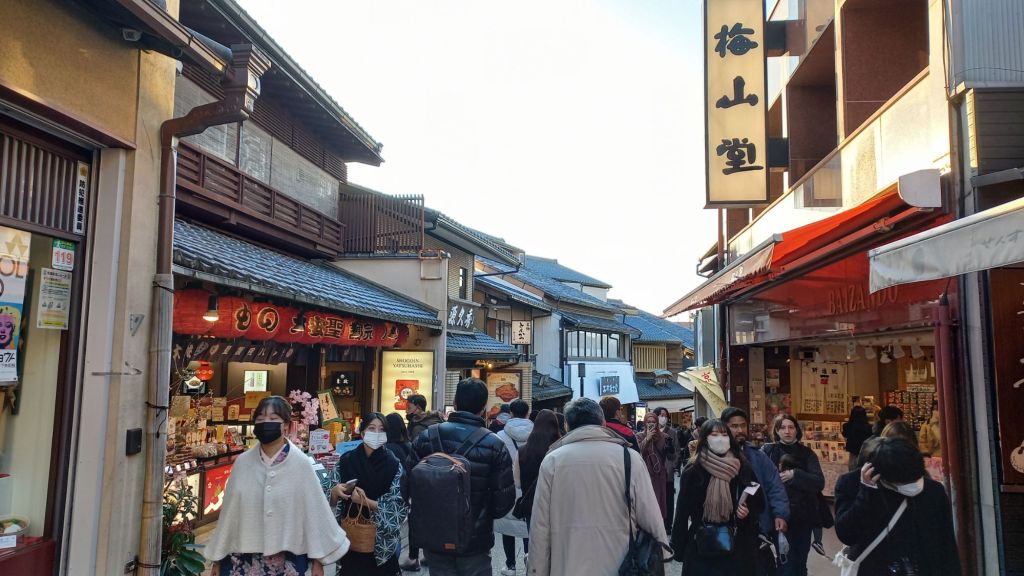
Walking past the shops up to Kiyomizu-dera
Day 2
Start you day with a cultural experience at a Traditional Tea Ceremony whilst getting to wear a kimono. I went with this Viator tour which I recommend! Ensure to book well in advance as spots get booked out quite quickly. Here, you’ll learn about the art of matcha tea making and get to enjoy some traditional sweets (wagashi) in a peaceful and traditional setting.
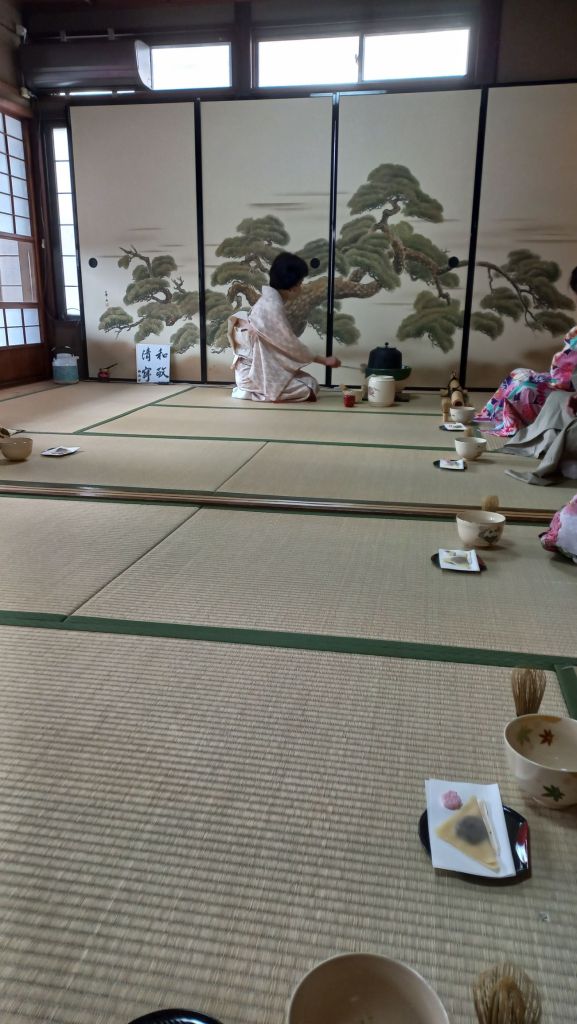
At the tea ceremony

Next, walk to the nearby Nishiki Market for lunch where you’ll be tempted with seafood, local food plus souvenirs. A site for a market almost 400 years ago, this 400 metre market today is busy. Pick up some lunch, snacks or sake! On the east side, Nishiki market joins with a popular shopping arcade with more restaurants and shops if you feel like continuing to browse.
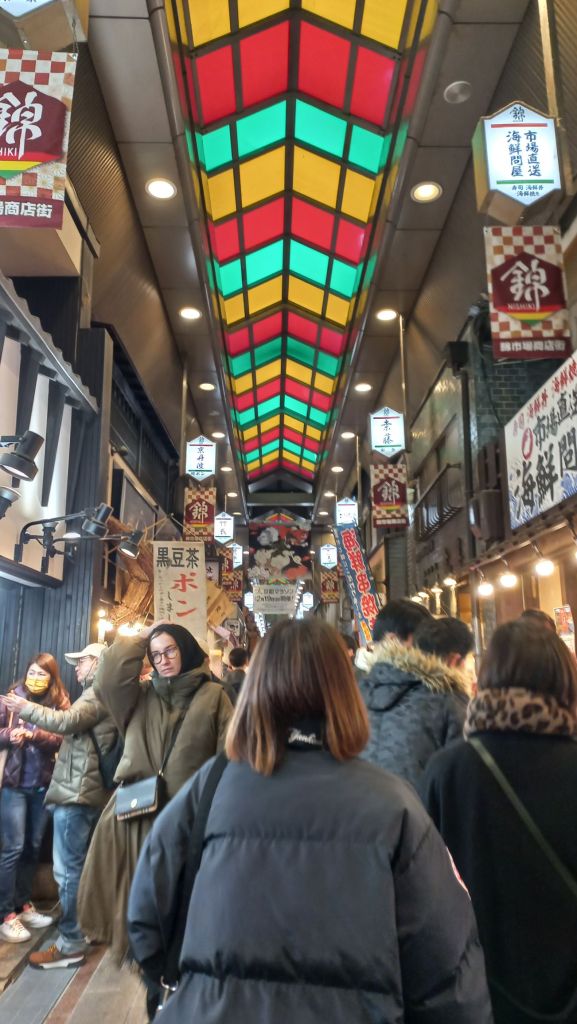
Nishiki Market
Next, catch the bus to Nijo Castle. Completed in 1603, it was the residence of the founder and first Shogun (military rulers). You can enter the palace complex where you must take your shoes off and follow the guided path around (which is a nightingale floor! so you’ll hear the constant chirping beneath your feet). You can look into each room, some of which are beautifully decorated or feature an impressive ceiling. You can also take a walk in the gardens before or after. Admission to the castle only is 800 yen.

Nijo Castle
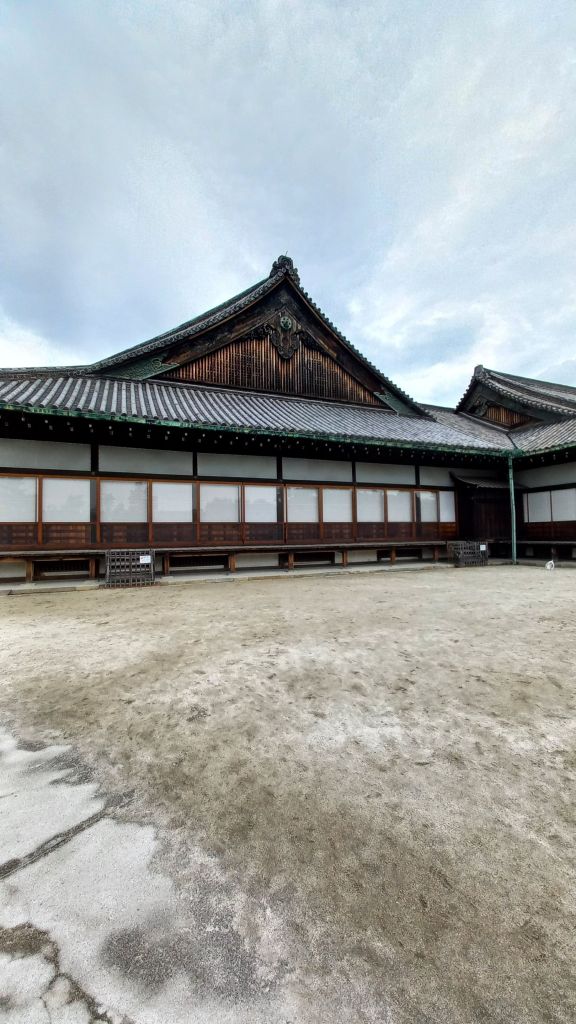
Nijo Castle
Day 3
Start you last day with taking the bus to Kinkaku-ji (Golden Temple), a historical golden temple which was used to house relics of Buddha. Entry to the pagoda is not allowed but the picturesque gardens and grounds are beautiful. This site is quite small compared to the other popular sites around Kyoto so again, it is advised to go early. There is a directed path through the gardens which is like a U-shape and takes you through to the exit.

Kinkaku-ji
Take the 2 trains to get to the west of Kyoto to Saga-Arashiyama Station. Here, you can feel more space and at peace with wide views of the mountains and Katsura river. Have lunch at one of the many popular restaurants located just outside the train station (or take a walk to one of the restaurants nearby in quieter streets) before heading to the Arashiyama Bamboo Forest. Most people tend to mill about at the entrance of the bamboo forest so the further in you walk, the less people there will be. Take your time walking through the Arashiyama Park Kameyama Area or even along the river. There are plenty of places to sit to take in all the beauty or at a nearby cafe.
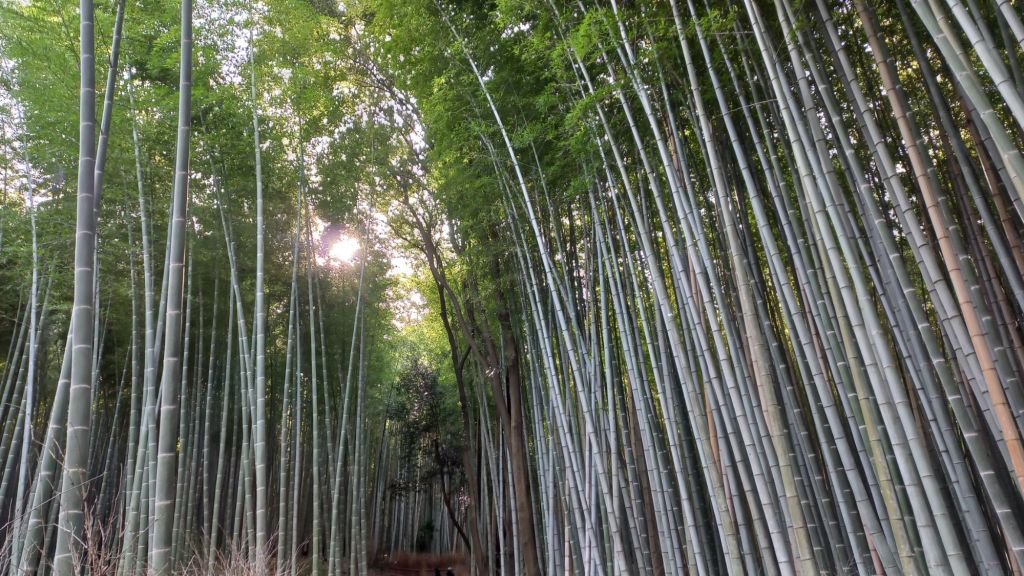
Arashiyama Bamboo Forest

Cross the famous wooden Togetsukyo Bridge and follow the signs to the Arashiyama Monkey Park Iwatayama. It is a steep uphill walk to the Monkey Park so good shoes (well, good shoes are advised regardless due to the amount of walking) are a must but you are rewarded with a beautiful view over Kyoto and of course, cute monkeys. Entry is 600 yen and can you spend some time standing or sitting, watching monkey business. Inside the park, there is a feeding room where you can buy a small bag of nuts to feed the monkeys. Note that the park closes at 4pm so allow enough time to walk up and down.
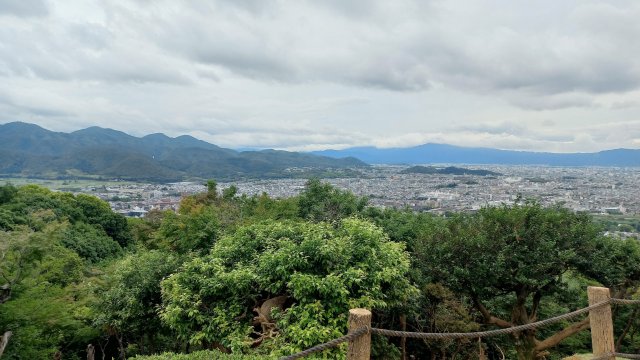
Arashiyama Monkey Park Iwatayama
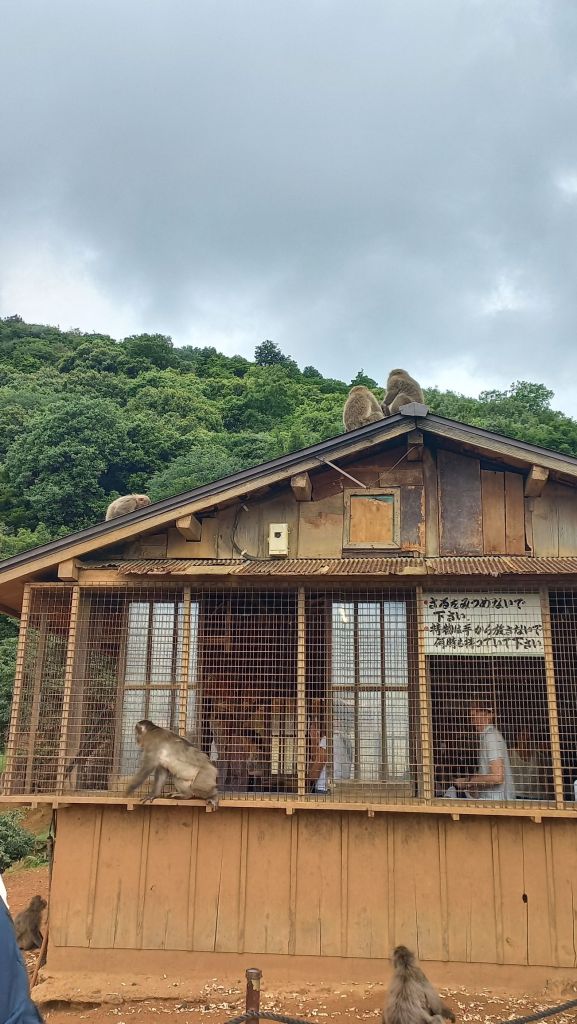
Arashiyama Monkey Park Iwatayama
And that’s it, your 3 day itinerary to see some of the highlights in Kyoto. Have you been to Kyoto? What were some memorable places that you went to?
Related Posts:
– Cute Things In Japan
– Exploring Japanese literature: my booklist
– Sightseeing in Tokyo Day 1 and 2


 Lingo in Transit
Leave a comment