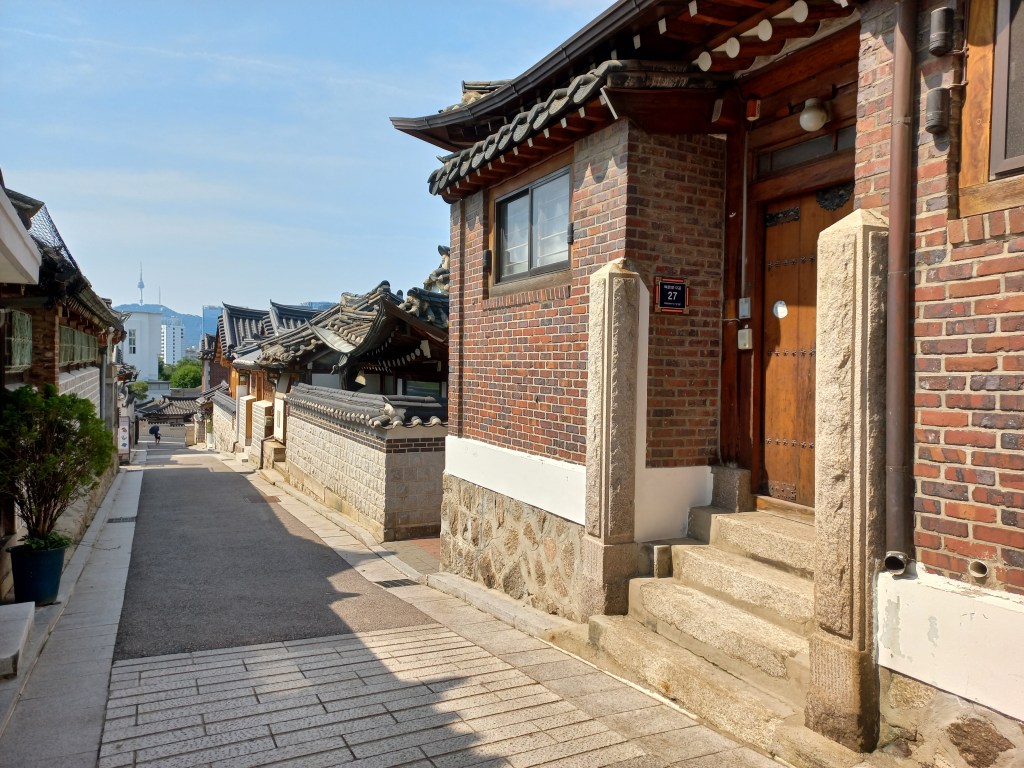
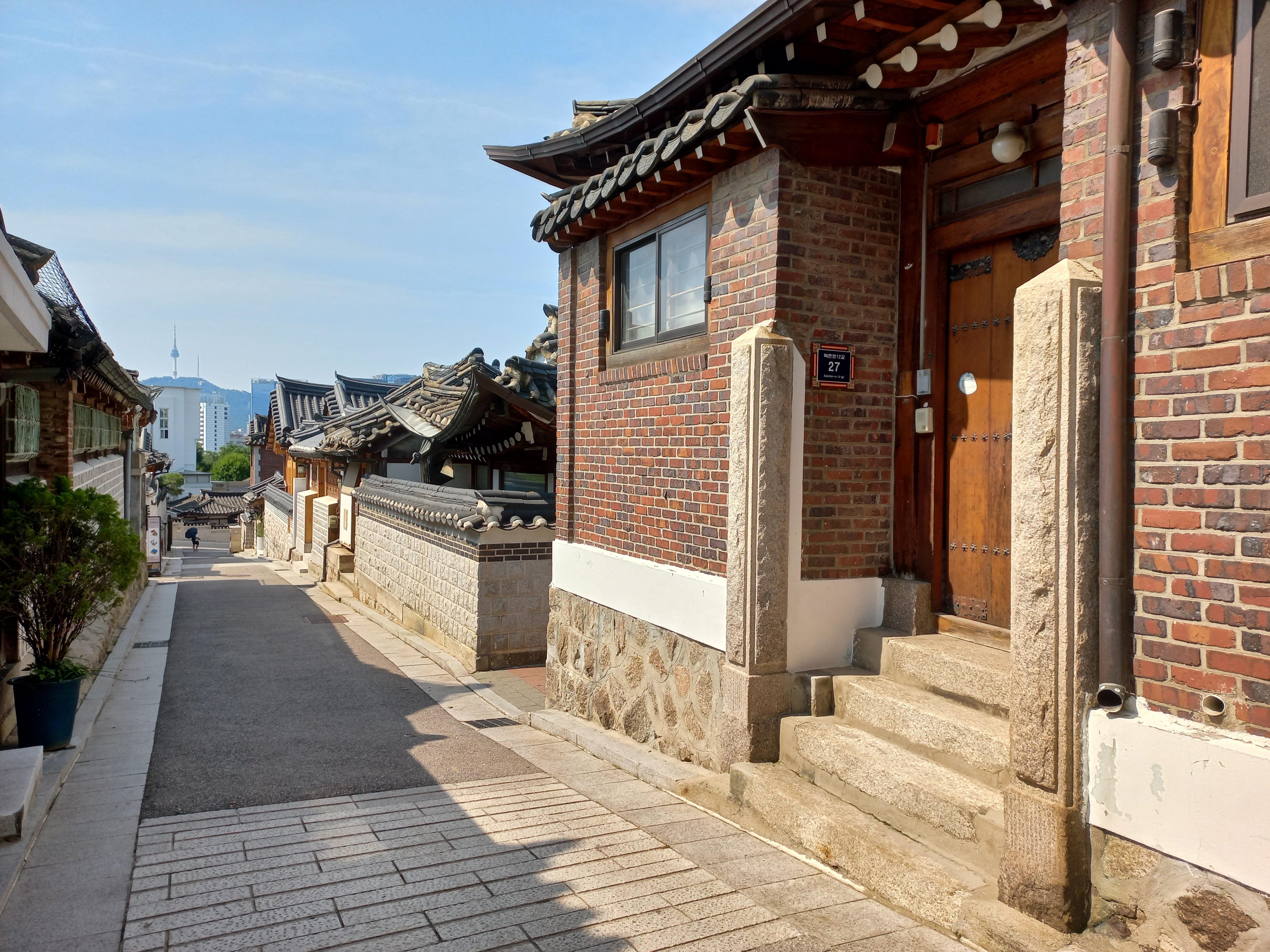
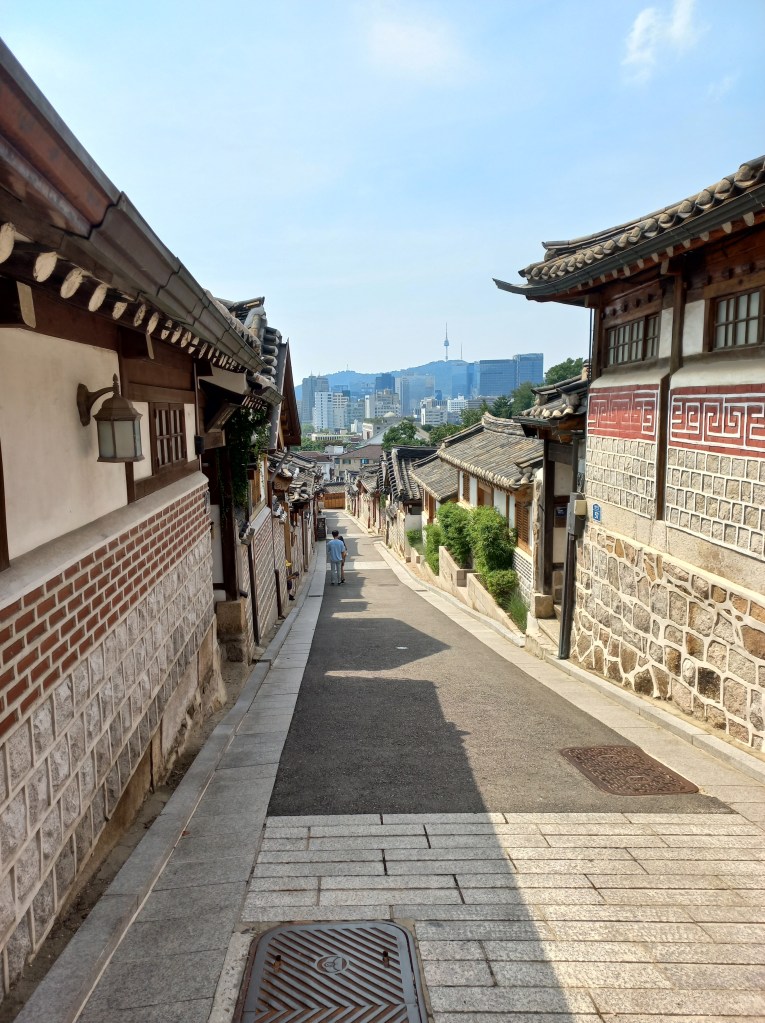
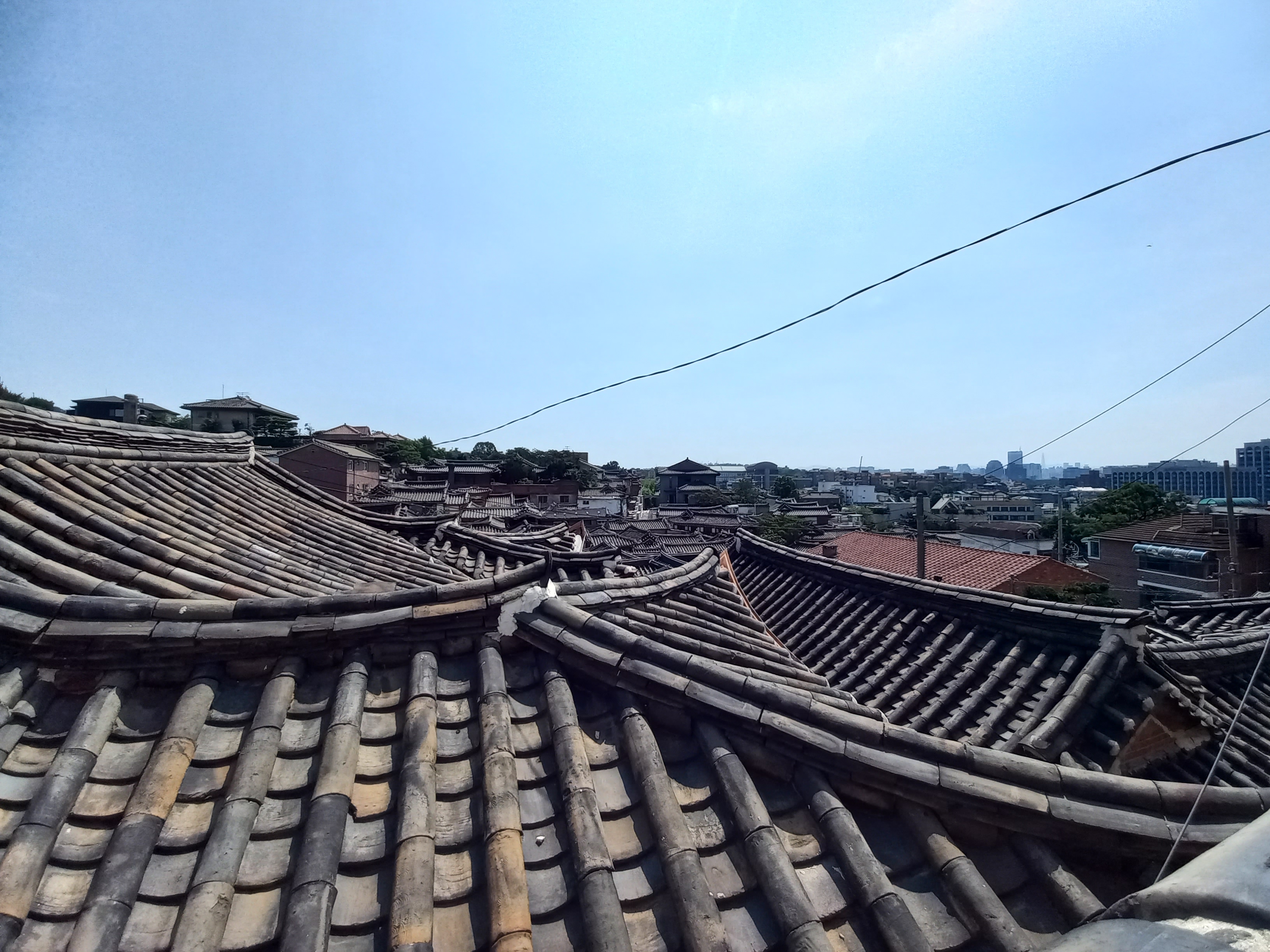
Staying in the Bukchon Hanok Village will transport you back to the Joseon Dynasty. Located between Gyeongbokgung Palace and Changdeokgung Palace in northern Seoul, this traditional area will make you feel worlds away from the bustling skyscapers of Seoul.
Hanoks are traditional Korean houses built from wooden structure and soil baked tile roofs. Many today have now been converted to cultural museums, restaurants, cafes, guesthouses and some still remain as residential houses. Popular in this area is the opportunity to hire and wear a hanbok- traditional Korean clothing- from one of the many hanbok rental stores. You can wonder the streets in hanbok for some great souvenir pictures and also be an active participant in an open air museum. Wearing a hanbok will also give you free entry into both palaces.
As you walk around, there are signs to remind visitors that they are in a residential area and to keep their voices down. Noise must really project in these small alleyways and with hundreds of tourists coming by every day, it is no wonder that the locals feel this way.
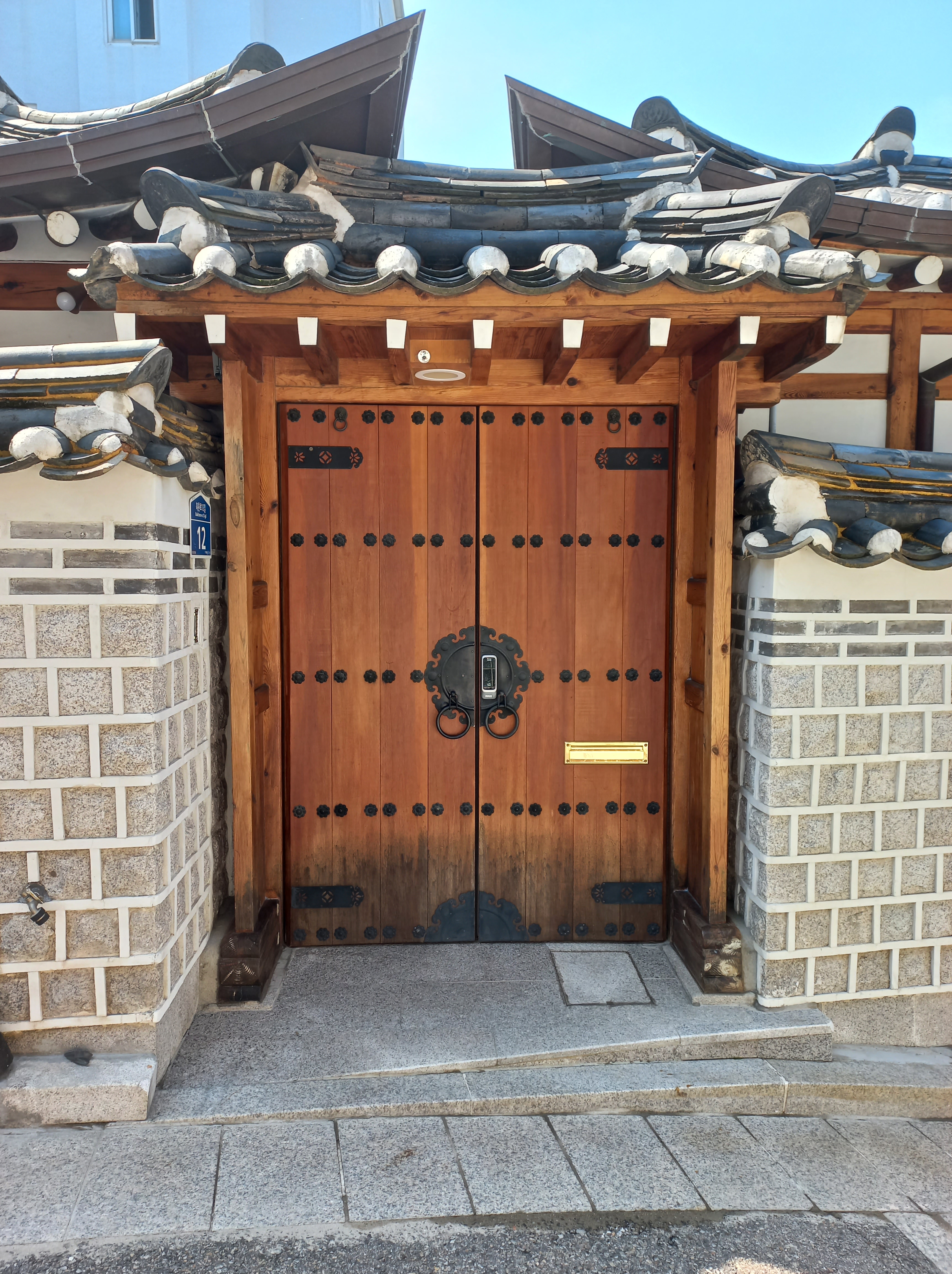
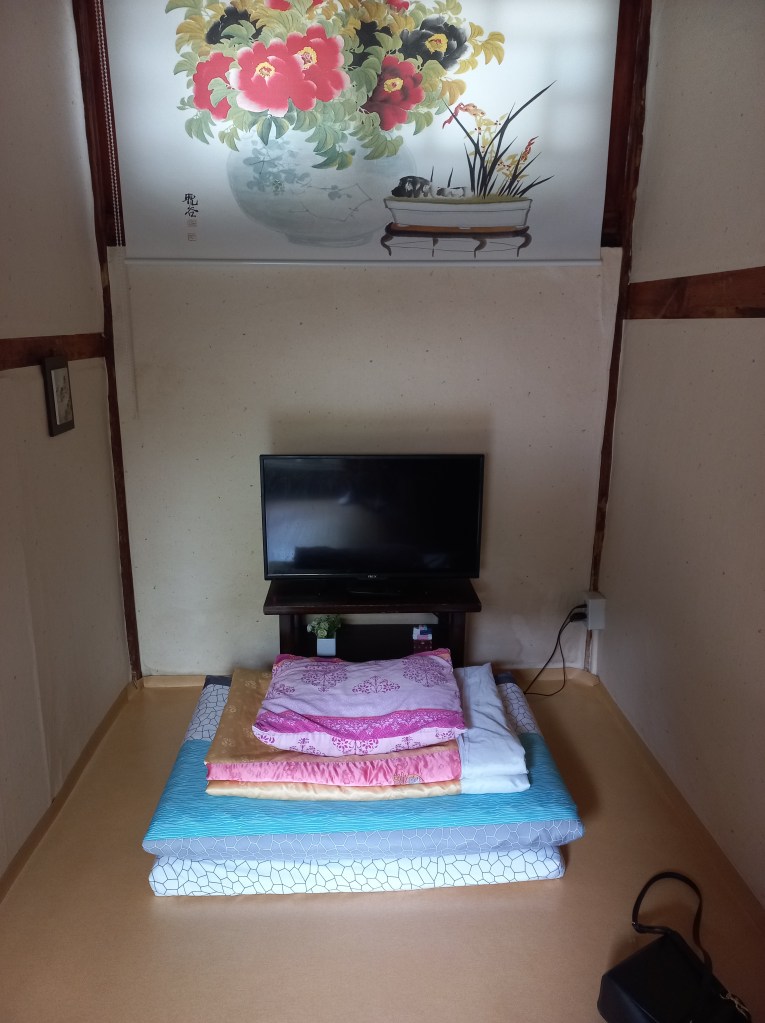
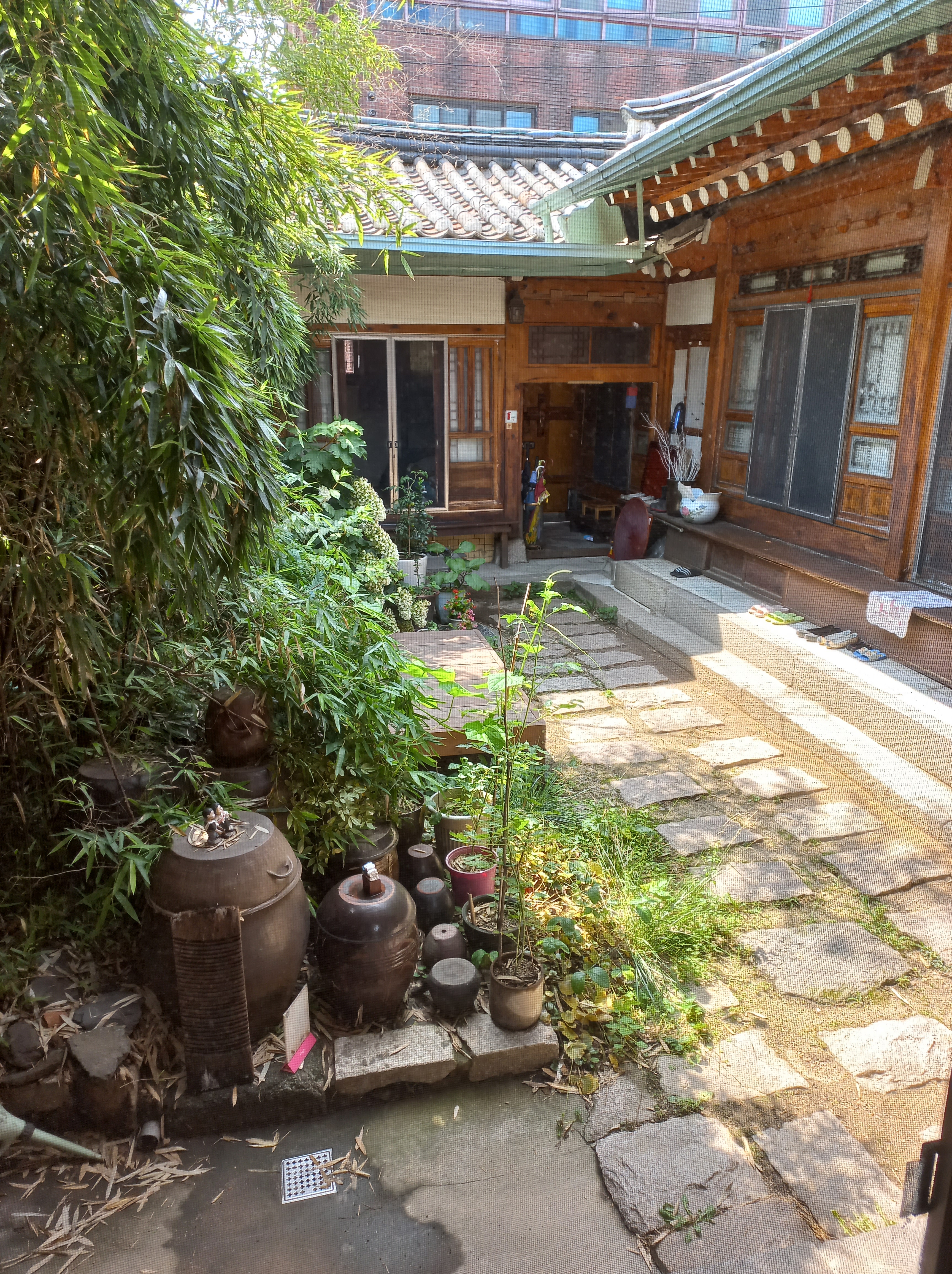
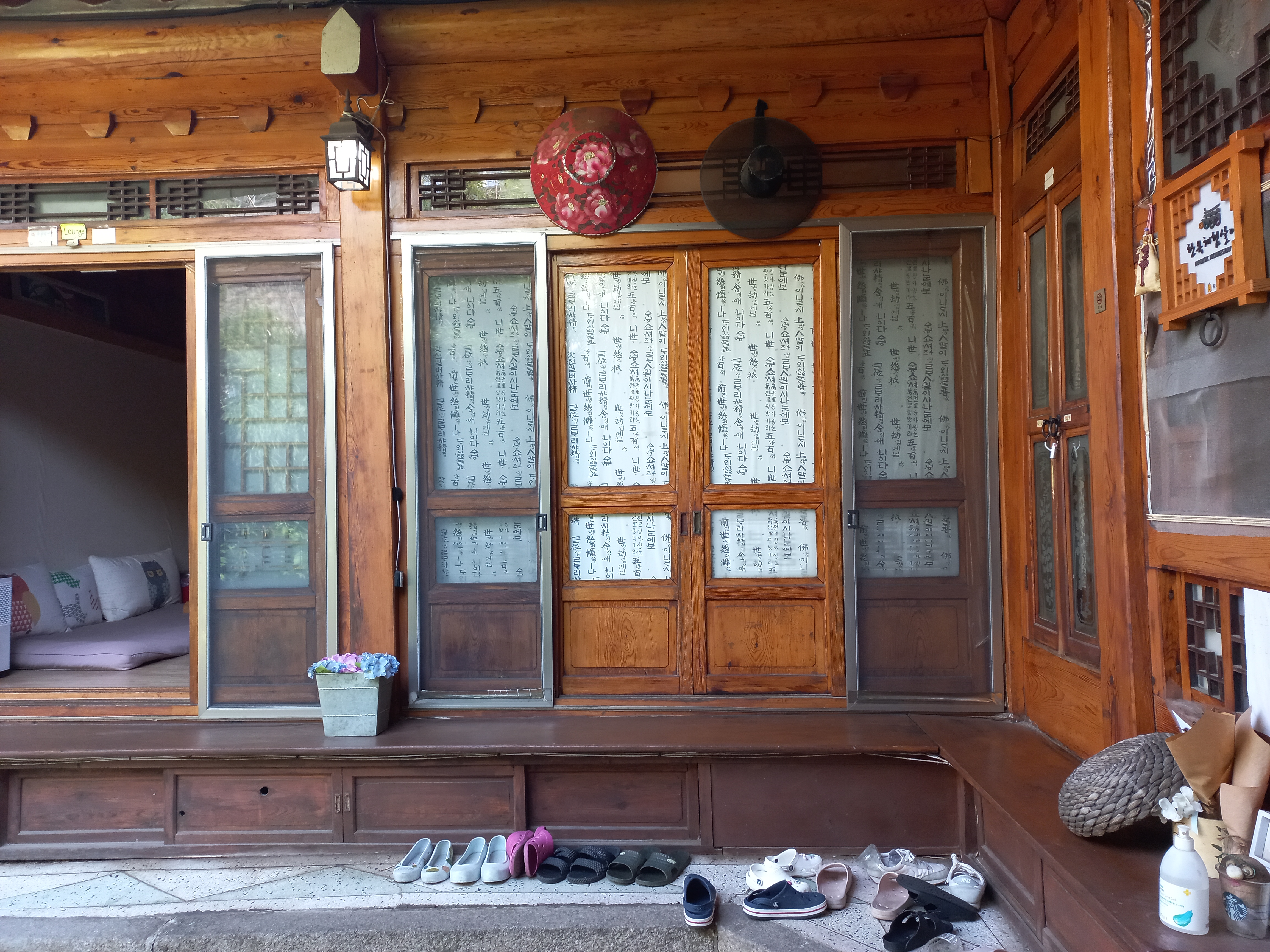
I booked to stay a night in a hanok and ended up at the Gongsimga Hanok Guesthouse. The single room was roomy enough for a single fold out mattress and space to put your belongings. There was a TV, air conditioning and a heater inside to accommodate all the seasons. For the single room, the bathroom was located across the courtyard which I didn’t mind. There were 4 rooms in total that guests could book.
The room was quite cool inside with the high ceiling. Upon further research, the hanoks are orientated so that the mountains are behind and rivers in front to maximise ease to water access while at the same time blocking out undesirable winds. In addition, the floor heating system – ondol – allows for an effective way to heat the entire room in the snowy winters.
My room
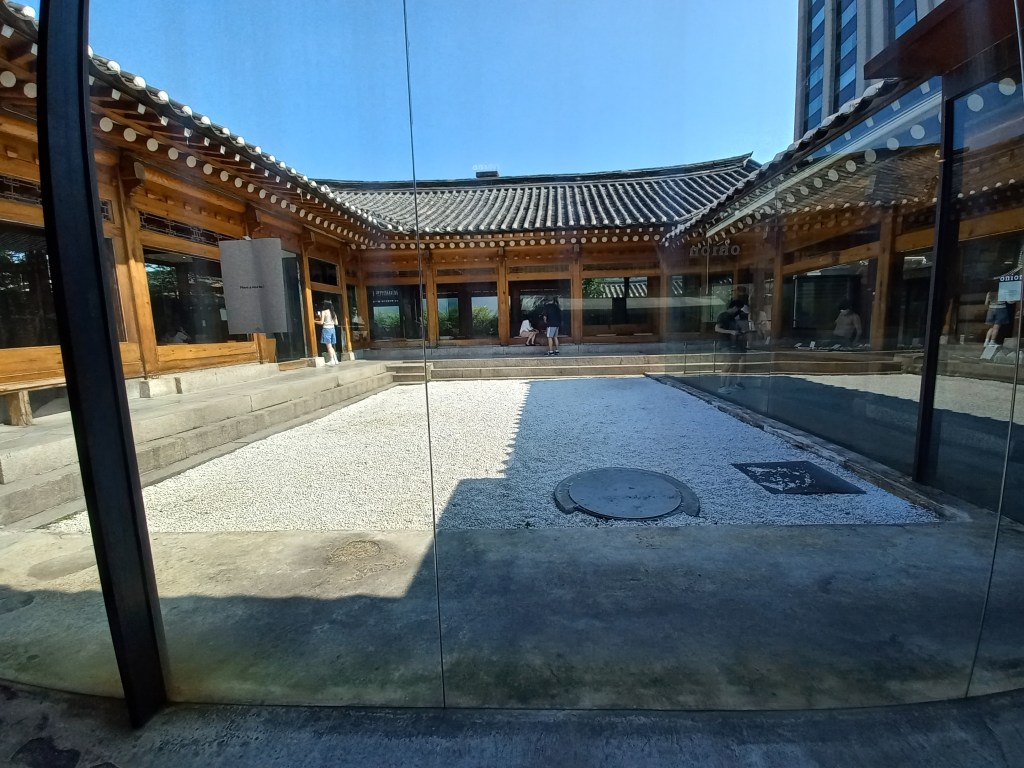
The courtyard
When walking around the Hanok Village, you can find many hanoks that have been converted to cafes, tea houses and restaurants. One of the more popular cafes is Onion Anguk which is normally packed with a waiting line during the day. They offer patisseries and coffee which is a perfect break stop. Knowing the crowds on the weekends, I came early on a Sunday morning to be able to snag a table.
To be completely honest, I don’t think this place lives up to its hype. It’s a gorgeous cafe but the food and drinks are nothing special.
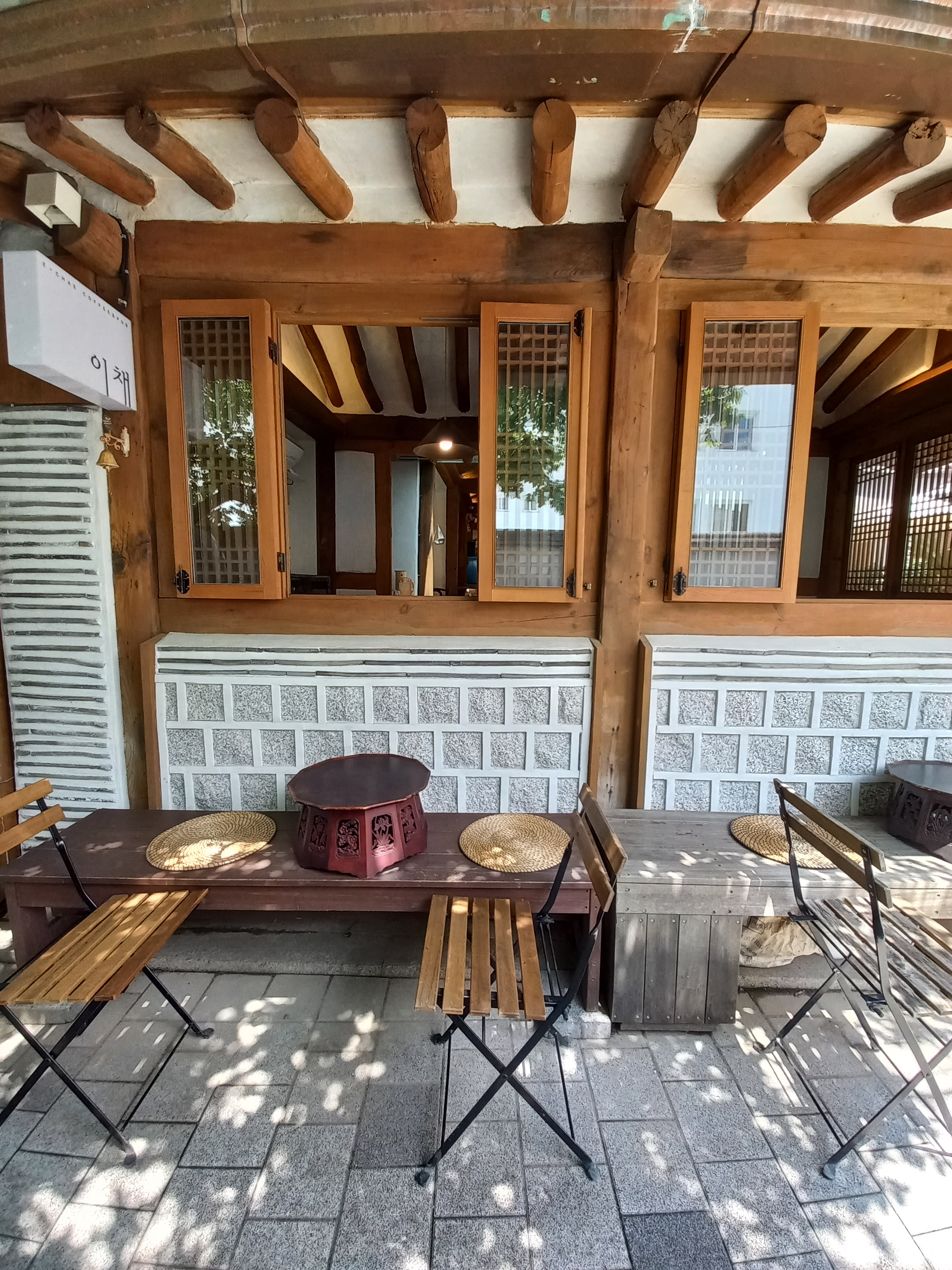
Onion Anguk Cafe
A cafe in passing
Have you ever stayed in a hanok? How was the experience? Will you be adding a hanok stay next time you’re in Korea?
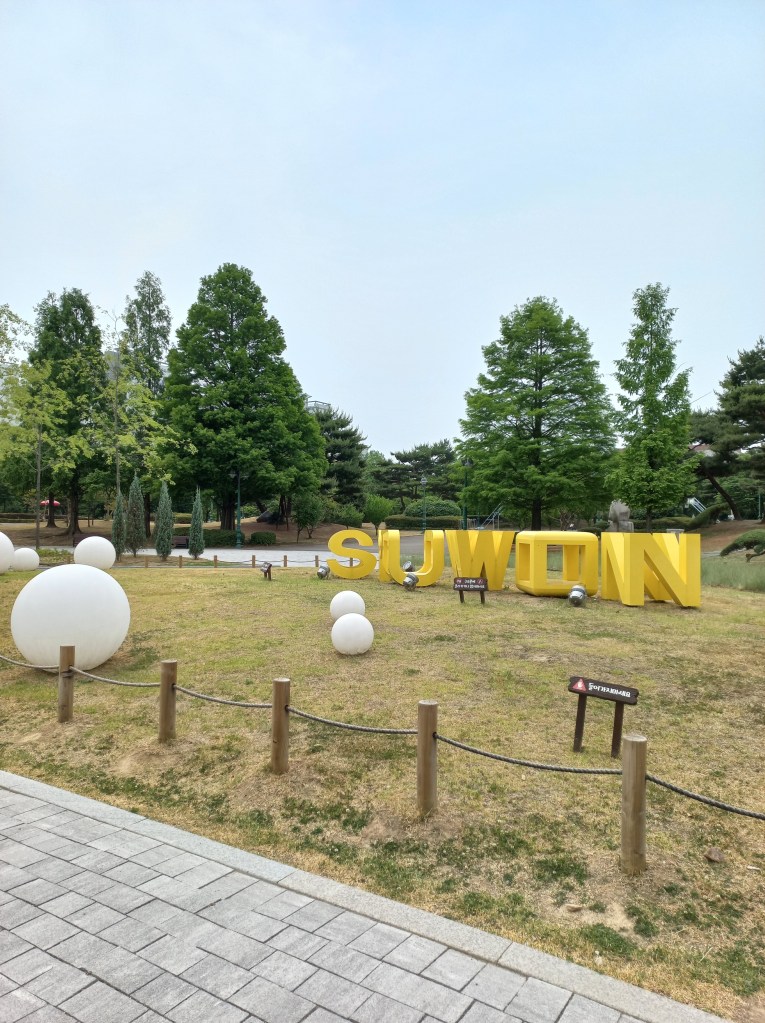
I’ve moved to the city of Suwon which is located about 1 hour south of Seoul. It’s home to just over 1 million residents although it feels like a lot more and it’s famous for the Hwaseong Fortress (to come in another post!). It’s the last remaining walled city in South Korea and also home to Samsung’s headquarters. Suwon is also a major education hub housing 11 universities!
Suwon has great metro and train connections to Seoul and surrounding areas and there are airport buses that reach Suwon. The most convenient way to get around in Suwon though are buses. Google maps is pretty much useless in Korea. A better app to use would be Naver Maps which will also be able to tell you which buses/what stops and walking routes which are more accurate than google maps. There is clear signage of bus stops with an electronic board at each stop indicating what buses are about to arrive and there are also lists with all the bus routes and stops. My standards were pretty low as some bus stops in Australia just have a measly “bus stop” sign attached to a pole in the middle of the street.
There are many parks around with gym equipment at all the parks that I have seen so far. There are dog parks, oldies going for walks and babies. I have noticed that there were barely any young children around when I was out for my morning walk the other day but assumed that they were all at school or in kindergarten. Let’s save schooling for a different post.
Suwon can be a great day trip or weekend trip from Seoul if you want to venture to a different city. Of course, I would recommend the fortress and streets surrounding it. There are plenty of cafes and rooftop places to take a break from walking the 5km length of the wall.
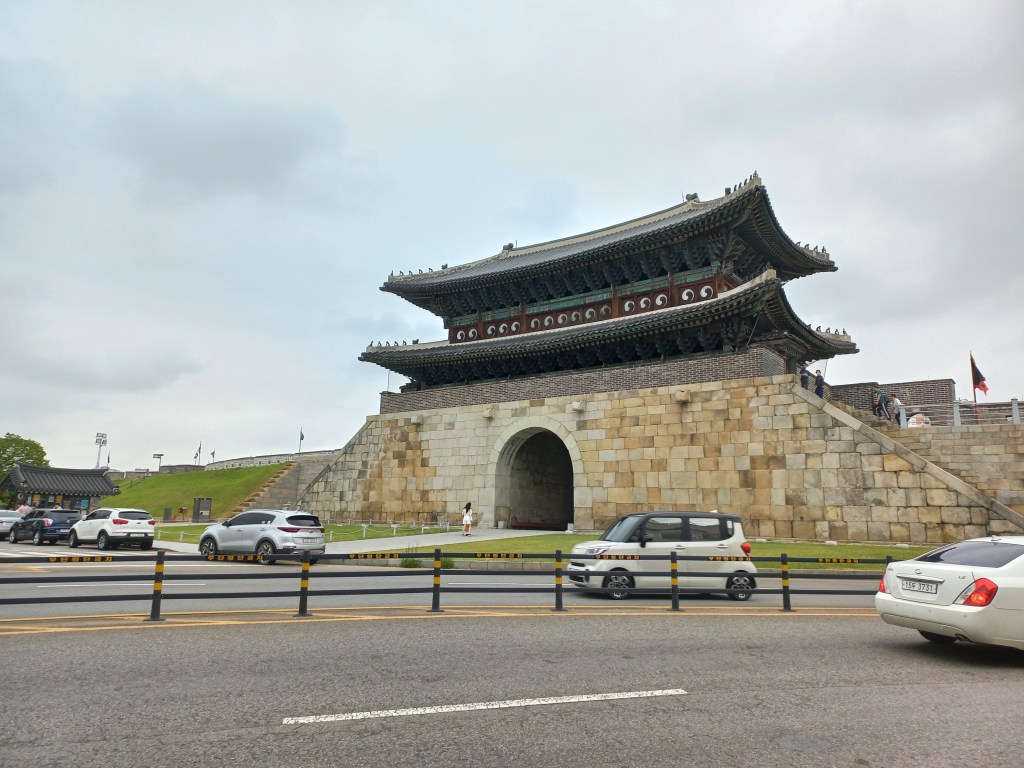
Suwon Hwaseong Fortress
Streets are lined with Cafes near the Fortress
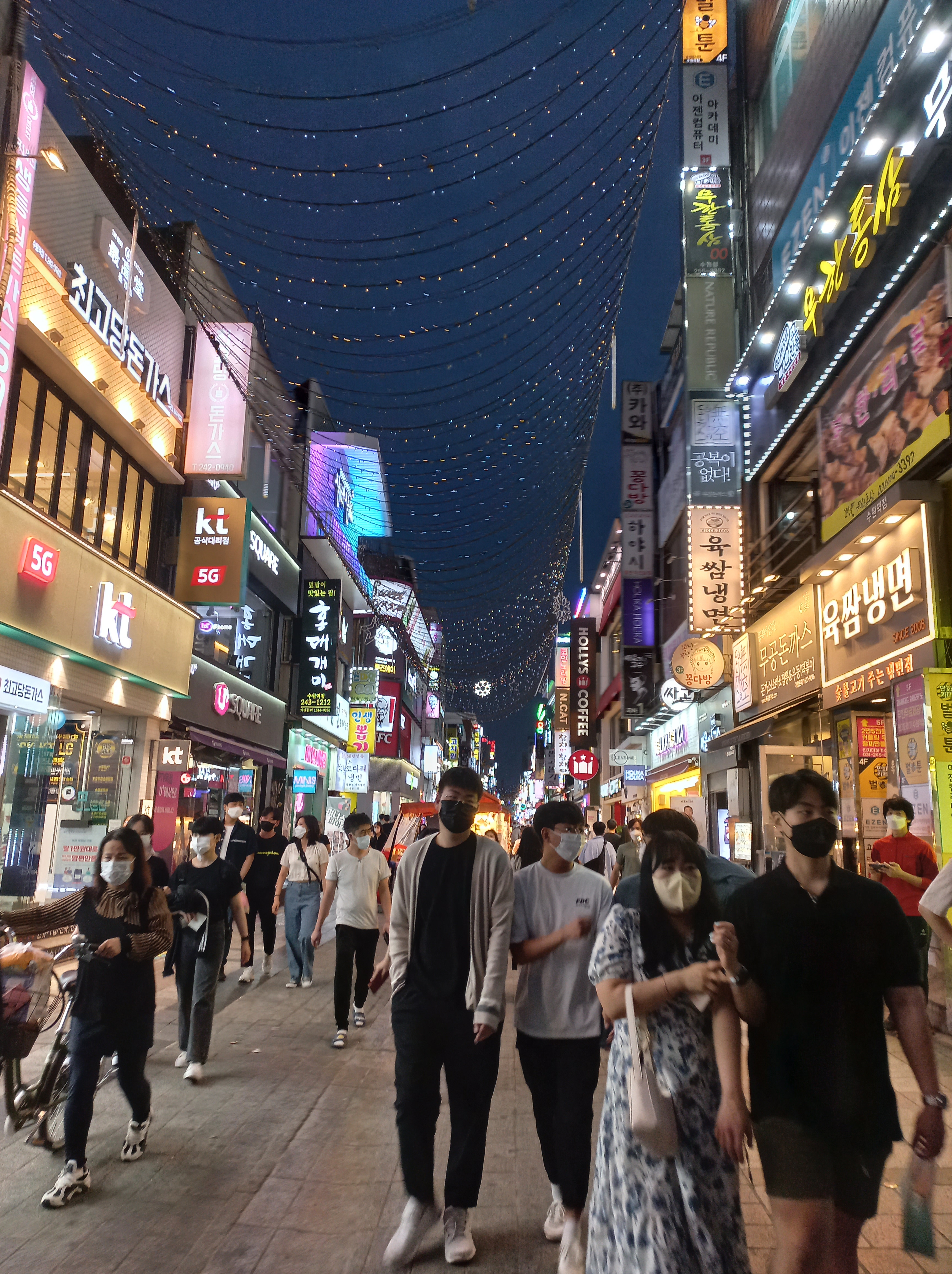
Assuming that you will be travelling from Seoul, you will likely arrive at Suwon station which is a connection hub where metro lines 1 and 2 meet to change to get to the west of Seoul, train connections to the rest of the country and also a bus interchange. The streets surrounding the station are bustling at night. In particular, Suwon station rodeo street. There are stores on the ground floor and plenty of bars, restaurants and coffee shops on the upper floors of buildings. There are food stalls at night in the middle of this walk way but they seem to be more expensive than if you were eating in an actual restaurant.
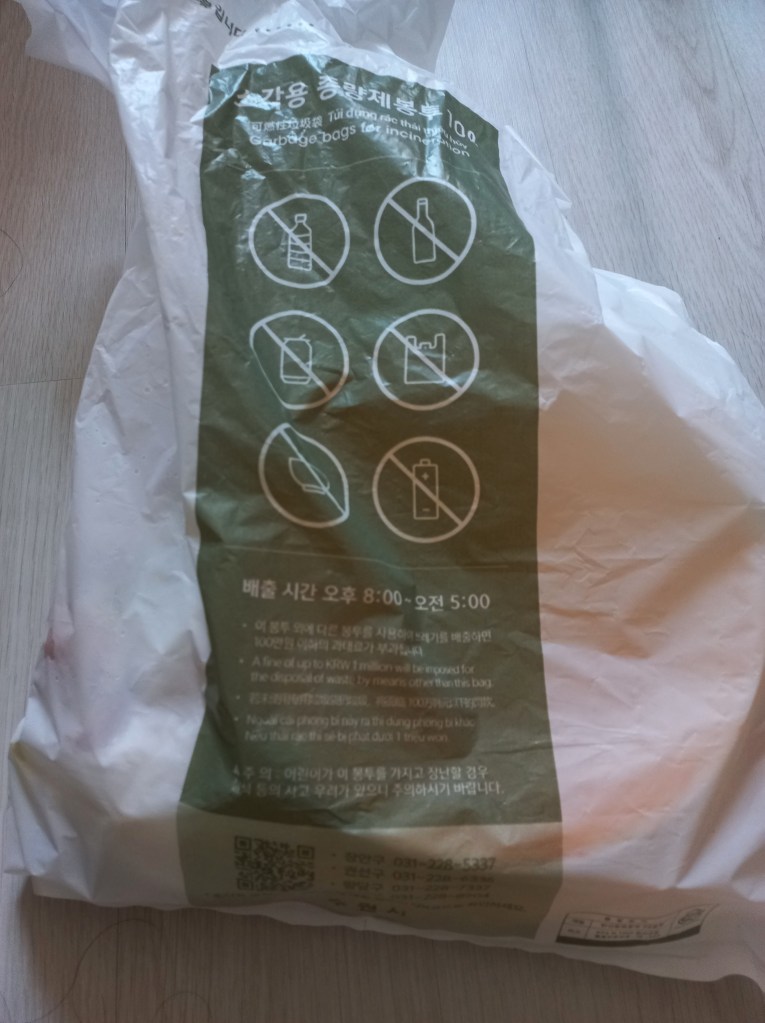
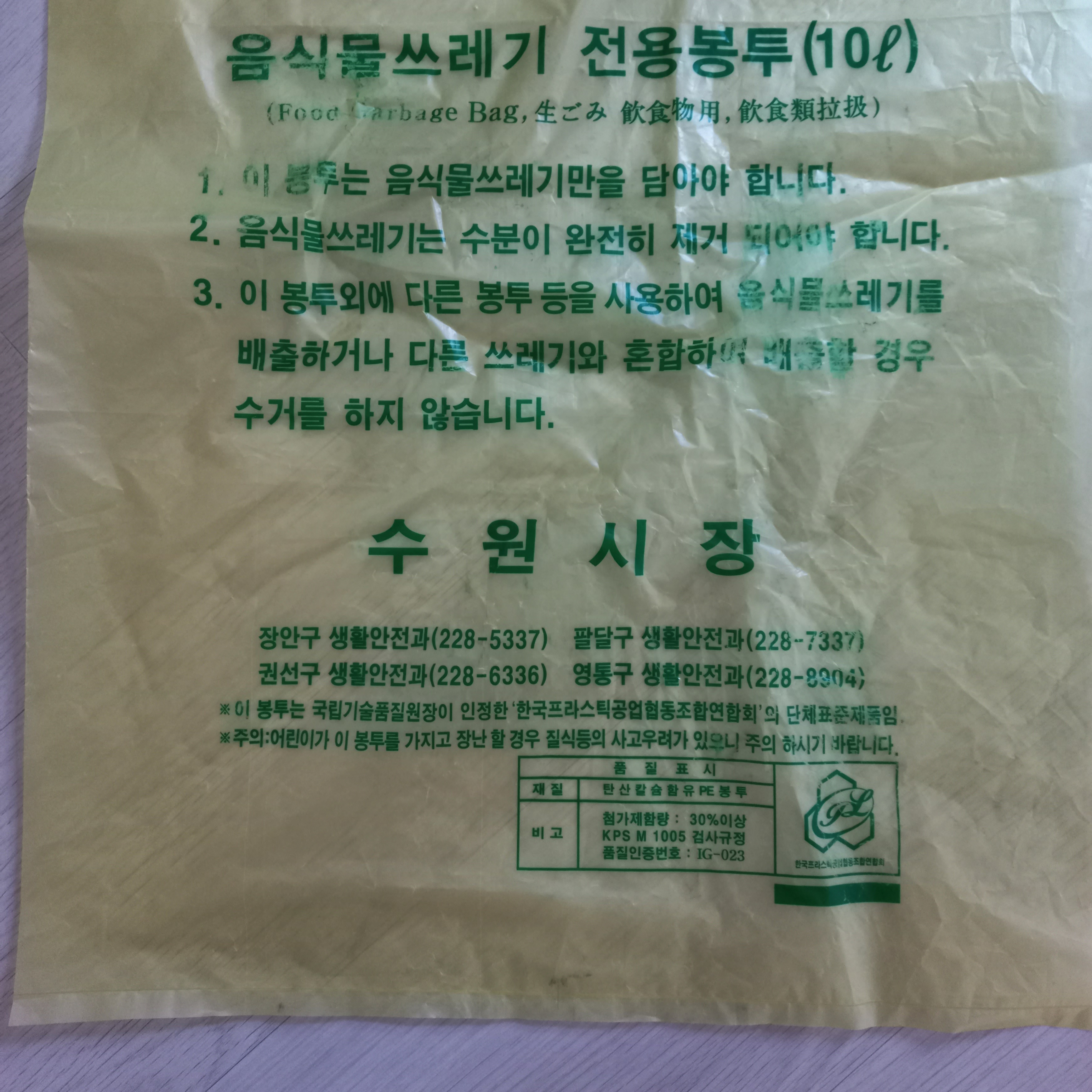
When I arrived, I came to quickly realise that waste and recycling is taken seriously here. Each area has council rubbish bags that can be purchased at the local convenience stores and supermarkets. One for general rubbish and one for food waste. Everything else needs to be recycled. I had to look up online what was considered waste and food waste as I wasn’t given any information.
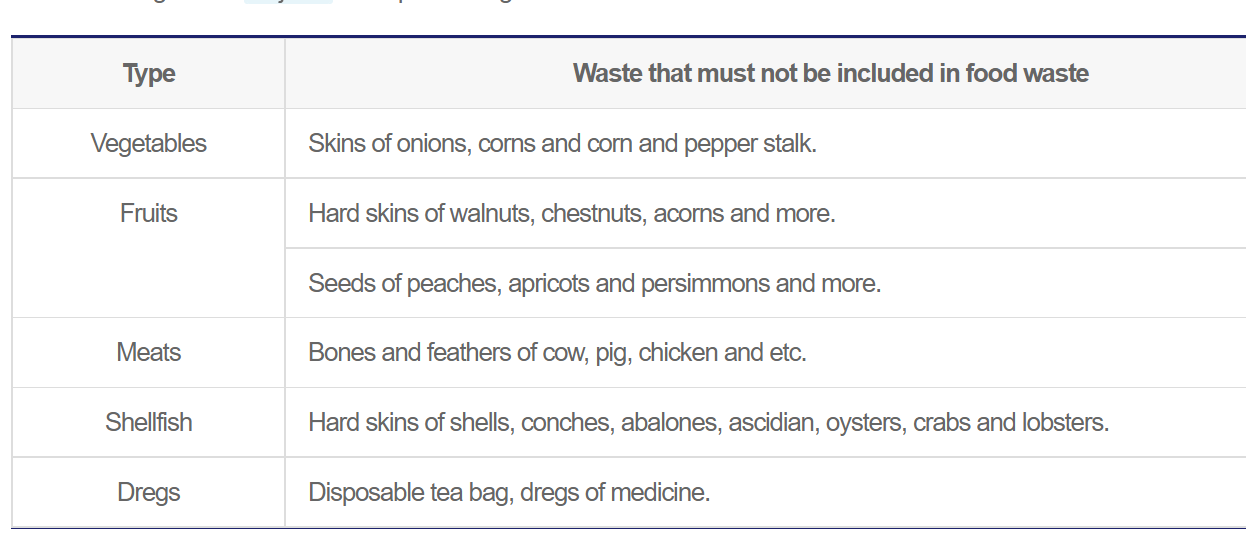
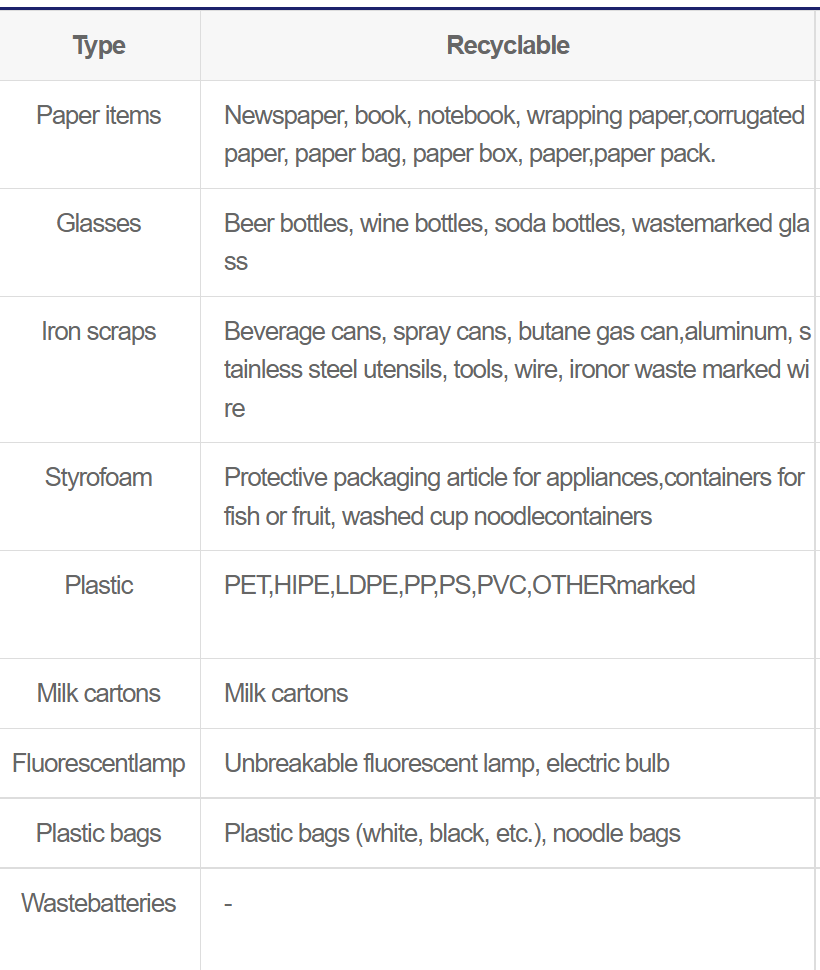
I did find this useful table from another district which I have been using. The items considered as food waste are quite different from food waste back home when the local council rolled out a trial food waste program. Food waste recycling is still not widespread in council areas back home. This has taken me some getting use to!
Everything else that can’t go into food waste or be recycled is general waste. So once you’ve filled your food and general waste bags, you leave them out on the curb to be picked up. Yes, that’s right! There is no bigger bin that you through your bags into, just simply tie your bag up and leave them out after 8pm. There are some rules around this, I’ve read that some districts have certain days of the week and there’s also times when you should be placing your rubbish out.
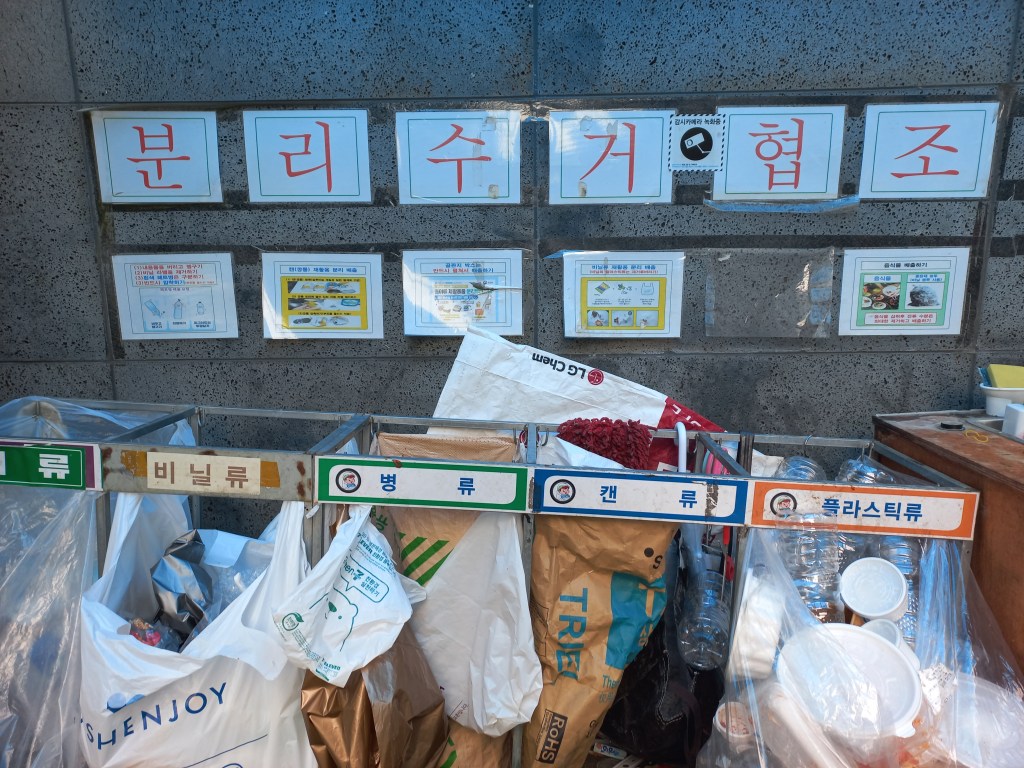
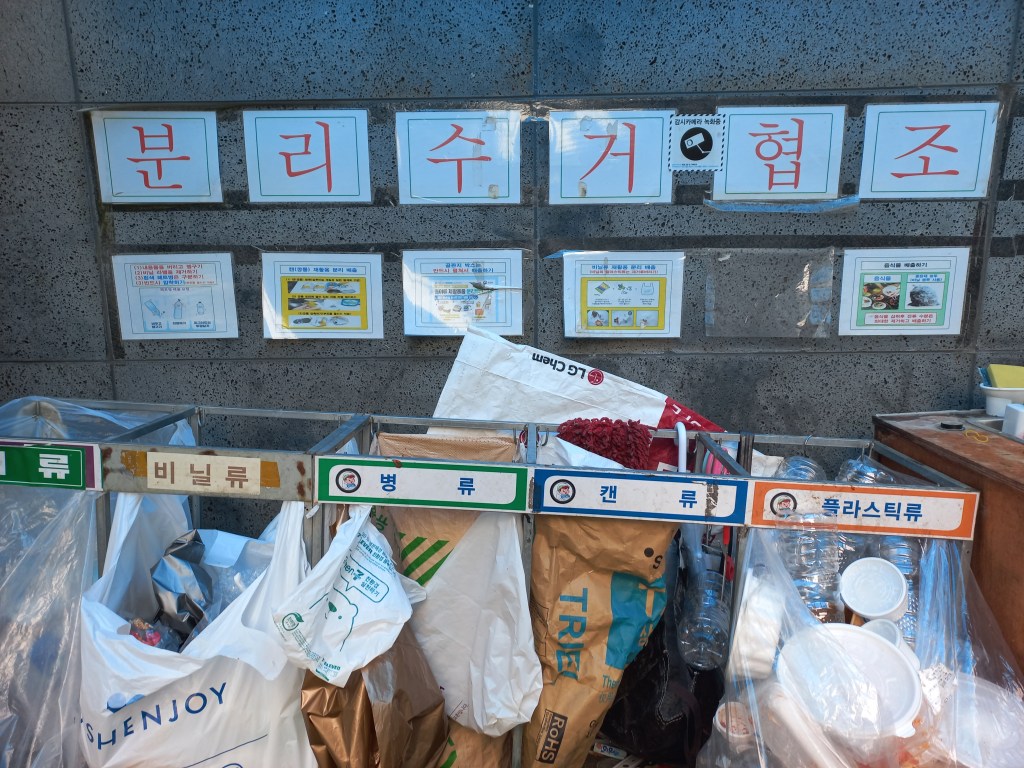
Next up is the recycling. In my building there is a recycling area with bags already there. You just need to separate everything into the allotted bag. I have seen a clothes bin outside as well as a container of batteries too. The items that are recycled are the following:
Back in Australia, our recycling bin was just everything that could be recycled mixed together into the one wheelie bin (so paper, cans, bottles and hard plastics). For soft plastics and bags, you had to be take these to the supermarket again if you want them recycled. Now that I’m writing this, I can see how much our recycling program back home is lacking and not that accessible!
I’m still getting use to the rubbish situation but hope I’ll get to use to it in no time. How does this waste program differ from yours?
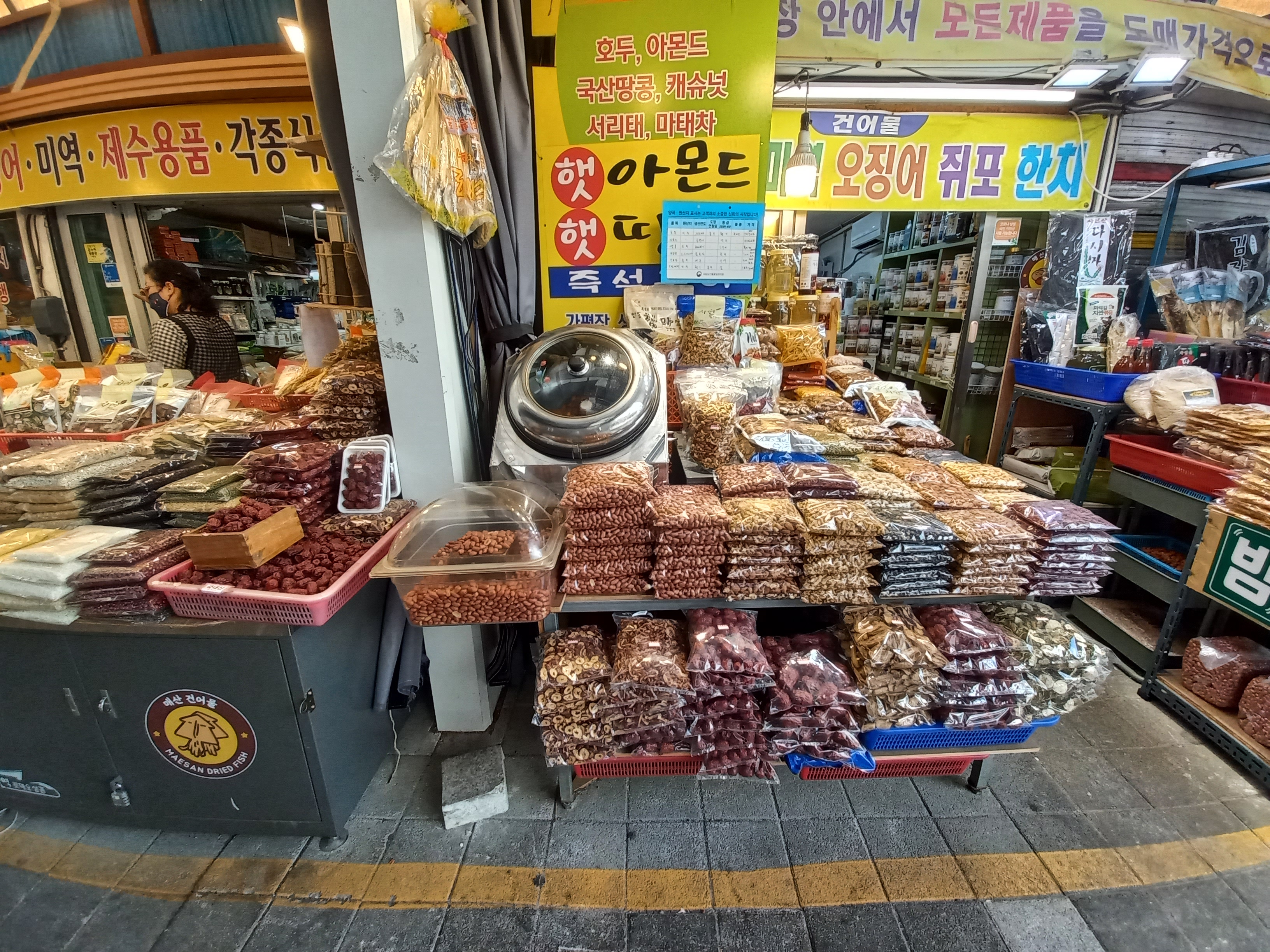
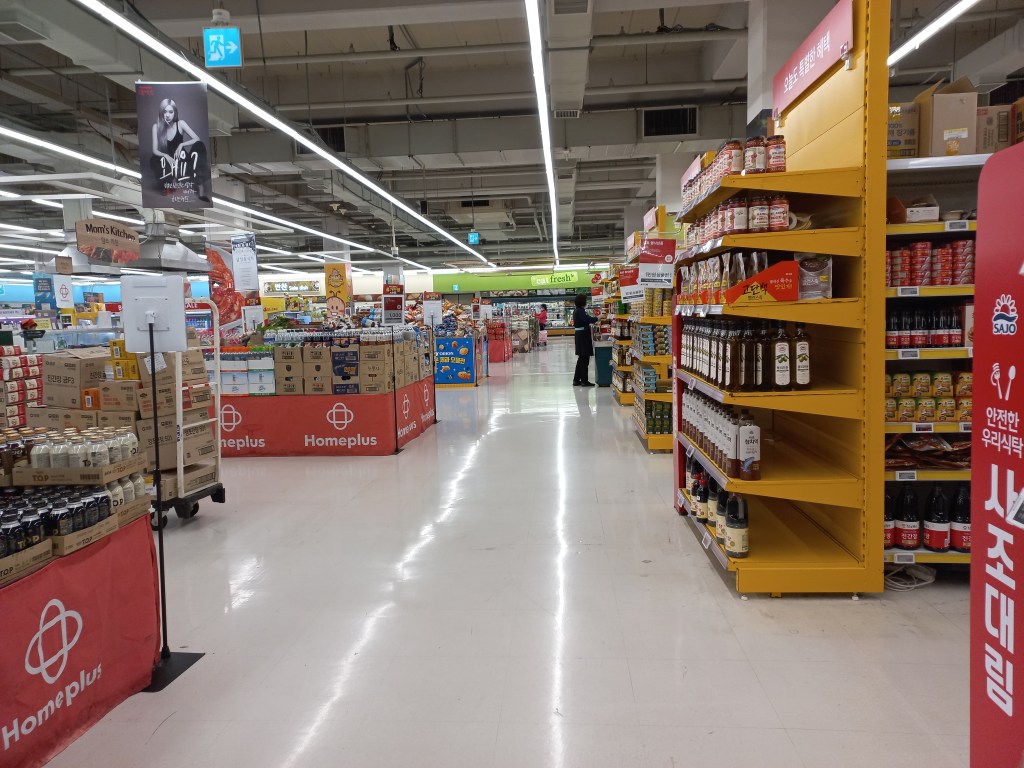
One of the first places I went to when I finished my quarantine was the local supermarket. I’m lucky to be close to a Homeplus which is a multi storied store. There are clothes on 1 level, food on the next and then a floor for homeware and appliances.
Grocery shopping in another country is one of my favourite activities. Just browsing the local fruit and veges, drinks and snacks! I’m not use to having to carry all my groceries by hand and walking home though so I have to keep reminding myself that my eyes do deceive me and that I cannot carry everything I want to buy back in one trip!
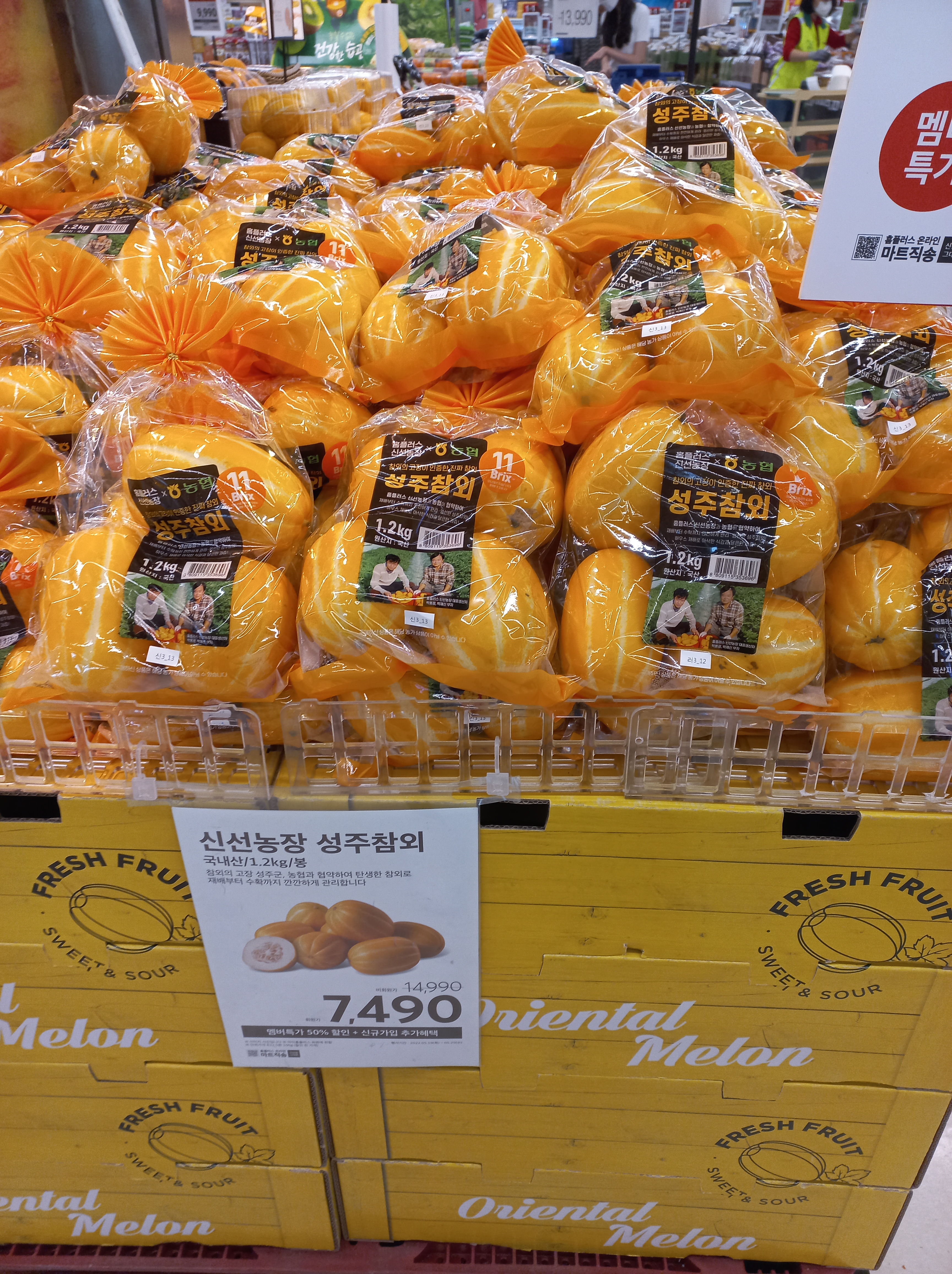
At the moment, it’s summer fruit season so Korean melons, watermelons, cherries, pineapple and grapes are out.
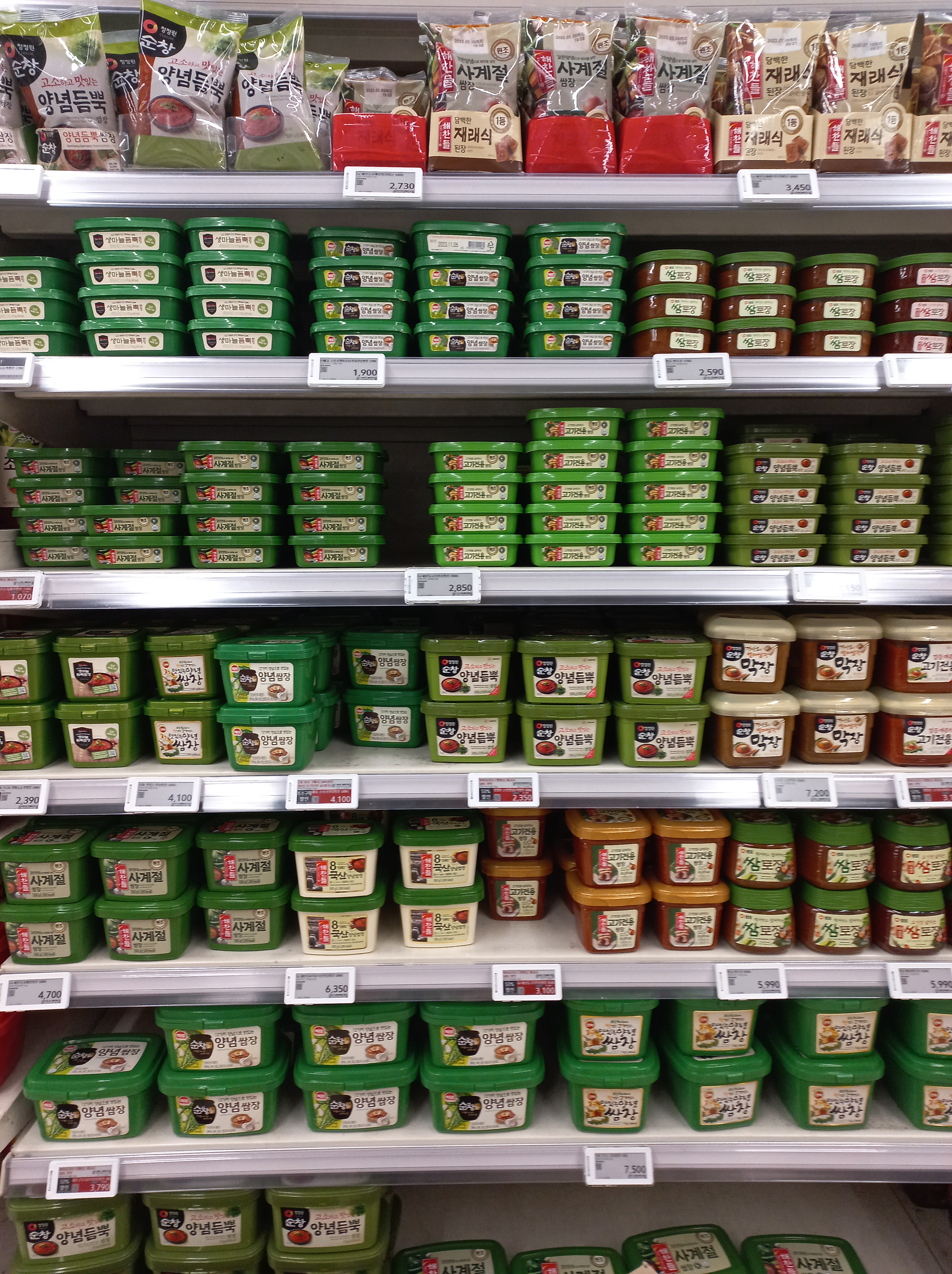
In terms of price, I would say groceries are just as expensive as it is in Australia. Of course, cooking Korean food will be cheaper but my fridge and freezer isn’t big so I cannot store much at a time. I’m hoping to start to make more Korean food too as the ingredients are plentiful and delicious. The only hurdle is that I will need to research exactly what items to buy, what the Korean word looks like and maybe even what the packaging looks like for a more speedy shopping adventure.
I need to figure out what all these sauces are for
As I had already heard, beef is expensive (spotted some Australian beef) but there is plenty of pork, chicken and seafood as alternatives. I’m a huge fan of seafood and was not surprised that I could easily find fresh fish, squid, clams, octopus and prawns at the supermarket. Now to only find recipes to use them in (maybe a seafood pancake)!
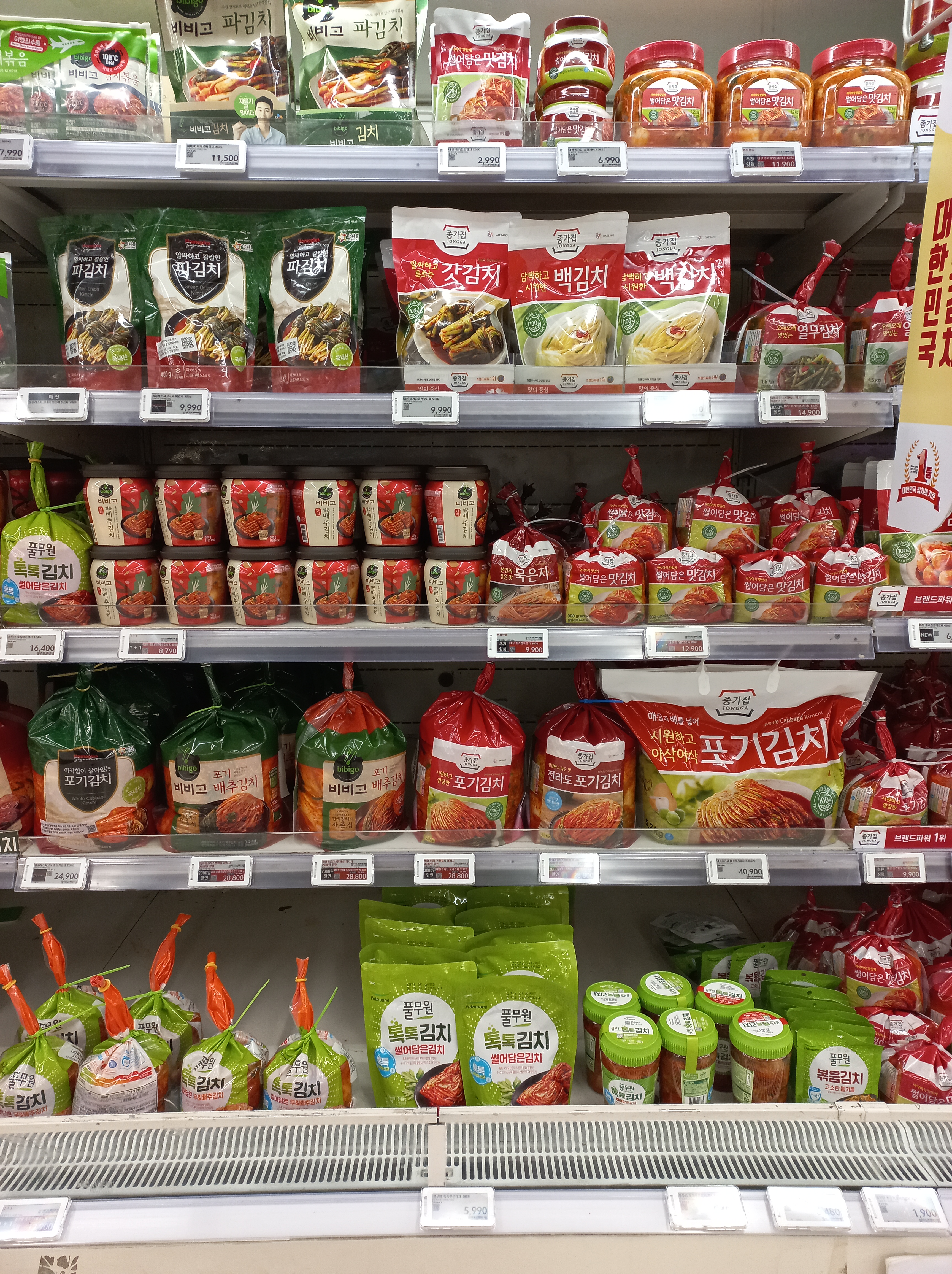
You may already know that Korean meals come with a lot of side dishes (known as banchan in Korean). There was a whole aisle dedicated to banchan with plentiful options. I haven’t bought any yet as when I order take-out, banchan are also included (free of charge!) and it takes me usually 2 or 3 meals to finish it all.
Something that surprised me is how popular coffee is here. In particular, iced americanos which you can find in every cafe on every street for 2,000won ($2 aud!). There is a whole aisle dedicated to dry coffee products and only half an aisle dedicated to tea. Go into the chilled drinks section and you will find even more coffee drinks! I’m not sure why I thought that tea would be bigger here than it actually is. Probably due to my generalisation that asian countries like to drink teas due to the humidity and heat to sweat.
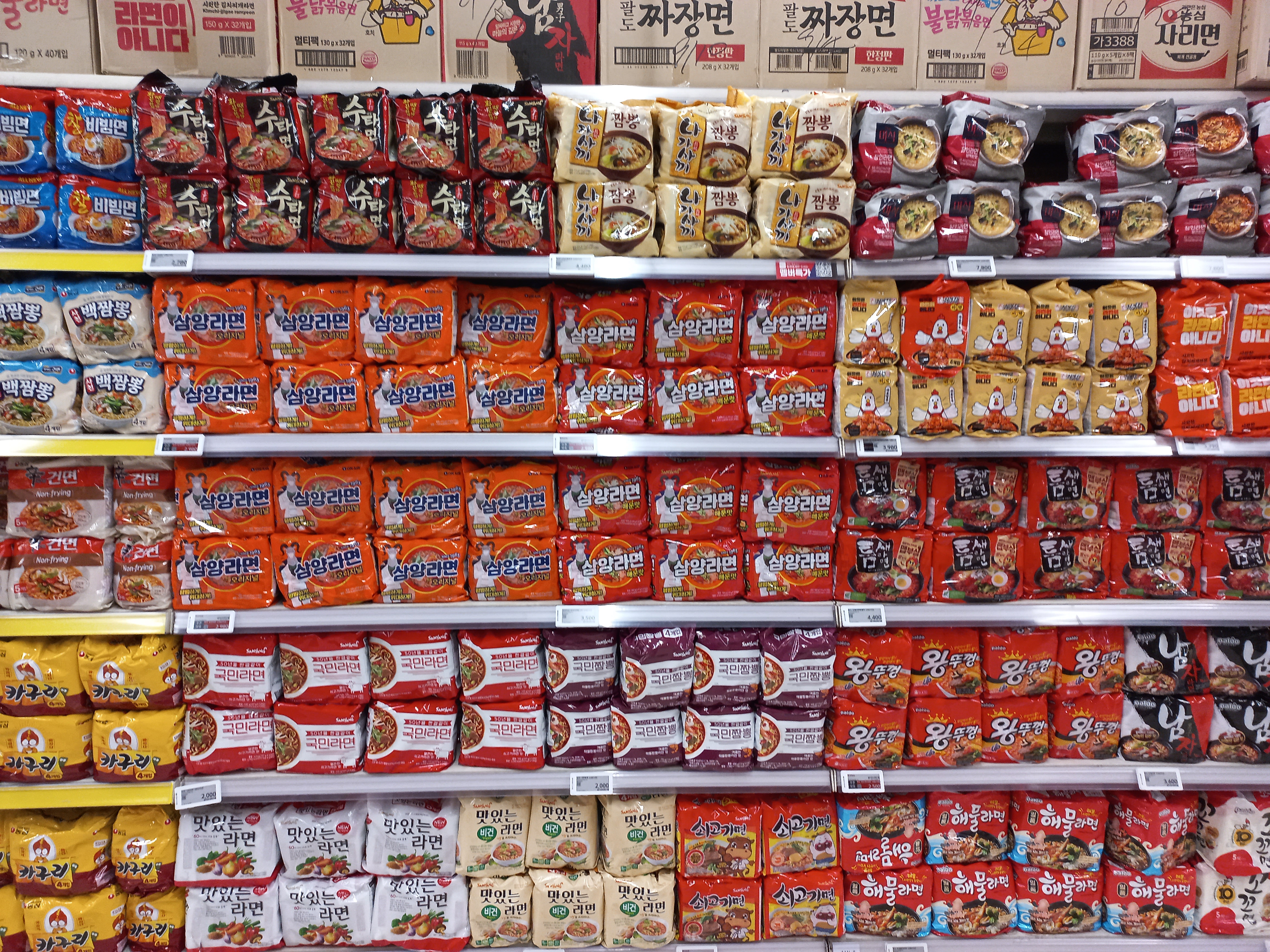
Another aisle that I wanted to visit was the ramyeon aisle. Ramyeon- the dried instant noodle- is a popular export from South Korea with plenty of options including super super hot firy ones. I was hoping to be able to buy individual packs but there was not much at this supermarket. I’ll keep looking (or will just find a ramyeon convenience store).
As with many places in the world now, you’ll need to bring your own shopping bags or pay for one!
Do you have favourite grocery items you always buy and try when you travel?
With my life now packed into 2 suitcases and a carry-on, I’ve gone through all the paperwork and pcr tests and now I’m here!
Currently at the time of writing, people coming into the country who are completely vaccinated and from a country that qualifies are quarantine exempt, you need to go to a local district testing centre for a pcr within 24hrs of arrival.
I hadn’t slept very well on my overnight flight so was glad to be able to rest and stay in for the day. Once I had arrived at my accommodation, I turned my attention to the all important area of food. I wasn’t allowed out to get anything so started looking into all the apps that I had been told about prior to arriving. To my disappointment, many of them did not take foreign cards so I turned to trusty google and facebook groups.
I came across the site Help Me Emo which turned out to be a complete lifesaver! It turns out that Emo means aunt in Korean which is such an aptly named site. It operates via KakaoTalk (similar to Whatsapp) where you message your details and what you want to order. The team find it for you, send you screenshots of the final bill and order if for you. I have found that the food arrives soooo quickly and it has all been so delicious! A typical meal has cost me on average about 9,000 won. Coming from Australia, this is cheaper than a McDonalds meal!
Unfortunately, my result was indefinite which meant I had to go back to retest the next day. The result of the re-test was positive so I am in quarantine for an additional 7 days albeit asymptomatic. But fear not, I’ve had practise with quarantine before (we all have!) and I started online training with my school during this time as well. It wasn’t the ‘hit the ground running’ that I had imagined but this meant it gave me time to figure out the washing machine, get to order and try different Korean dishes, study and watch netflix.
In terms of actual groceries, I was only able to find some through the Trazy website. I did a small order as the items were soooo expensive. When they arrived, I learnt that I could have ordered directly with them (still expensive) instead of going through Trazy.
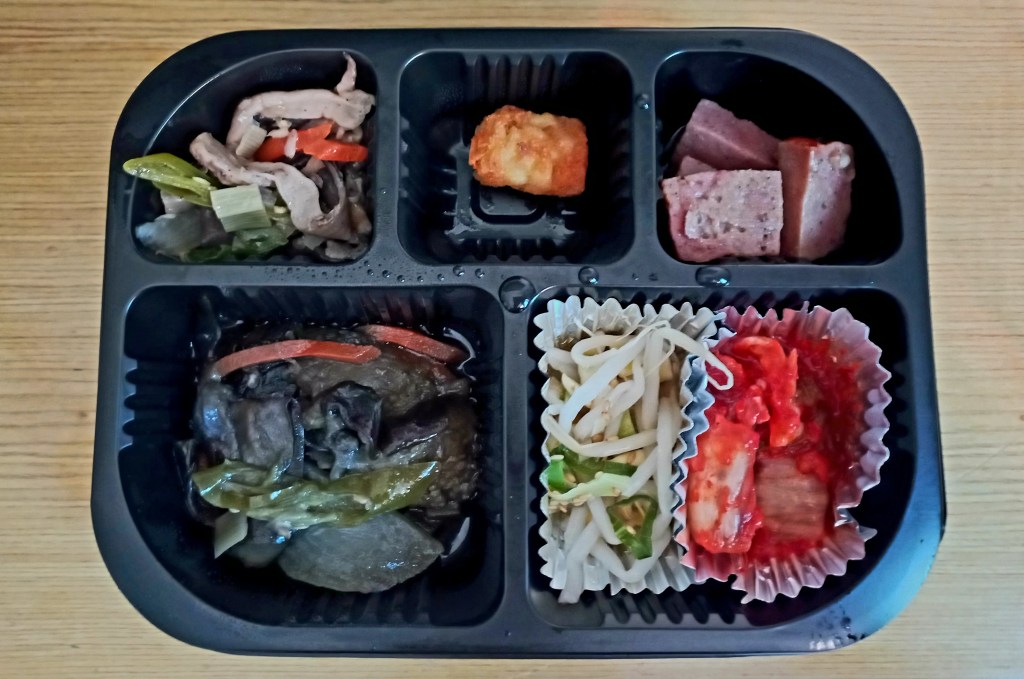
So for the time being, here are some food snaps and until next time!
At the beginning of the year, I wrote a post about the 5 things that I’m going to keep doing in 2022. I think the middle of the year is a good time to see how I’m tracking and refresh myself on all the things that I had set out to do for myself this year.
1. Reading I wanted to keep reading. I had actually set myself the goal of reading 20 books this year. I don’t think I’m fairing very well. At the time of writing this, I’ve only finished 3 books so far in the year! To be fair, I was very pre-occupied with organising myself and moving (soon to be twice) in the first half of this year. With my upcoming move, I bought myself a kindle. Apparently it will help me to read more. I was torn with buying a kindle as I’m a “you have to feel the pages in your hands” person but I probably wouldn’t have easy access to English books in Korea so ended up getting one for this purpose. I like the easy of carrying it when I’m out incase I have time to read it whilst waiting or on public transport. I like being able get the books instantly (hello instant gratification generation). We’ll see if by some reading spree, I’ll get close to 20 this year.
2. Exercising I wanted to keep up my exercising and I think I’ve done well with sticking to this. My ultimate goal is to preserve my aging body so I really make it a priority in my day. I wouldn’t say I’ve done anything new in my exercise routine so far. We’ve had an unusual amount of rain here this year so I haven’t been out for my walks as much but I’m still exercising indoors.
3. Exploring grocery stores I wanted to keep exploring grocery stores. So far this year, I don’t think I really have been. My latter half of the year will have a lot of exploring grocery stores so I think I’m ok here.
4. Making mornings me time Well…….with it being winter now, this still hasn’t really happend!
5. Keep minimising It really did help that I had to move in the first half of the year. I was able to go through everything that I had and part ways with those items that really have had its day. Now that we actually need to go out, I’ve tried to be more purposeful with all my purchases. Not only in terms of usage but colour and material so that they can be worn more often across seasons and events.
So that’s it! How are you going with your own goals of 2022?
If you are like me and the idea of learning another alphabet seems harder than climbing Mt Everest, fear not. It is possible!
One of the perks of learning Korean is that it’s quite phonetic. Once you learn the alphabet (hangul), you will be able to read in no time but not know what the words mean. Still, that’s one step forward.
To start of with, I learnt the alphabet. I made myself an alphabet card although I guess you can also print yourself off one from the internets. And then I just drilled until these started sticking until I could remember them. I used Memrise for this early on and also youtube videos. Memrise is great as you learn via flashcards to drum it into memory (so aptly named Memrise) and there are also accompanying short videos for audio but also so it’s not so dry. There are also revision and game functions on the website/app. Similarly, I used youtube videos to learn pronunciation too.
Next, I enrolled into a free online course in Coursera called First Step Korean which is a 5 week course run by Yonsei University. It was quite tough and I actually still haven’t finished it. It explains some of the grammatical points but I’ve found a better resource now. I think I would have preferred to mull around in vocabulary or very short sentences and found that this course launched into many sentences all at once. In hindsight, I probably wouldn’t recommend this so early on in the language learning journey.
Then I came across Talk To Me In Korean. This has become THE place to learn for me. They not only have textbooks but there’s a free online course as well that is so comprehensive and fun to listen to. There are annotated notes for each lesson (I can’t believe it’s all free?!). There is a youtube channel too that discusses grammar points and pronunciation. All in all, this has been a great resource to use.
After becoming more familiar with hangul and some basic basic words and phrases, I thought that I would use Duolingo. The reason why I left Duolingo to later can be found in my previous post on Duolingo here. I think it was a better decision for me and the way I learn to leave Duolingo to later. I now supplement my learning with Duolingo.
I also found an online group course running through a facebook group that I’m in which is a class once a week. It’s only a 1hr class but great to have a teacher explain some grammatical and cultural points and a “live” person to ask questions to when things get confusing.
If anyone is learning or has learnt Korean previously, let me know what resources and how you went about learning!
After spending the past 8 years working almost non-stop in the scientific world, I’m taking a break. Switching gears. Crossing a bridge. Whatever you want to call it.
It’s a big deal for me. I guess I’m still quite traditional in the sense of thinking of my working life as a “career” and assuming that I would be in the same field of work until I retire. I know, how un-millennial of me. Maybe I’ve just been conditioned to think this by the people in my social bubble who have stayed in the same field or even company until they retired.
One book that I read during lockdown that really changed the way I thought about life and spending was Die With Zero by Bill Perkins. This book talks about how when we are young, we are in good health but have little money but once we’re older, our health declines but we have more money to spend. So we need to think about what experiences we want in life and to plan them accordingly taking into consideration our health and money.
The next takeaway point for me was about memory dividends. Much like investment dividends, our experiences and memories of them make up who we are and give us something to look back and smile at as we get older. You can only have these memory dividends if you have life experiences that you want to have. You need to actively start planning these experiences today. Time doesn’t wait.
During one of my many lockdowns, I decided to break from my chains, fears and thoughts that I had to have a career and do something that I’ve always wanted to do instead. The unknown of it does worry me but apparently we regret the things that we don’t do more. Maybe I will discover my next career or some other opportunity will present itself and I’ll be taking another turn.
I’m taking this break to chase a life experience while I still can.
This post contains affiliate links where I will earn a small commission if you make a purchase through these links and will not cost you anything extra.
There is no greater way to see New Zealand than hiring a campervan or car and driving around both islands. The roads are well maintained and there are plenty of camping sites around the country that will suit your needs.
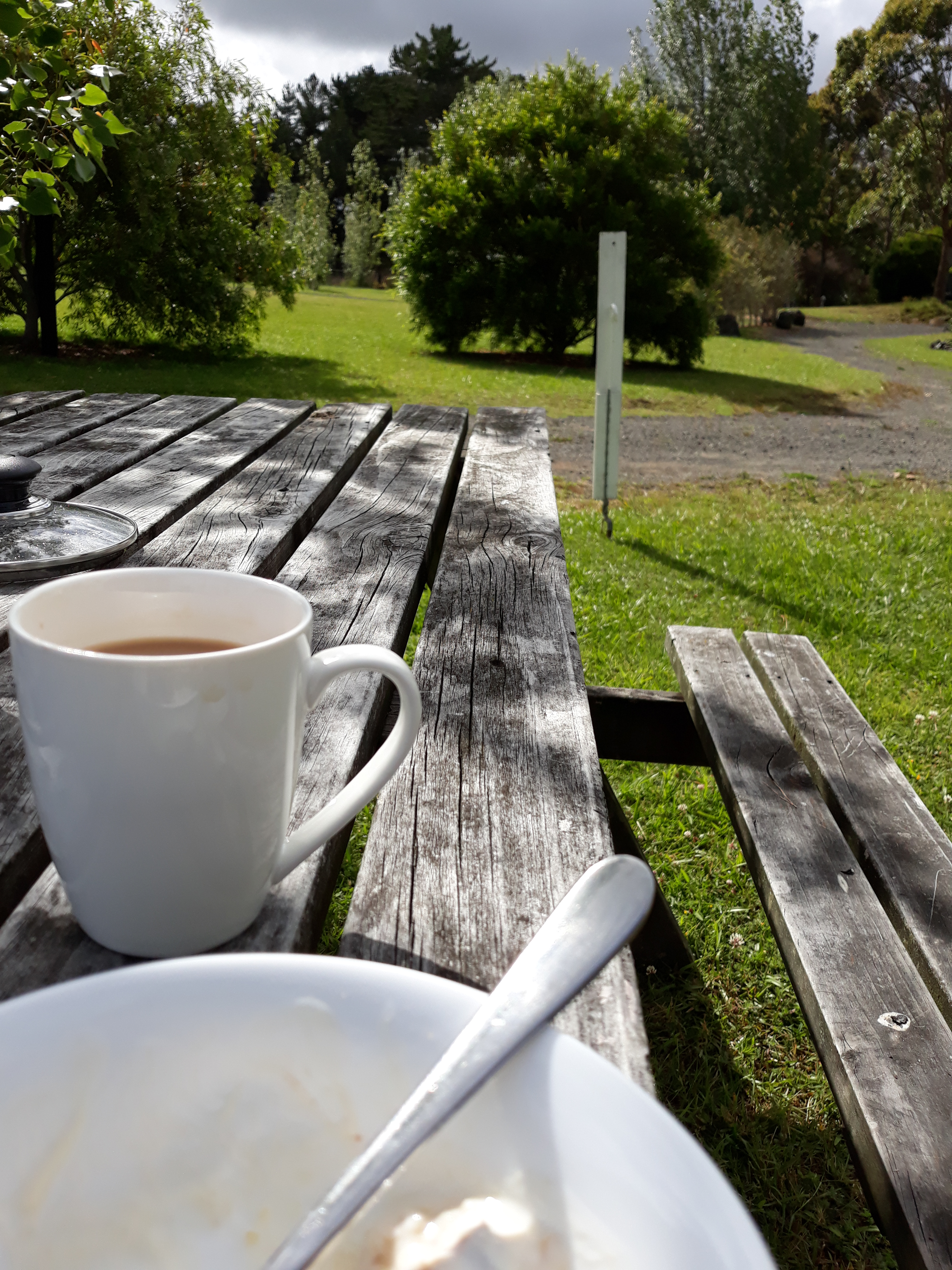
There are a handful of campervan hire companies and the one that we have previously used were Mighty Campers. On this particular trip (circa 2019), we decided to see the north of the North Island. We had learnt from our first New Zealand trip to not be overly ambitious with the itinerary as there is a lot more driving than you think. Plus, you need extra time to have a cup of tea on an empty beach or at a lake surrounded by mountains.
We started in Auckland and stayed a night in the city centre. New Zealand is 3 hours in front of Australia (east coast) so it was already evening by the time we arrived. Every time I go to Auckland, I’m just amazed at how many people there are and how much the city has grown since the last time I was there. The city centre is easily covered on foot with many back streets and harbourside seafood eateries to fill your belly with.
The best thing about campervanning is that you don’t really need to plan that much and can duck in to many places for quick stops. Our first stop was the town of Whangarei, which is about 2.5hrs to get to. Using the app (formally Mighty Campers app) but now called thl roadtrip, this app allows you to find camping sites and be able to book them whilst you are on the road. Depending on your campervan or car, you can book a room or a campervan spot to “charge” your van. Alot of the campervan features such as the fridge and heater will require your campervan to be plugged in to work or charge.
Parikhaka Park
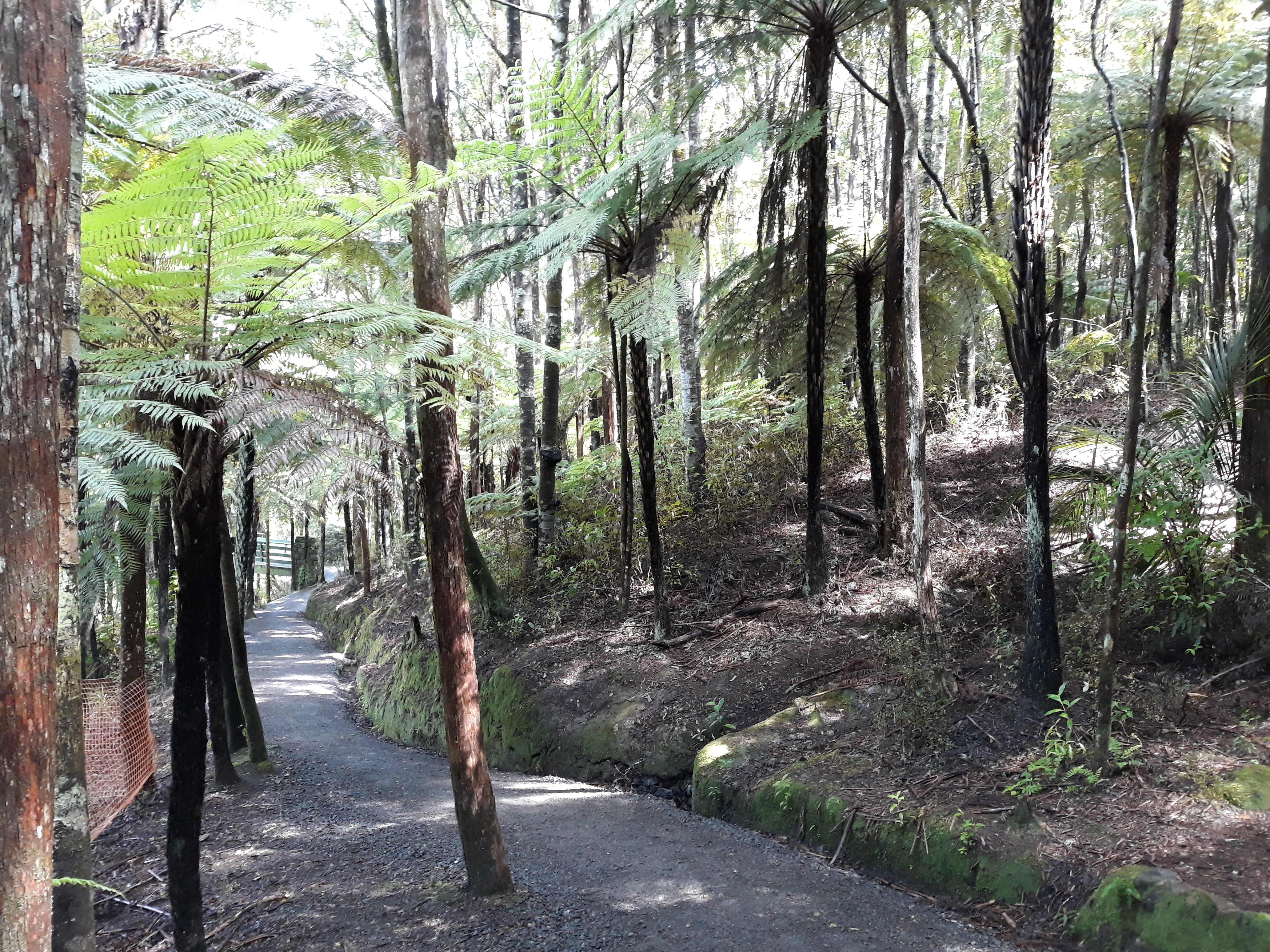
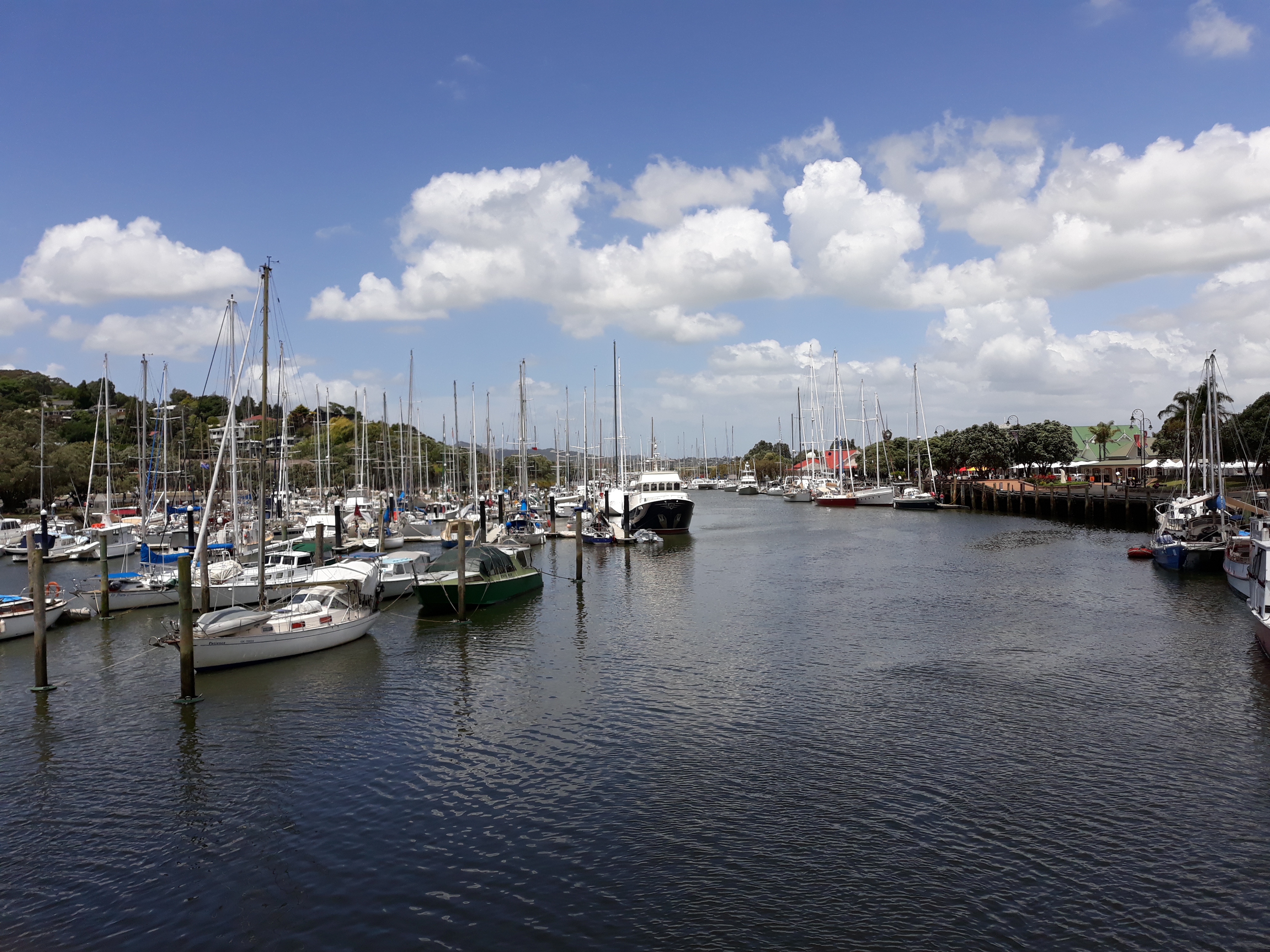
We stayed at the Whangerai Top 10 Holiday Park. Top 10 Holiday Parks are a chain that exist across New Zealand. We found that these were not much different to boutique or family owned camping parks but they had more cabins/rooms which would suit big family holidays. The Whangerai Holiday Park is on the edge of the Parikhaka Park which was great for a steep morning walk into town for lunch. Whangerai is the type of town you want to retire in. The Hatea river runs through the town and the river banks are filled with cafes and restaurants. We spent the afternoon at the Claphams Clock Museum (I’m always up for an odd museum) before walking back to the Holiday Park.
Whangerai
We moved on to Paihia the following day which was a very small surfy town and stayed at the Bay of Islands Holiday Apartment grounds. It was opposite a supermarket which was great to reload on some food supplies. From here, we used it as a base to explore a tiny bit of the Bay of Islands. There is a ferry from Opua which will take you (and your car or campervan!) across the bay to Okiato where you can drive into Russell. Russell was one of the first white European settlements and the architecture is very telling. Cafes lined the waters edge with very grand houses peering over from behind. If you wanted to just be surrounded by water with plenty of walks and hikes, I would completely recommend just staying in this Bay of Islands area.
We then were searching for accomodation at the tip of the north island but the closest we found that had good ratings was in Ahipara at the Ahipara Holiday Park. This was our favourite campsite of this trip. It was large and surrounded by nothing by land, more greenery and a short walk to the Ninety Mile Beach (although not swimming conditions as it was cold!). Ahipara is more of a suburb than town so we only went out to get lunch in Kaitaia but spent more of the time walking along the beach or chilling out on the picnic chairs at the camp site.
Enjoying the empty Ahipara Holiday Park
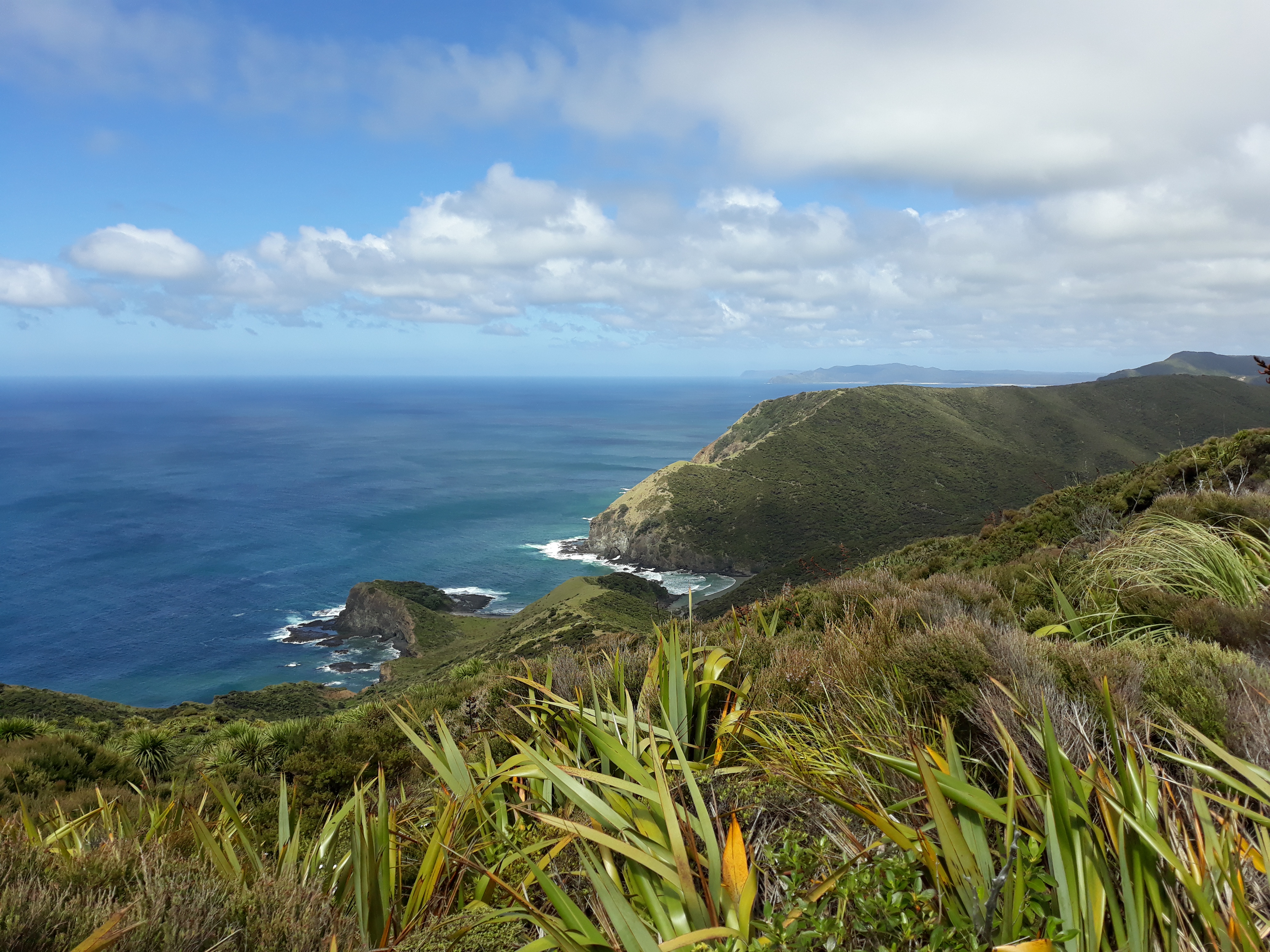
We used Ahipara as a base and did a day trip to Cape Reinga. It’s a 1.5 hours drive. In Maori, ‘Reinga’ translate to underworld and Cape Reinga is believed to be the gateway to the underworld. It is absolutely beautiful and luscious and the gravel walk to the lighthouse lets you experience nature at its full force (wind and all). It’s peaceful and also the meeting point of the Tasman Sea and the Pacific Ocean. There appeared to be some trails but most people were there via car.
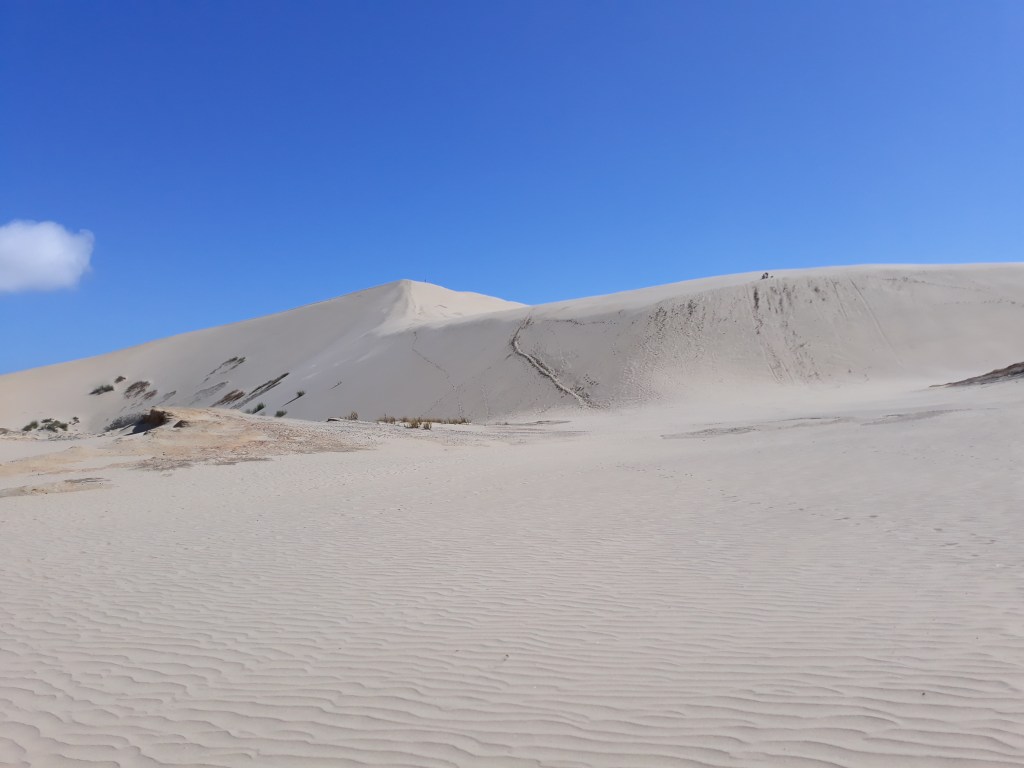
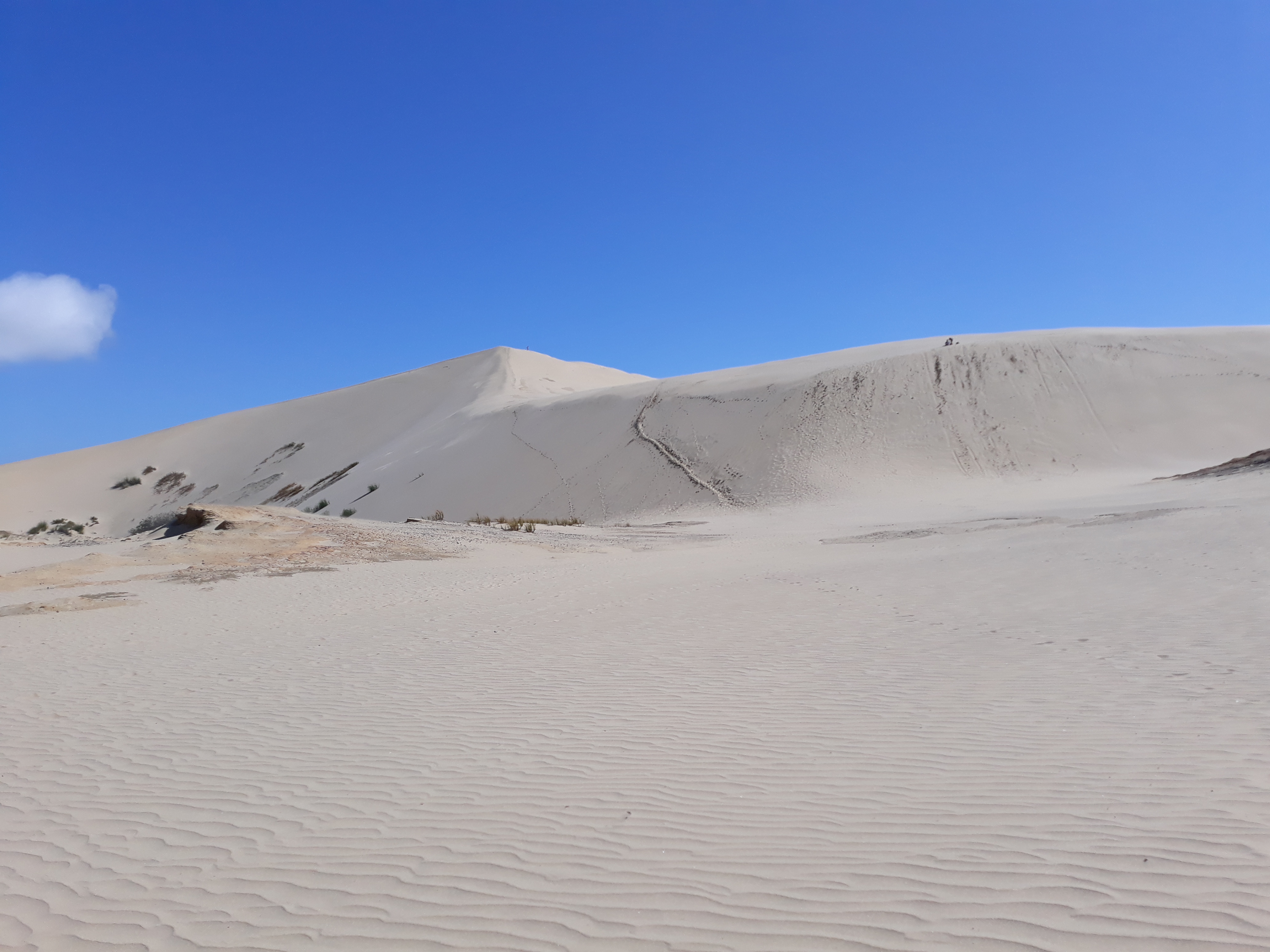
We stopped on the way back at the Giant Sand Dunes. Yes, there are sand dunes in New Zealand! When they say Giant, they were not over-estimating! It’s free to just park and have a walk around. Sand dunes are always shifting and changing so you may get lucky and see the Tasman Sea. The dunes were quite steep and I was on my hands and knees at one stage trying to climb up (and most definitely not looking down behind me).
Cape ReingaGiant Sand Dunes
After spending a few days at the tip, it was time to make our way back to Auckland by driving down the west side. We made a stop at the Waipoua Forest to see the Tane Mahuta, to see the largest Kauri Tree to be known today. It’s estimated to be about 1250-2500 years old and is an easy site to see. It’s sign posted and you’ll notice the cars parked alongside the road. There is a boardwalk through the forest to see the Tane Mahuta and is a very short walk.
Our last stop was to Muriwai Beach Campgrounds so that we didn’t have to stay in Auckland. This was by far the most crowded campgrounds with a mix of permanent residents and many many camping tents. The camp grounds are a short walk from Muriwai beach which is popular for surfing, black sand and Muriwai Gannet Colony.
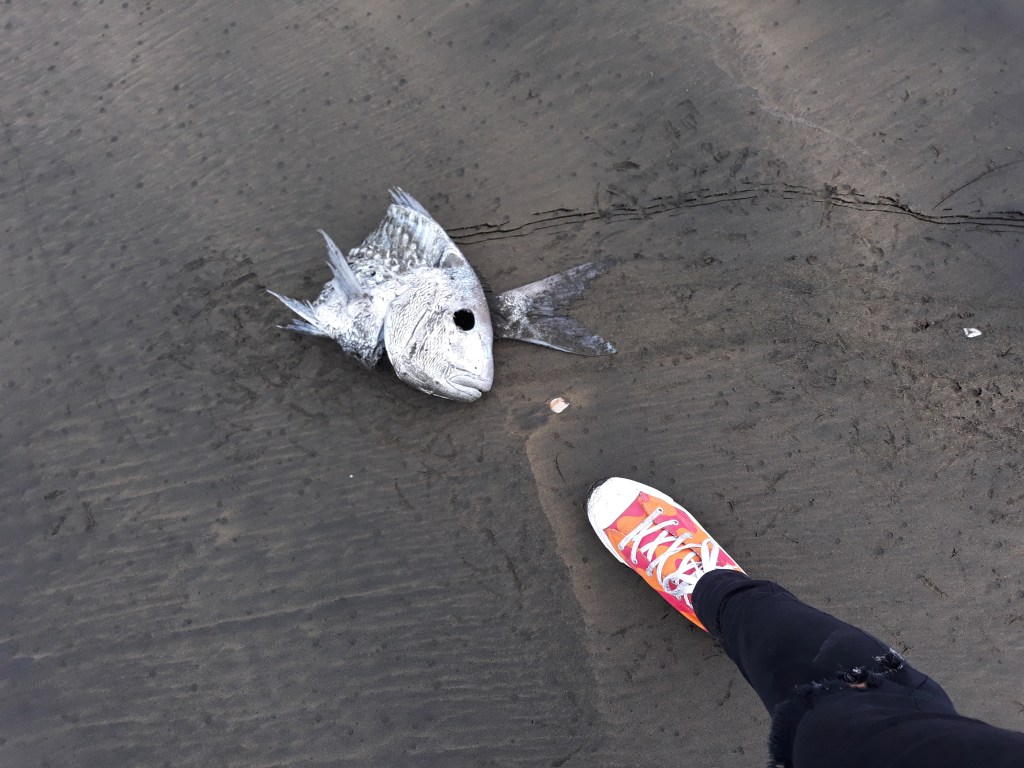
Huge fish washed onto the Muriwai beach
Are you thinking of New Zealand? Where are you planning on going? If you’ve been, where was your favourite place on the North Island?
Most of the pieces of the puzzle have almost fallen into place. I have resigned from my job, moved back to my parents and am now officially unemployed for a few weeks until I fly.
I’ve always wanted to live abroad, even if for a little bit. I’ve also always wanted to teach English abroad, even if for a little bit. The lockdowns got me thinking about all the things that I have wanted to do but never have. It’s not like I’m getting younger by the day. What was I waiting for?
And with that, I started getting the wheels in motion. I put aside all of my adult doubts of a career break, taking a huge pay cut, the unknown, detour in my “career path” and not being any closer to being able to afford a million dollar house. I’m not going to lie, I am still filled with all these adult worries that I now push aside in my head but I know, this is what I need at this current moment in my life. To realise a dream.
A new contract has been signed, flights booked and now just awaiting my visa. I’m studying the language intensively to give myself a head start. The luggage is out and I’ve started piling in the essentials. My shopping list left is tim tams, caramellos, vegemite and eucalyptus oil.












 Lingo in Transit
You must be logged in to post a comment.