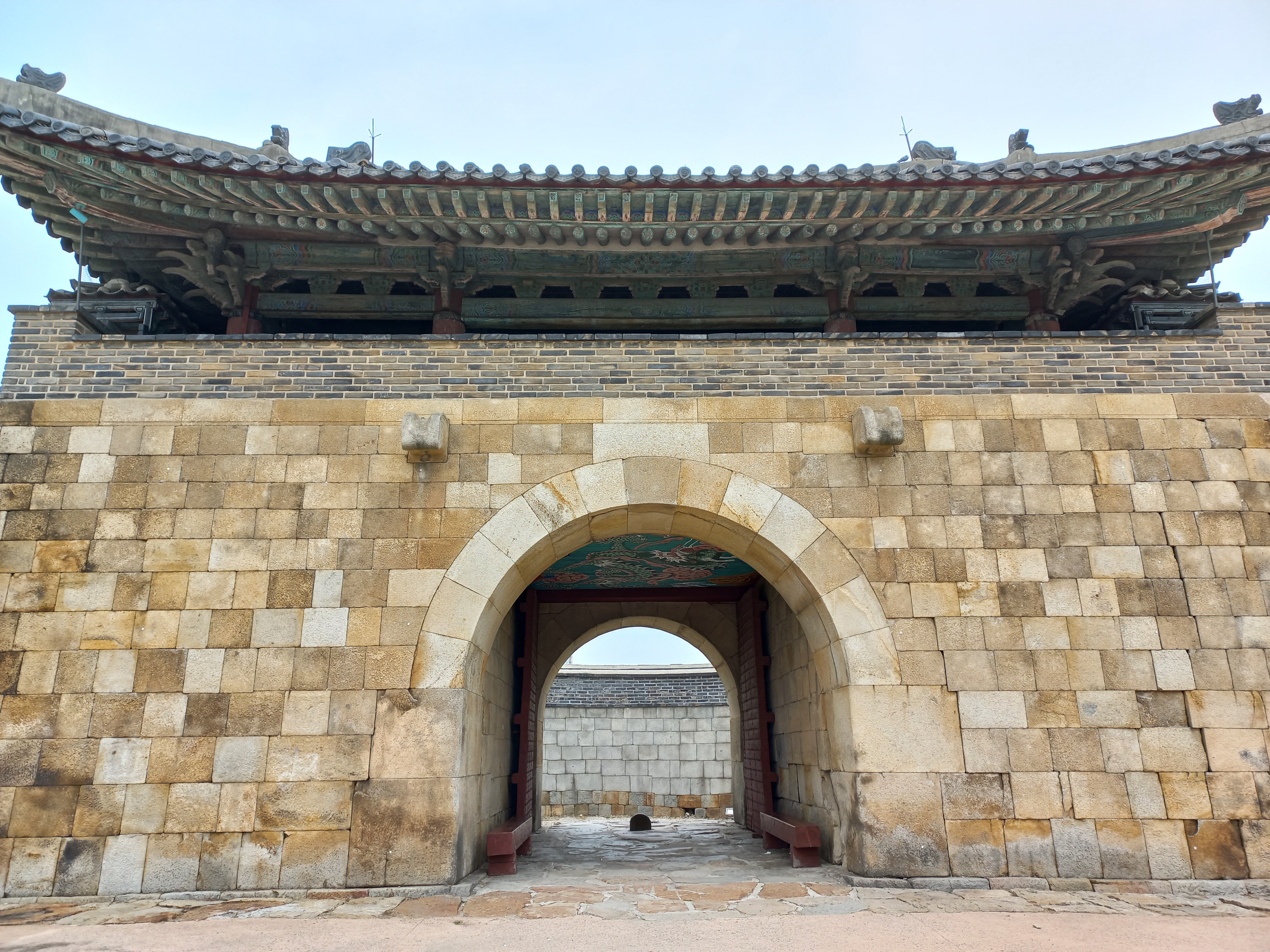
When I was trying to pick which cities to put down on my list of city preferences for teaching, I had no idea as I had never been to South Korea before. I wanted to avoid Seoul after reading that it was more expensive to live there (for food and groceries) and also being home to 10 million people. My search led me a city called Suwon which is famous for the Hwaseong Fortress. And just like that, my gut was telling me that this was the place. I don’t think I listen to my gut often enough and often it’s not very vocal but when it comes to travel, I get such strong pulls from it particularly where to travel to.
You can see more about Suwon here in a previous post.
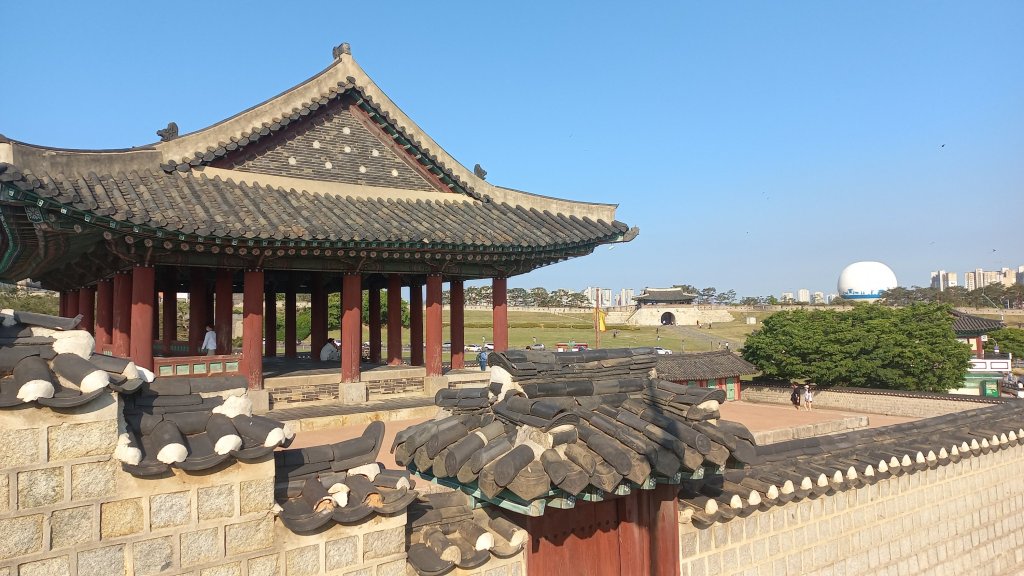

The star of the city is really the fortress. Building started in 1794 by King Jeongjo during the Joseon dynasty with plans to move the capital city from Seoul to Suwon. It was interesting to find out that the architect of the wall, Jeong Yak-yong, would later become a well known leader of the Silhak reform movement. The Silhak reform was developed in response to the strict Confucian social structures and instead wanted to encourage the use science and technology to improve the lives of the people. This school of thought is credited to have influenced the country, building it into what the country is today.
Contained in 10 volumes, the blueprint proved to have been invaluable as it was used for reconstruction. The fortress unfortunately suffered major damage in the Korean war and was rebuilt in 1970. With the exact blueprints to reconstruct the fortress to the same detail as it was built, it led to the successful registration of the fortress as a World Cultural Heritage site despite being a modern restored building.
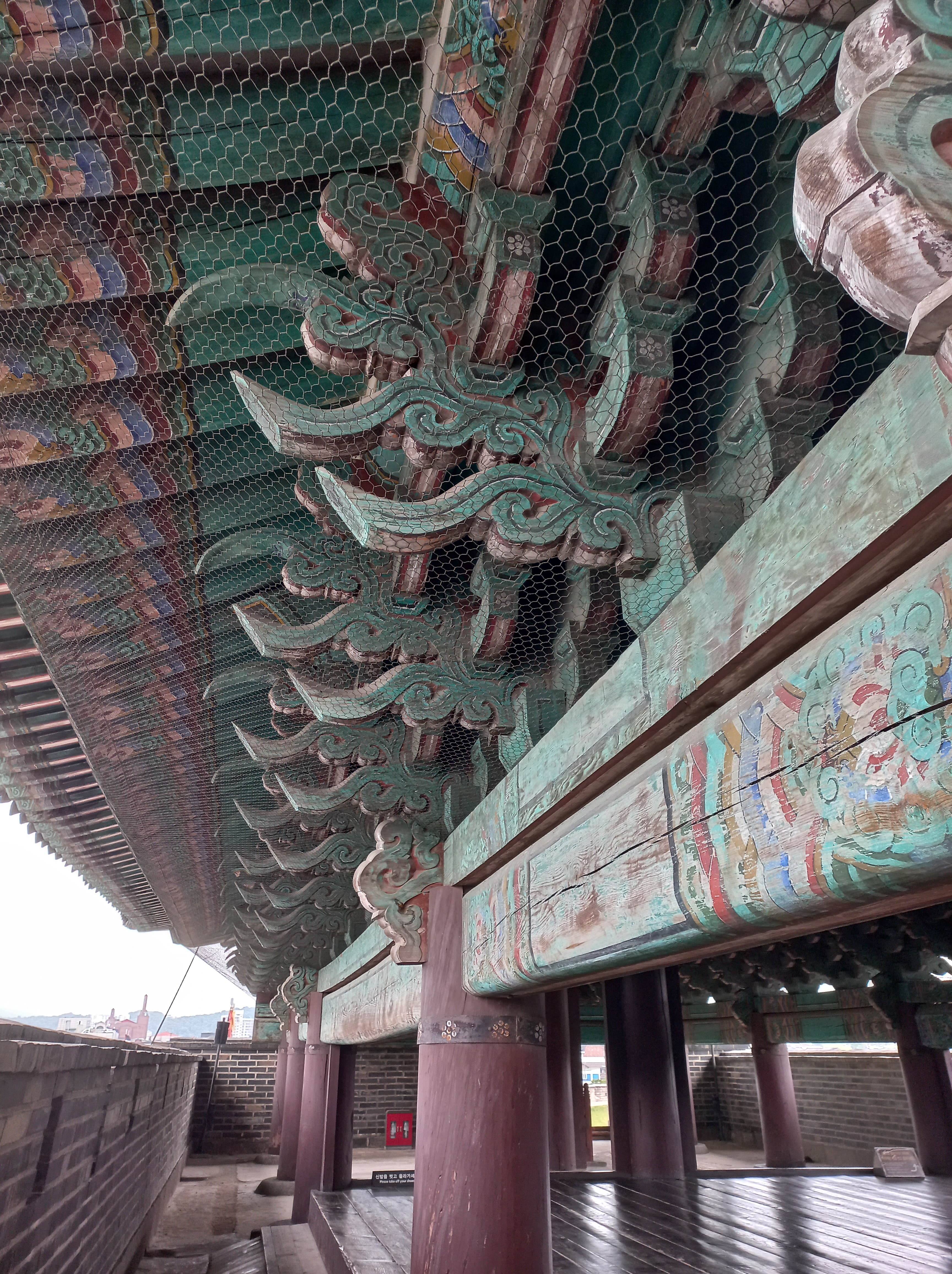
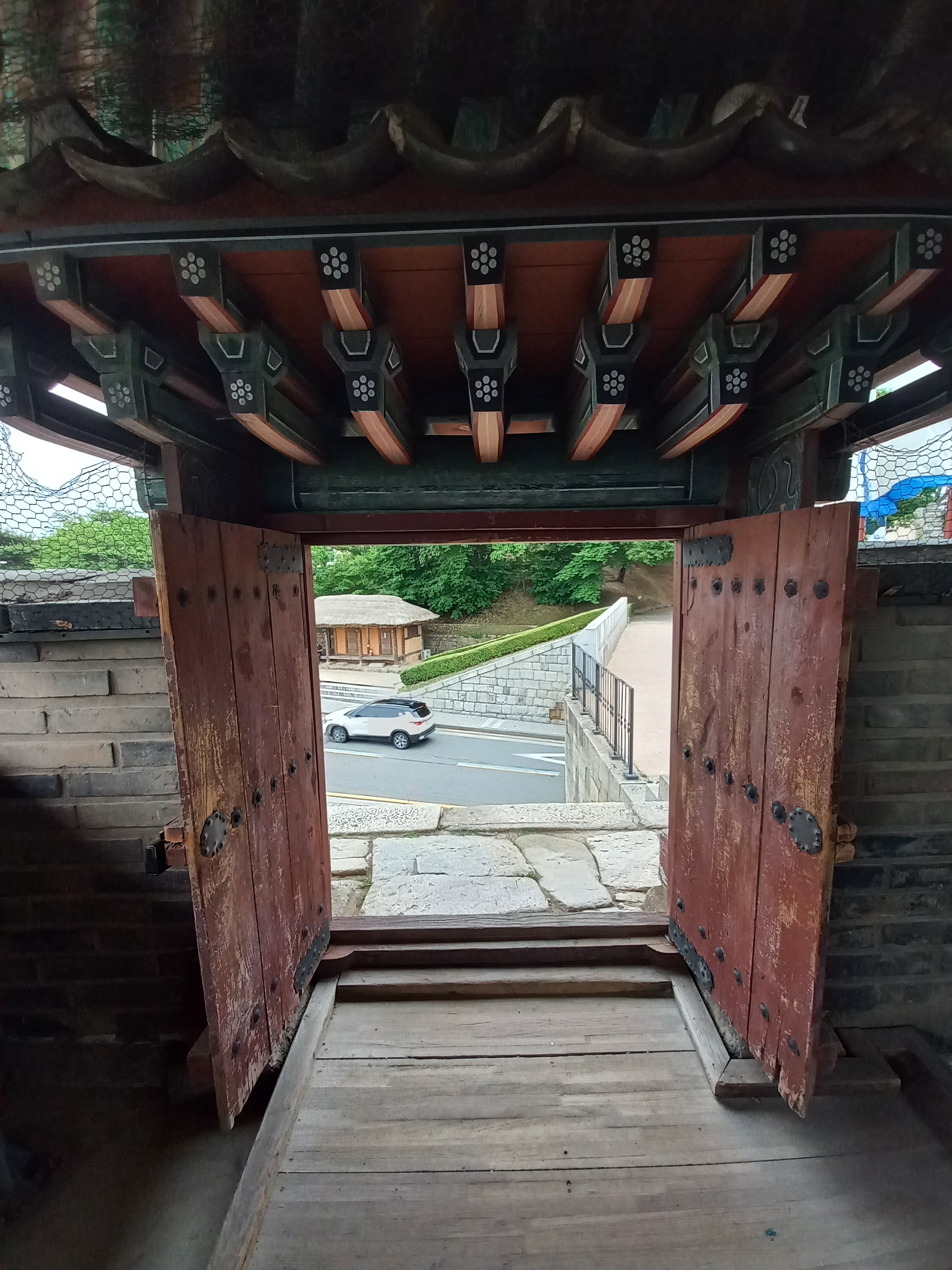
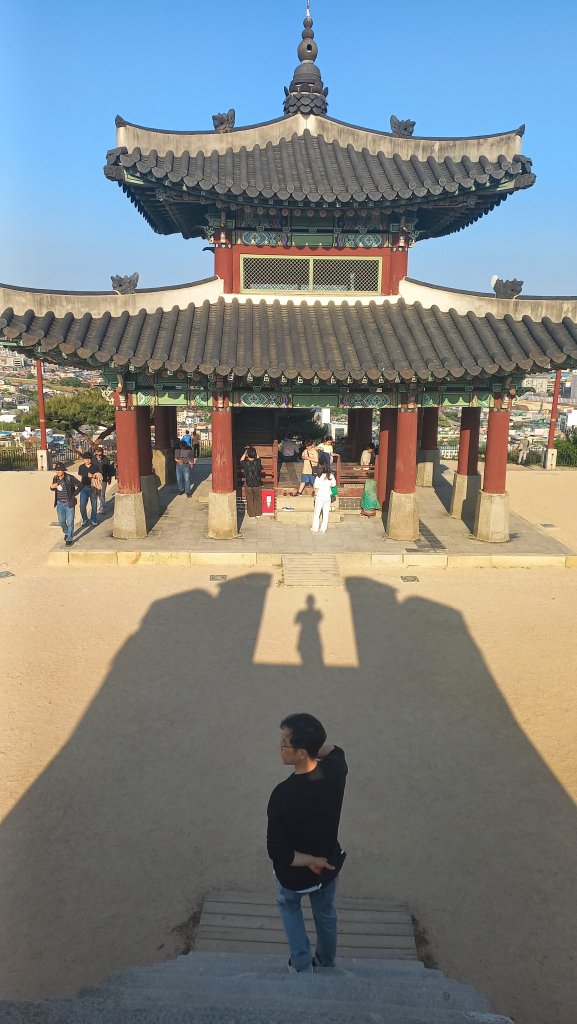
You can also sit inside on the wooden floorboards if you take off your shoes


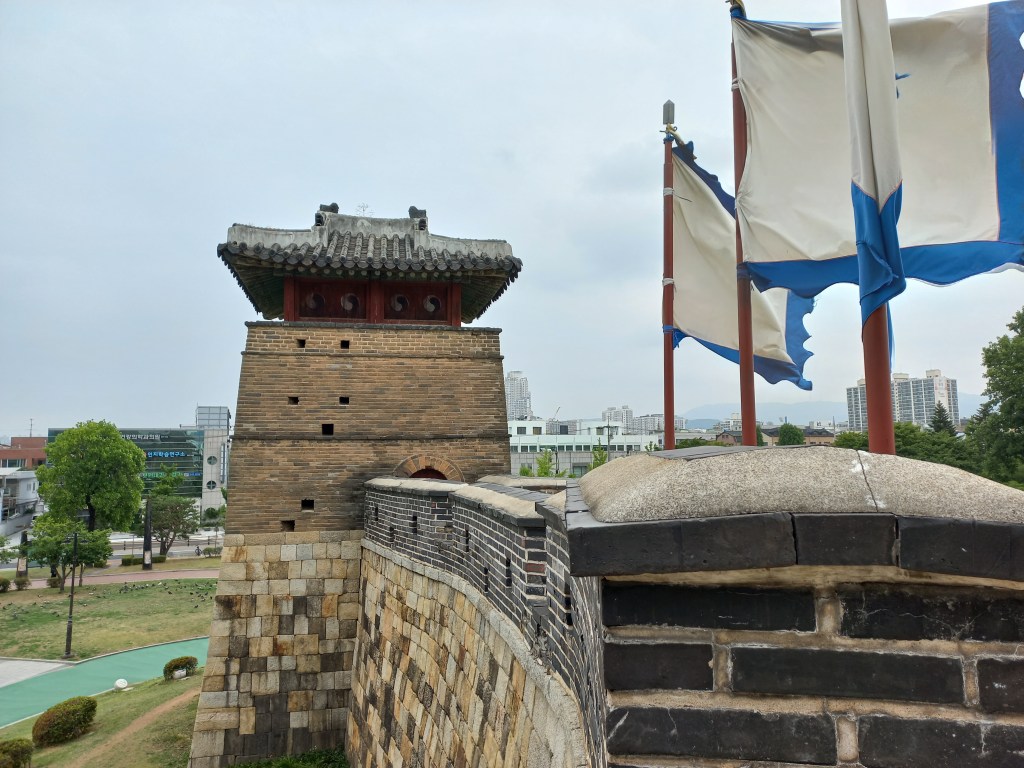
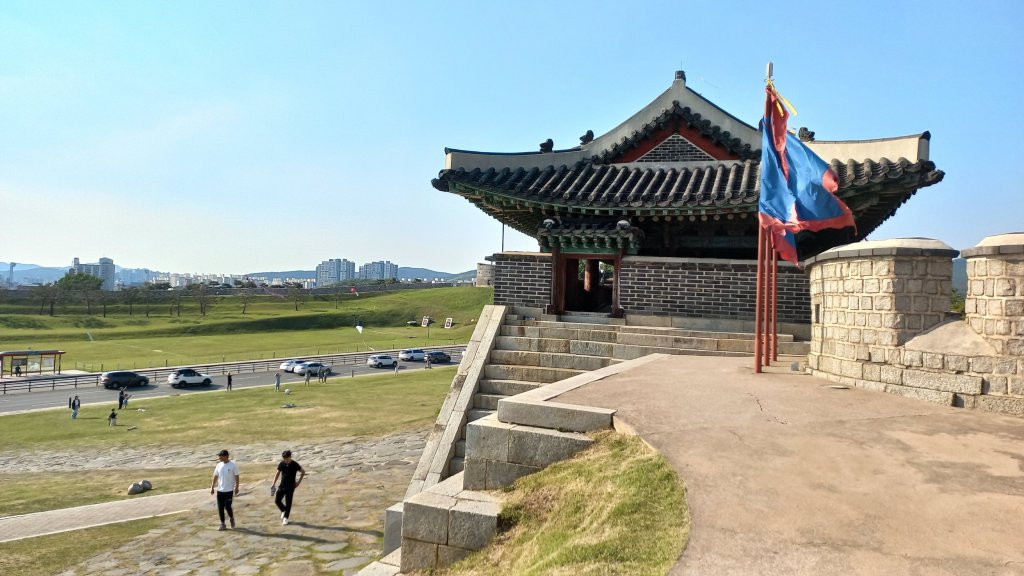
The wall is just under 6 km long and is built over and along some mountains. It was built to include structures that allow defensive and offensive attacks. Today, it is a walking route, surrounding by green areas for picnic go-ers, kite flyers, cafes and an area for archery. On either side of the Suwoncheon stream, there are cafes and gift stores that you can stumble upon by walking the streets. If fried chicken is what you are after, you’re in luck. There is the Suwon Chicken Street also within walking distance where you can pick a restaurant to have chimeck– chicken and beer (maekju is Korean for beer).
I have been to the fortress a handful of times and found out a few months before leaving that I could actually walk there from where I lived! It’s the perfect spot as well to watch sunset and a less crowded break from Seoul. You can walk along the wall and enter most structures (gates and towers- but they are locked out of hours). The wall is always open and you can keep walking the length of it but will just need to come down to cross the road before going back up to the wall on the other side to continue.
Inside the towers, there is a wooden floorboard you can sit on if you wish to have a break but you will need to take off your shoes. It’s very cool and breezy inside in summer which is a great spot to take a break from the humidity and sun.

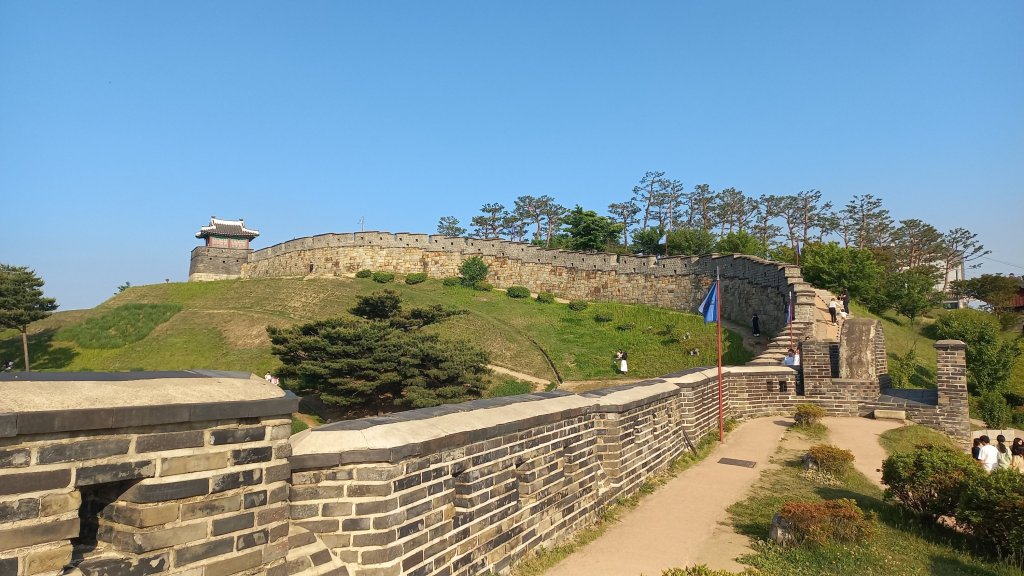
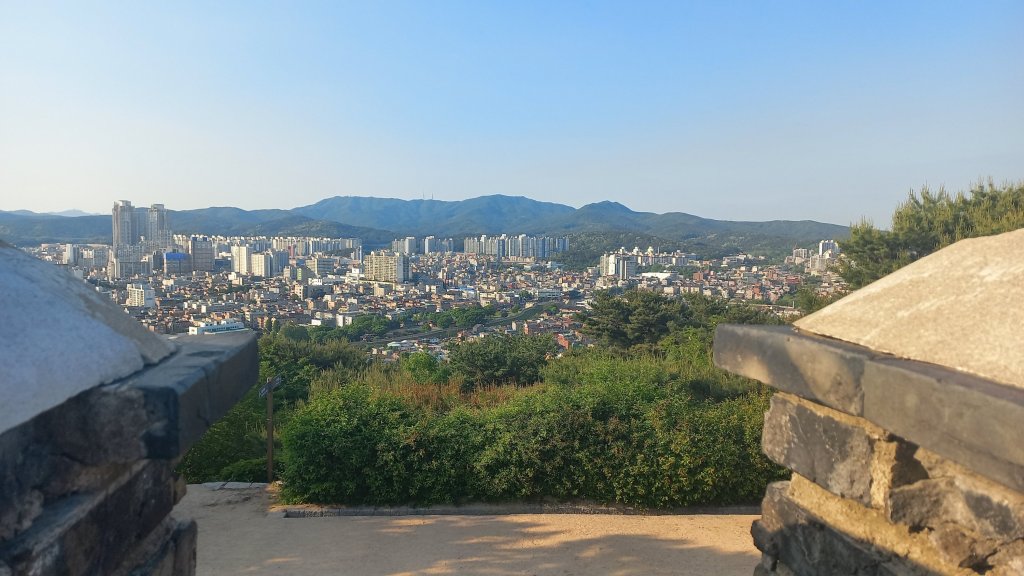
I am so happy that my gut led me to Suwon and all because of this fortress. Not only a place of historical importance, a sliver of history in the every day and an engineering feat, it has blended into the current modern landscape with beauty and functionality. I know the next time I go back to South Korea, I will need to walk the walls again, seeing views over Suwon from above and below and being able to see far away- space.
Until next time Suwon!
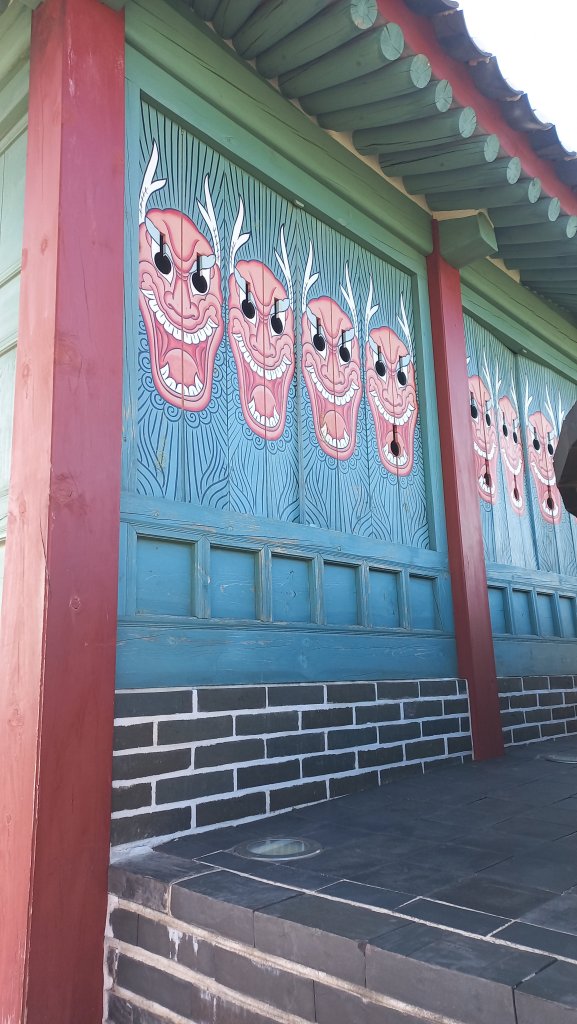

Suwoncheon



Leave a reply to Rebecca Cancel reply