It is inevitable that when you live in a different country, things are bound to go wrong sometimes. You just don’t know, the culture is different or you just didn’t know (I said that twice on purpose). To get through these times, you need some humour and a little bit of that ‘happy go lucky’ attitude.
Transport
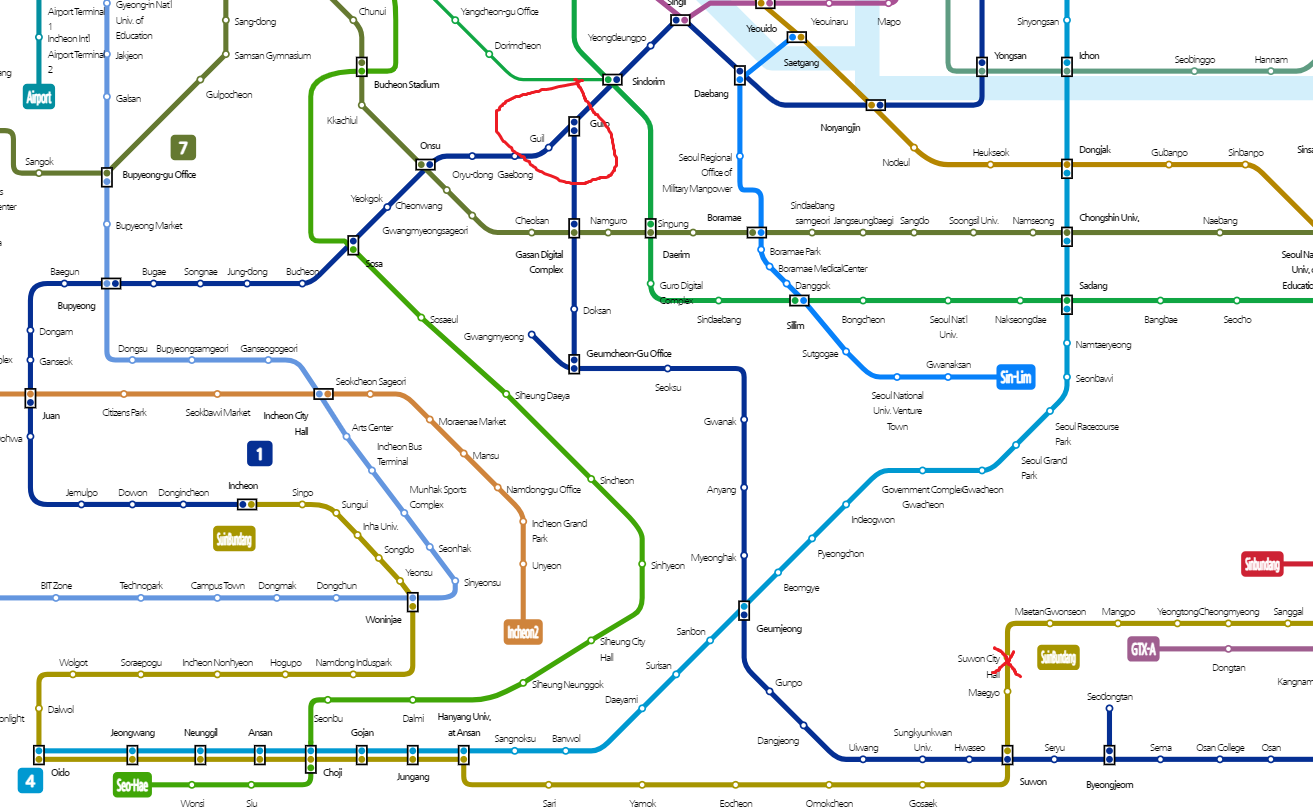
My first misadventure on public transport occurred very early on in my stay in South Korea. I was going back to my city (x marks the spot) after spending the day in Seoul and caught the metro back as I had caught there. It was simple, I just needed to take the dark blue line and then swap onto the olive line. Little did I know, that there are infact 2 routes on this dark blue line. You can see the fork where I circled on the map. So yes, I didn’t know that there were 2 end destinations on my line until after the fork in the tracks and found myself instead, en route to Incheon. It was an easy fix though, I just had to get off and change platforms and head back. Luckily, the metro I next took was going in the right direction towards home.
Food
I relied heavily on my own research and also recommendations from students about what foods to eat and try. I’m not that much of a fussy eater so am game to try everything. It was important to me to try as much as I could of the local foods that I could find. Some I liked and some I didn’t care for.
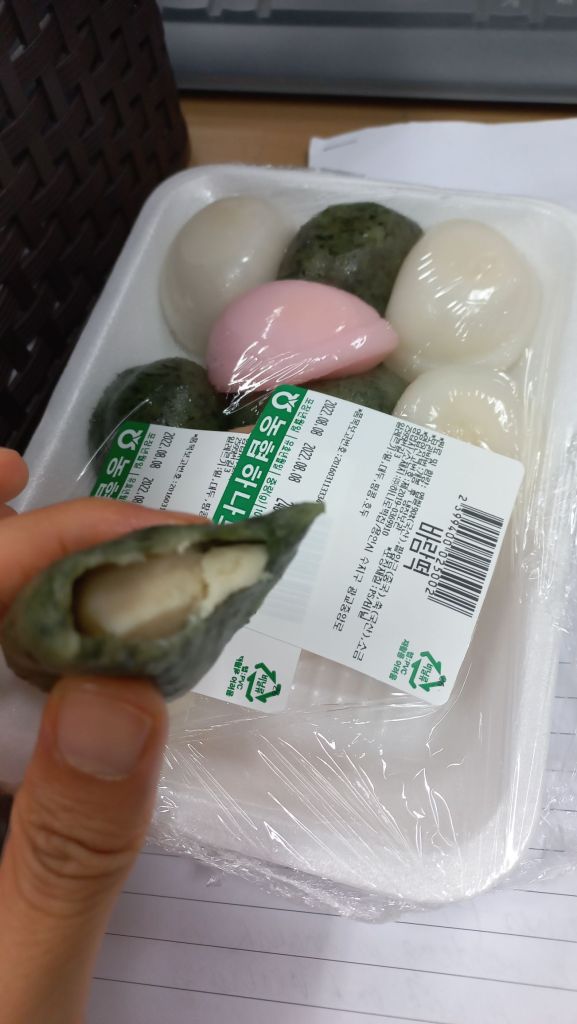
Songpyeon (rice cakes) is a traditionally eaten during Chuseok (Korean harvest moon festival) and I was so happy when I came across them at a local supermarket. I wanted to try them and I also wanted to try mugwort which is what this green one was. The outer is made of rice flour and it is usually filled with ground sesame seeds or in this case, mung bean. It was quite filling but I made the mistake of putting it in the fridge for the next day. The rice flour outer ended up toughening up and I only ended up eating the filling. The lesson here is to not put it in the fridge.
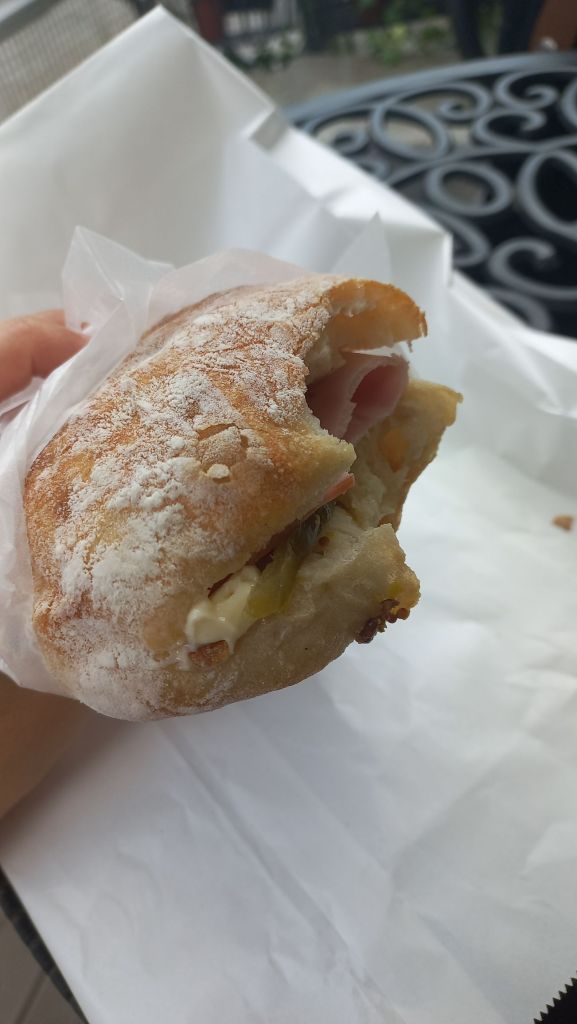
One food item that I missed quite quickly was bread. Sliced bread from the supermarket tended to be quite dry or were sweeter than usual (it’s a thing in South Korea). Bakeries tend to have cakes and from what I could tell, not make their own bread. I found 2 bakeries near my school and one of them had the best bread sandwiches except the filling. The filling was always the same. The butter was always in thick slices like you can see in the picture. It contained a slice of ham and jalapenos. I mean, it was still delicious but not my filling of choice.
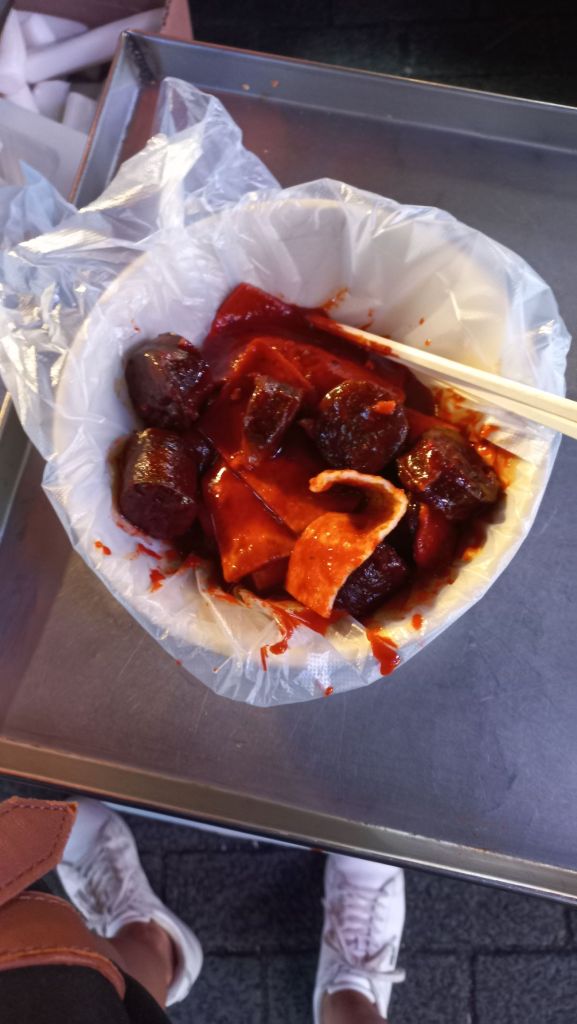
You’ll read everywhere that you need to try sundae when you come to South Korea. So tried, I did. Sundae is type of blood sausage and is a popular street food. You’ll find it being cooked with tteokbokki and fish cake in the street stalls. I love eating at these street stalls where you stand around, the store keepers are yelling out what they on offer and they are quick to serve you in assorted containers. I can’t say that I would choose to eat sundae again but it’s worth a try.
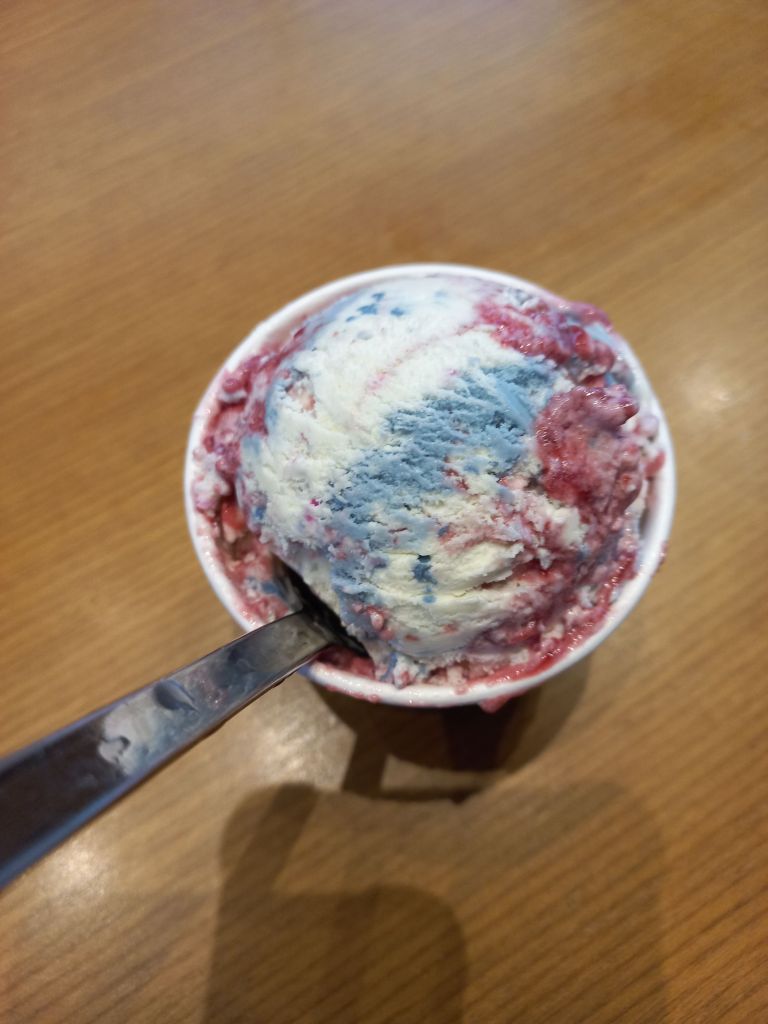
I don’t think I ate so much ice cream in my life until the year of living in South Korea. I seldom eat ice cream from a store and gelato is a lot more popular in Sydney. For some reason Baskin-Robbins is huge in South Korea so as you can imagine, there is such a range of flavours and some tailored towards the kids. My students kept telling me of this shooting star flavour which has popping candy in it. What a weird sensation and flavour combination it was but, I’d try it again.
Rubbish
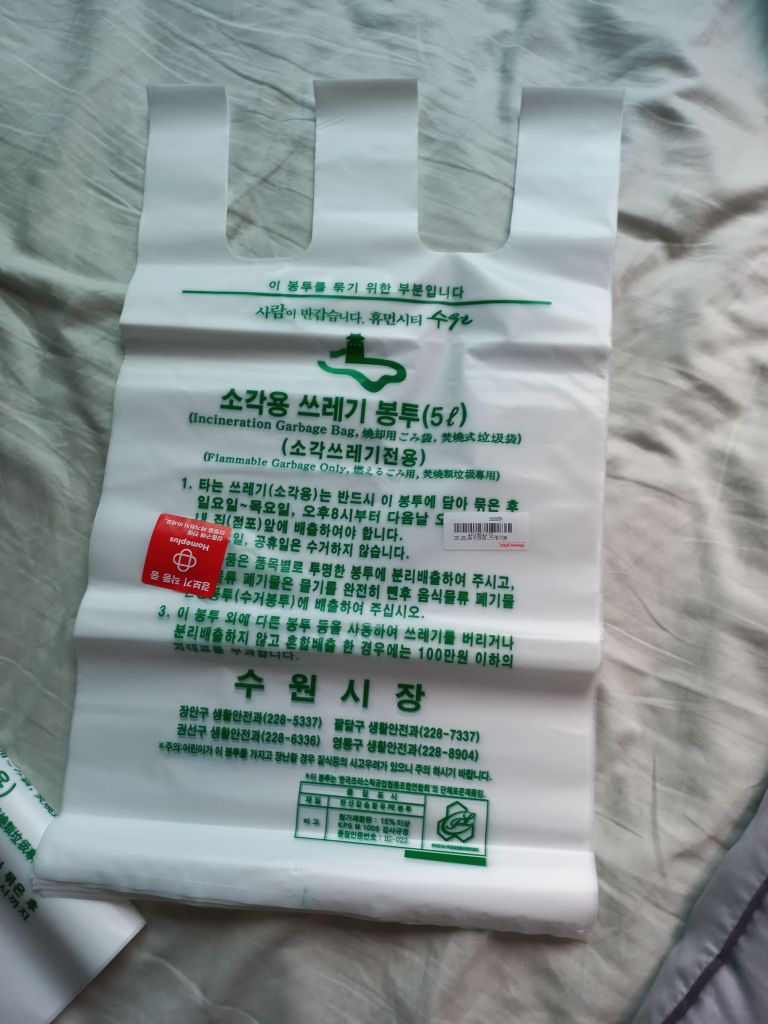
One of my first posts about living in South Korea was about the rubbish system. You can recycle almost everything and you have to buy these rubbish bags which are different in each town. You can buy them at convenience stores and some supermarkets sell them in packs. I once bought the cheapest option I could only to go home and realise it was cheap because it was the smallest size. It was 5L! But I discovered that this was actually an awesome size because food scraps get smelly quickly and it was better to fill one up quickly to chuck out.
My Apartment
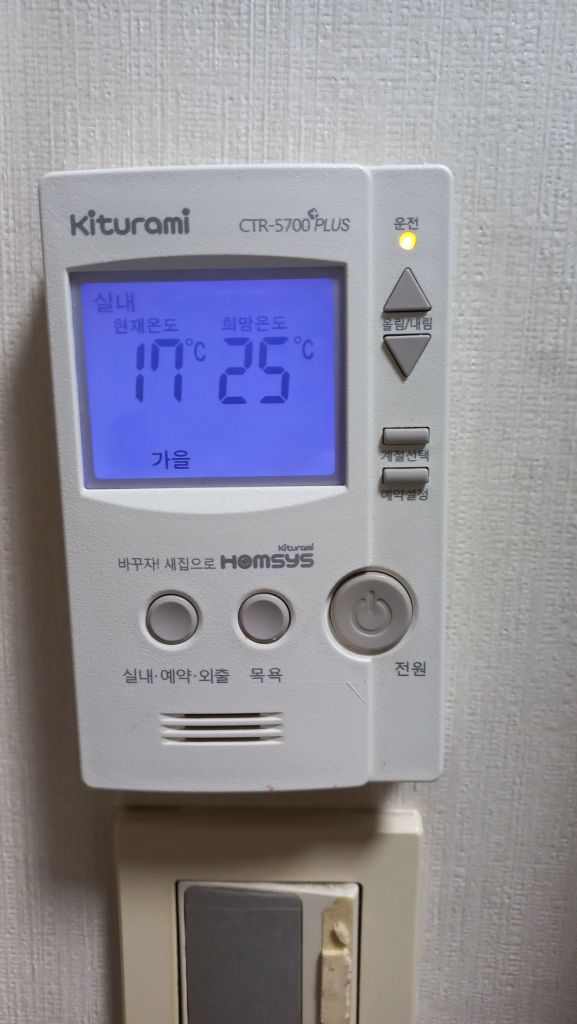
In Korean apartments, there is usually a control like the below which controls your hot water system and underfloor heating. Obviously, everything is in Korean. In the first few weeks of moving into my apartment, I woke up sweating wondering how it was so hot this early in the morning already. Upon going downstairs (loft apartment), I realised that my floor heaters were on! From then on, I made sure to always turn it off after showering. By winter, I had mastered my little heat controller to know where the hot water switch was and even how to set it for winter so my pipes didn’t freeze. I tried to set up the timer for the floor heating but didn’t manage to become an expert at it.





 Lingo in Transit
Leave a reply to Juliette Cancel reply