When someone recently asked me how long I have been in Korea for, I had to count as by now, I have lost track of all time. I can’t believe I’m in my 6th month here already! There is some truth then that time flies when you’re having fun.
Winter has officially started by the calendar but right now we are enjoying the end of the Autumn weather and landscapes. There has been the odd day where day temperatures have hovered around 10C but real winter weather has barely begun. The seasons change so quick here and it seems like it was eons ago that I sweating through sickening humid afternoons with my hand held fan. For the whole month of October, I barely spent my weekends in my home town and instead have been out and about getting to events and trying to see as much of the Autumn leaves as possible. I feel like I’m always running against time.
For the next month or so, I have no travel plans as I tentatively await the winter temperature hoping my Aussie ass will be ok. With the great differences in temperature in this country, it is then no surprise that some buildings aren’t that well equipped for winter. For example mine. The windows are 2 paned but still quite airy. Here, placing bubble wrap onto the window in winter is a thing. I’ve already got most of my window covered and am now trying to plug all the drafts that I can feel in my apartment.
My sister arrived in Korea in October to stay for a while and it’s been nice having family here and someone to do all these weekend trips with for a change.
I’ve loving the convenience of living here. How you can get pretty much anything you need quite easily and quickly. The food is great, affordable and there are no shortages of places to visit. Back home in Sydney, I could pretty much tell you all the major events that were happening in the city at any one time. Here, there is so much going on it’s hard to even remember (not to mention all the major events that are announced in Korean only).
I also like being able to easily get around without a car. Something unheard of back home. Public transport here is quite cheap with a single bus or metro ride costing under $2. I can get into Seoul for under $3 and it’s about 1 hour away.
One a sunny and pleasant Sunday morning, I agreed to go hiking with my sister. It seemed like half of Seoul had the same idea. The online information will tell you to take the metro to Gupabal but we decided to meet at the stop before at Yeonsinnae instead as we needed lockers. I spotted an ajumma (middled aged woman) selling freshly rolled gimbaps. I bought 2 from her. I had no idea what was inside them despite her attempts at trying to explain to me.
When they say that hiking is popular amongst Koreans, they were not overexaggerating. Every bus that we waited for to take us to the entry of the National park was FULL. And we saw about 4 buses that went past. We then decided to catch another bus that would drop us off 1km away from the entry of the park. 1km isn’t bad, so we thought. We were able to even sit on the bus.
Surprisingly, the demographic of the hikers were on the older side. Gosh, they are so fit. I admire their healthy hobby and determination.
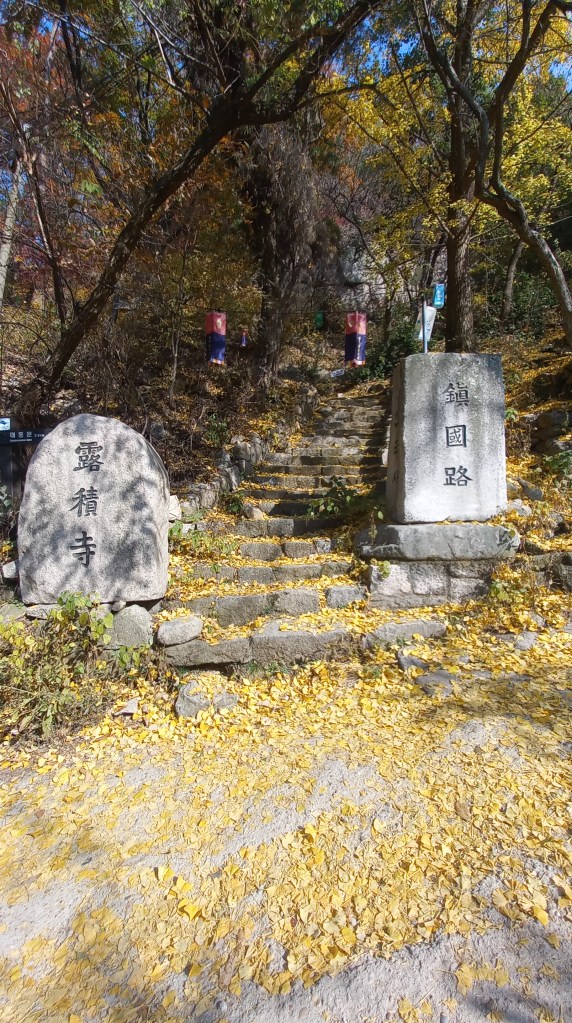
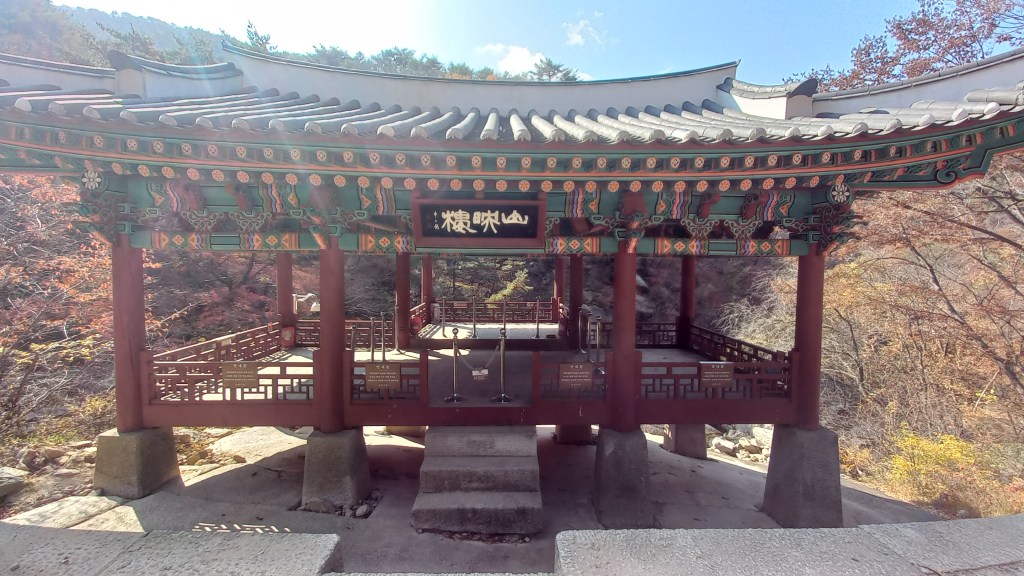
Once in the park, restaurants and hiking stores lined the entry path into the park. There are plenty of signs and plenty of people to follow into and up the national park. Along the way, we were treated to beautiful untouched autumn scenery. There are temples scattered throughout on the ascent. Although we didn’t go into any, the gateway and stairs to the temples were beautiful to walk past.
There were plenty of natural rocks and river edges to stop at. It seemed that many families and groups of hikers had packed plenty of food to enjoy a small picnic along the way.
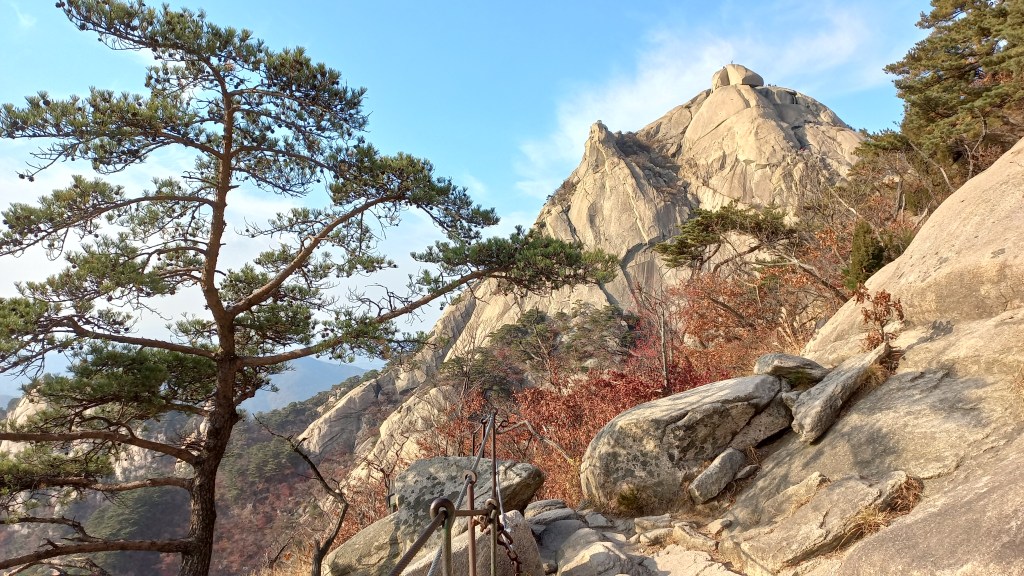
By this stage, we had just steadily gone up wooden steps built within the park and walked uphill. We had been walking for about maybe 2.5-3 hours to get here. It wasn’t until we reached the actual mountain that things got slightly harder. Bless my sister for preparing some gloves for us. The terrain turned from dirt, steps and leaves to now large rock formations. They have been carved and smoothed by all the hiking shoes and were very slippery. These wires have been installed along the area to help hikers pull themselves up and hold onto. I can say that they offered little help when doing back down.
The peak we wanted to reach. All the queues up and along the mountain are people!
Once we got to the 180 45 degree ascent to the peak, there was a human traffic jam of sorts. By this stage, it felt like we were climbing 180 degrees. The wires continued all the way up to the peak. Some of the rocks seem to have a foot ledge carved into the rock to help but by this stage, I was relying on the wire, arm strength and crawling on all 4’s to get me up to the top.
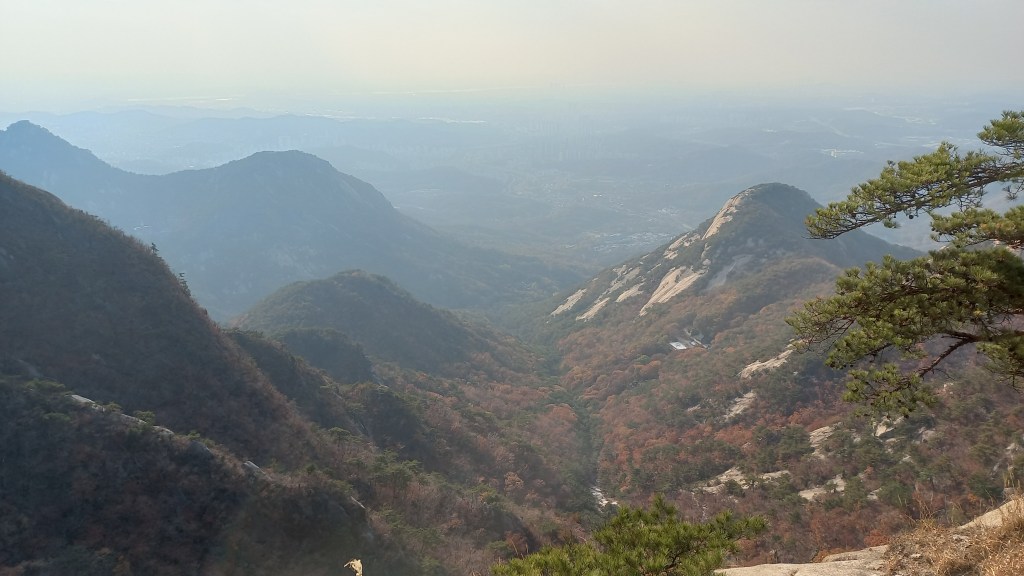
The view from the peak
The view from the peak was….ok. I believe this was definitely not about the destination but the journey. We sat at the top to rest, take in the view and have some more snacks to prepare ourselves for the 180 degree descent.
A view that looks like a painting
On our way back, there were noticeable less people. I’m not sure whether it was because people generally go up and down before 2pm, turned back before the peak or they all went down a different way back. Luckily there were still a few people around to follow. Along the track back, we spent some of our time going along a different track from the one that we had taken up. Perhaps we were wrong the first time. We just kept following others who seemed to know the way. It was late afternoon by this stage and we had to hurry to make sure we were down before sun light was completely gone.
In total, it took us about 7 hours to reach the peak and come back. We did stop many times for breaks, to catch our breath and to take pictures. We stopped for dinner at one of the restaurants at the entry of the park and had ourselves a nice big meal complete with bulgogi (stir fried meat), pajeon (pancake, we went with the seafood option) and makgeolli (rice based alcoholic drink which is infamous as a hiking drink). It was pretty much pitch black by now.
Gyeongju is located 2.5 hours southeast from Seoul via the KTX (express train). It’s the city that use to be the capital of the Silla Kingdom in 57 BC – 935 AD. Today, Gyeongju is a small town that attracts both local and international visitors. The city doesn’t have the skyscrapers or tall apartment complexes of Seoul so it has a very small town and authentic feel to it. The city’s cultural buildings, tombs and surrounding mountains offers a nice place to spend a handful of days. Whilst having a car would mean more ease at seeing sights out of the town, it is still do-able relying on public transport.
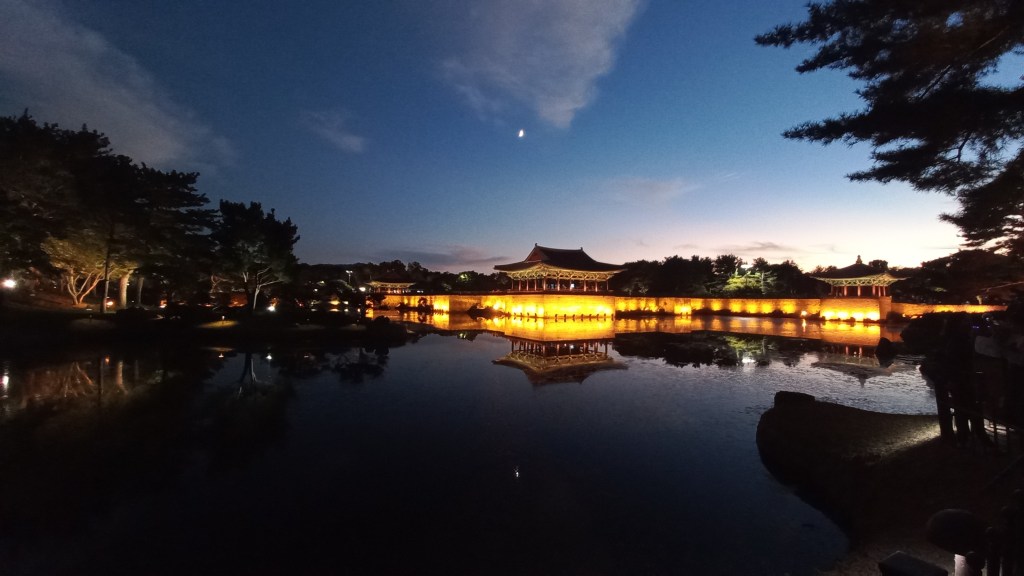
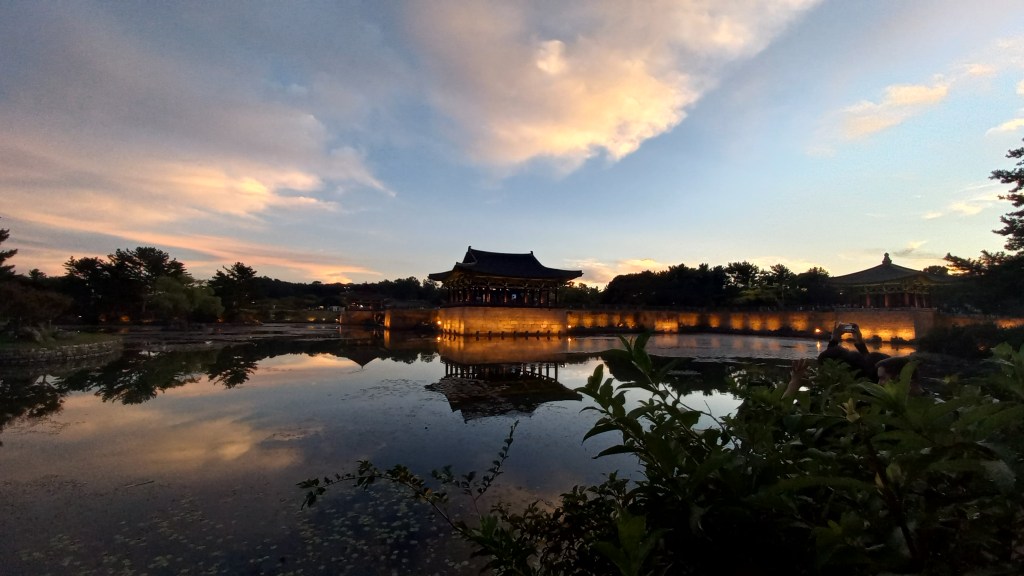
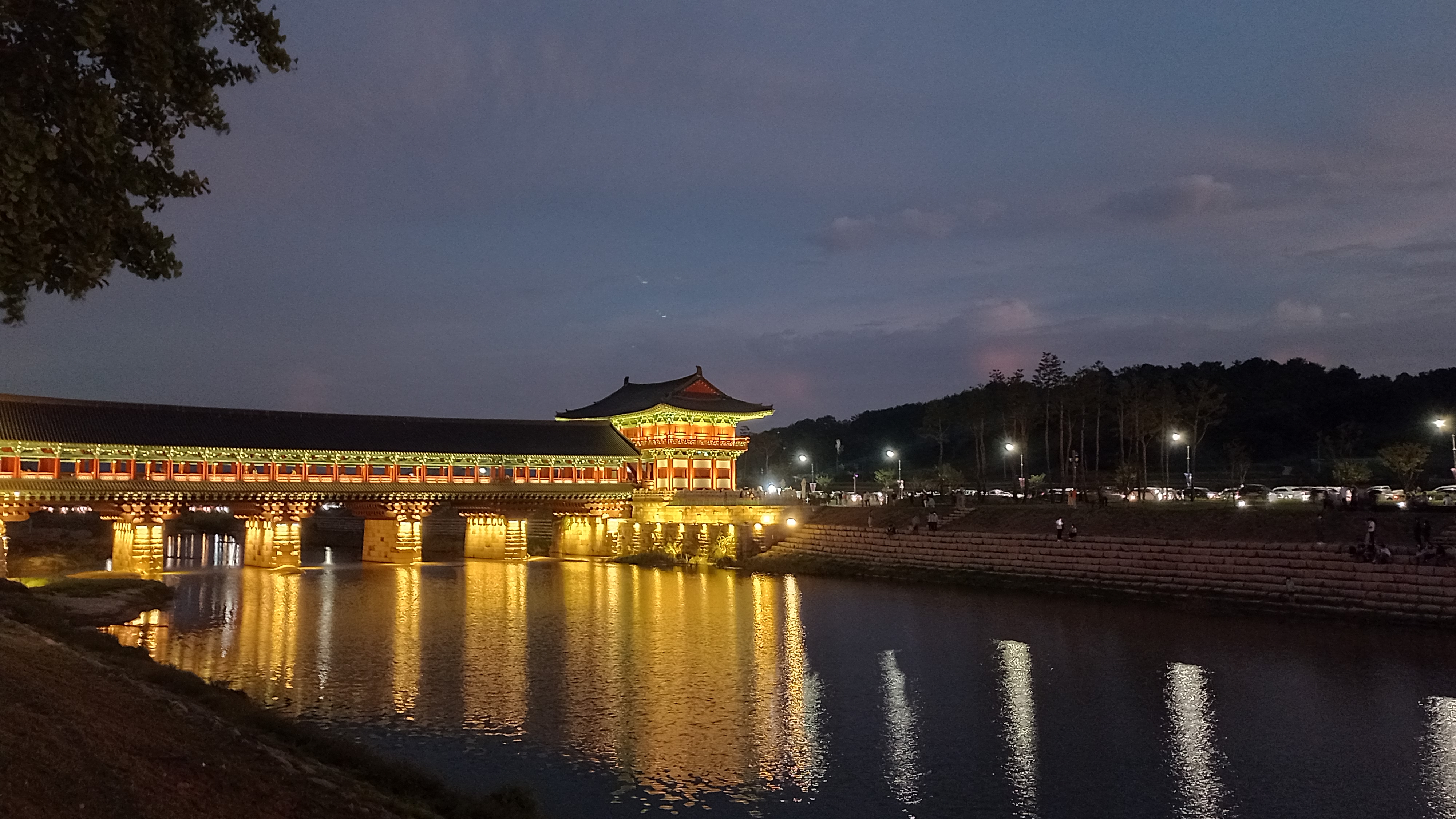
Donggung Palace and Wolji Pond Arguably one of the places to visit when you’re here is the Donggung Palace and Wolji Pond. It costs about $3 to enter but you can stay as long as you want. The grounds are not very big but it’s a impressive palace once used for banquets by King Munmu and the pond makes it a very picturesque place. I would recommend to go around sunset when the lights come on. There will be many people but there are walking paths and different points to stop at and take pictures. People generally move on after taking their pictures. There is a bathroom and a small gift store inside too.
Royal Tombs
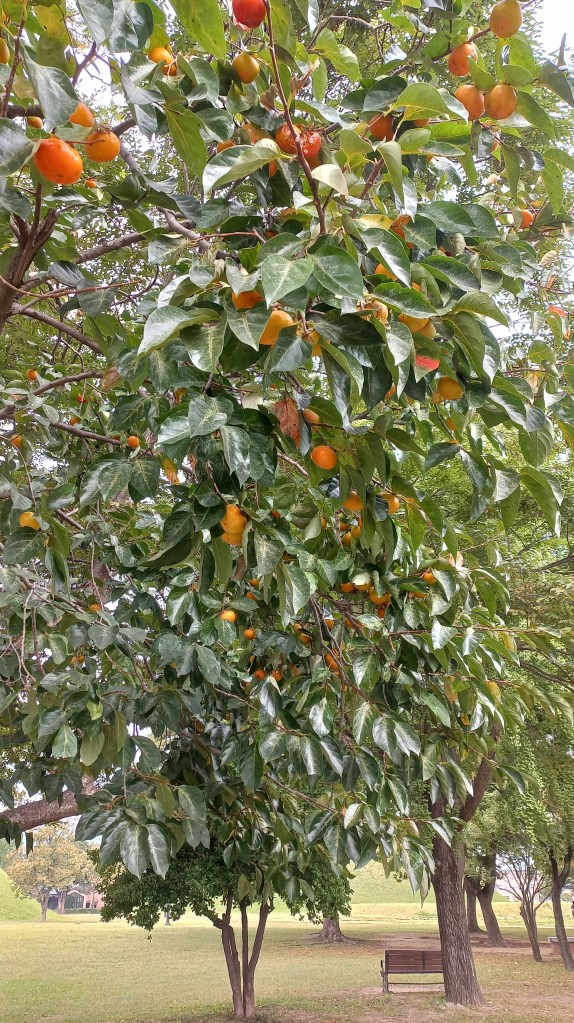
As you walk around town, you will come across a few hills. These are actually royal tombs. One tomb has been excavated and is open to the public- the Daereungwon Tomb Complex. It’s not very big and easy to spend about 1 hr within the grounds. There are benches to sit and take in the beautiful and different scenery. At the time I went, persimmon trees were in full bloom and I think quince trees too.
My favourite tombs are the ones across the road from the Daereungwon Tomb Complex- Bonghwangdae. Nature has taken over here and there are trees growing out from the tops of the hill.
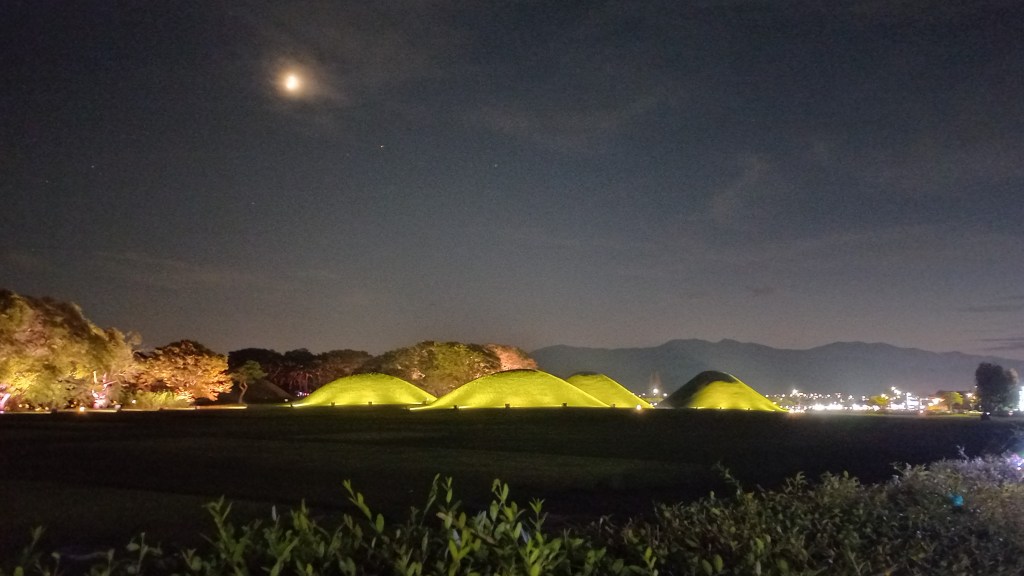
At night, the tombs in the Gyerim Forest are lit up which was an interesting nightscape to see. While you are here, be sure to also see the Cheomseongdae. It is an observatory built in the 7th century during the Silla Kingdom and is the oldest surviving astronomical observatory in Asia. There were many people walking in the Forest which also seemed to be a popular spot for kids.
Persimmon Tree
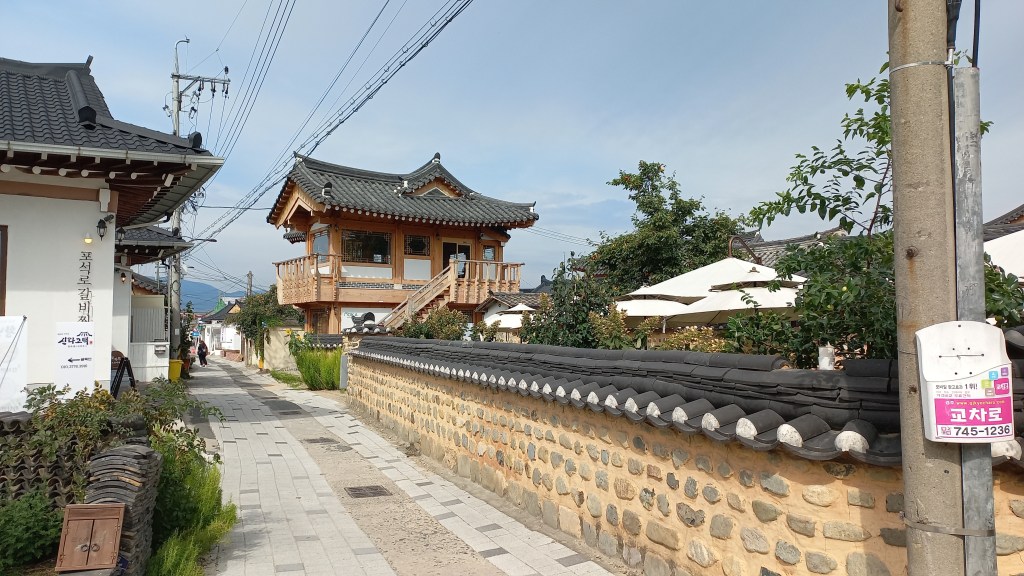
Hwangnidan-gil
Hwangidan-gil is a popular street which is a newly built modern hanok village with cafes, restaurants and small stores. This is THE area it seems to find a place to rest and eat. During my trip, I did not eat here at all as many places were completely filled and also had lines waiting outside. It’s a lively area however to wonder in and get lost in the winding streets. A popular street stall on this street is the 10-won bread which is more of a waffle with cheese inside. You won’t miss it, just look for the line and follow your nose! There are a few of these won bread stores around town so you’ll surely come across it.
Wall mural of the town
Traditional Korean Lunch
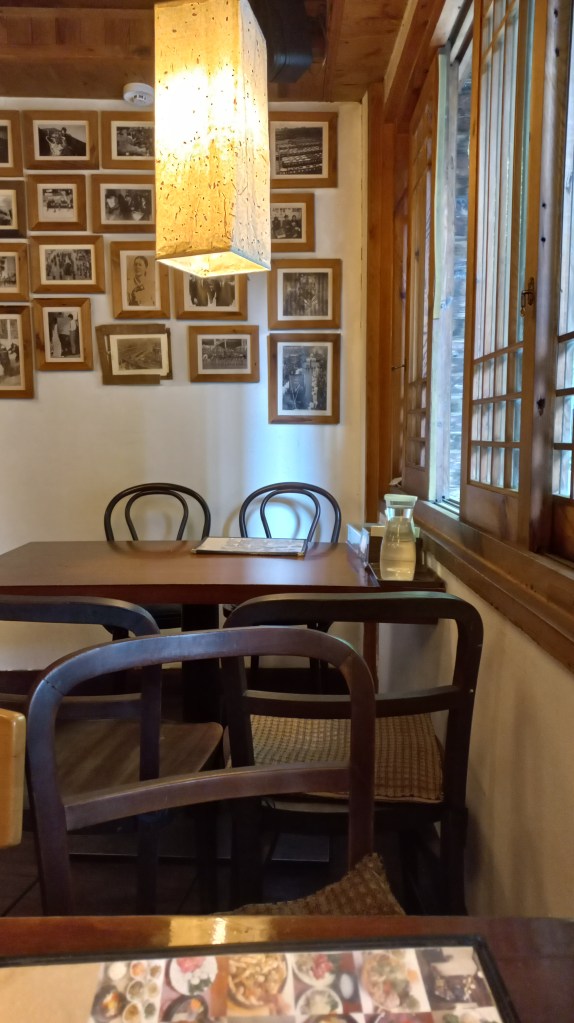
A friend joined me for lunch and the rest of the day. This was my first time having a traditional Korean lunch. It is definitely a must do in Korea! Make sure you are go on a very empty stomach because the amount of food served despite some dishes being quite small, is very filling! To my dismay, we were first served entree which consisted of some side dishes and porridge. Then the mains came out (the above picture). There was a mix of cold seafood salads, raw crab, siberian spring onion, honey covered walnuts, mackerel, sweet potato mash, bulgogi and seaweed soup. My favourite of the day was actually dotori-muk- acorn jelly! For dessert, we were served half a cold persimmon and a health tea.
Lanterns inside the Bulguksa Temple
Bulguksa Temple
The main reason why I wanted to visit Gyeongju was because of the Bulguksa Temple. It is a UNESCO heritage listed site and is located out of town in the Gyeongju National Park. The original temple built on this sight was in 528 but has since been rebuilt and reconstructed due to all the wars and a fire. When I came, there was a concert and a scaffold stage across the main building so I didn’t take any pictures. I was actually surprised how small the front of the main building looked- it looks so much bigger in all the pictures that I had seen.
The temple area is not that big and I had seen everything within 1 hour. On this particular trip, I also wanted to visit Seokguram Grotto which is a Buddhist sculpture located inside a cave but it is located about 4 kilometres from the Bulguksa Temple and I was not sure I would reach it and finish at the site before it closed for the day. Sadly, I didn’t get to visit it.
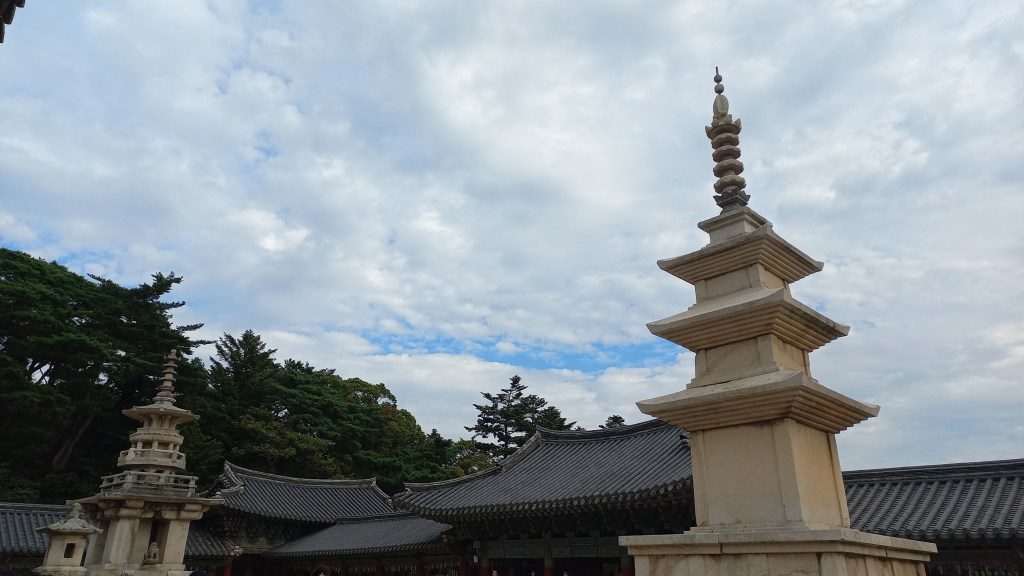
Dabotap and Seokgatap stone pagodas
Woljeonggyo Bridge
The last place I wanted to see was the Woljeonggyo Bridge. I had seen pictures of it and thought that it looked beautiful especially at night. The pictures did not do it justice. The view from the bridge was equally as beautiful of the mountains. It’s funny, the more time I spend amongst mountains here, the more I love them. They look like I’m staring at a painting. The beauty of nature cannot be beaten.
The bridge can be crossed on the inside and plenty of seats if you would prefer to sit inside. Further town the lake, there are concrete slabs that you can cross which is a popular activity and one that I very much enjoyed.
Nearby is the Gyeongju Gyochon Traditional Village, which is quite small with some cafes and a handful of restaurants. There isn’t much here but nice to pass by if you’re in the area.
With that, it concluded my long weekend here. I loved being surrounded by the mountains, space and quieter city. It’s a beautiful town for a nature getaway and also a city of great cultural importance. I hope it makes it onto your list.
How to get there: Take a KTX to Singgyeongju Station. Take a local bus into town (~30 minutes).
“Books took me to places I could never go otherwise. They shared the confessions of people I’d never met and lives I’d never witnessed. The emotions I could never feel, and the events I hadn’t experienced could all be found in those volumes.”
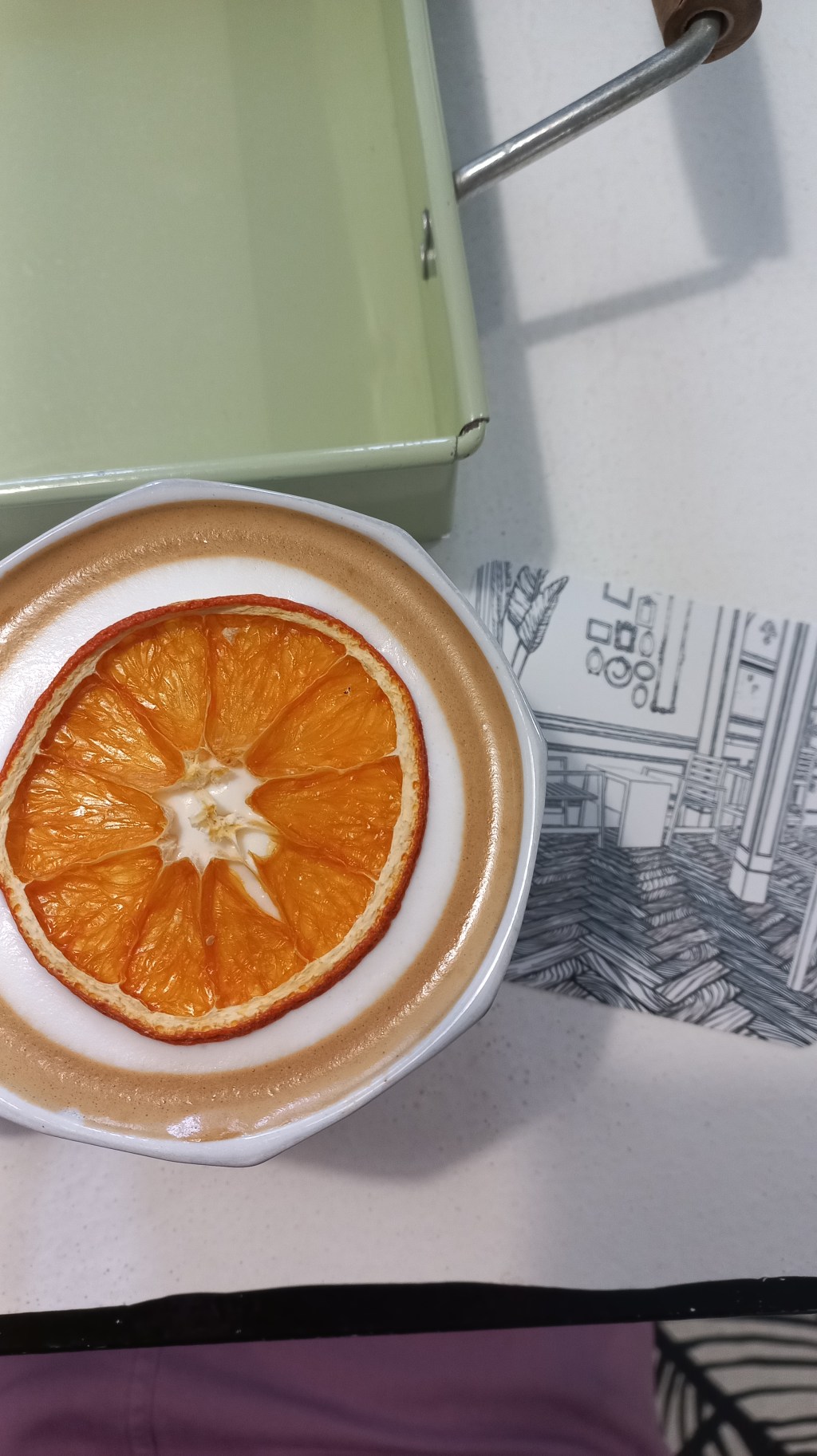
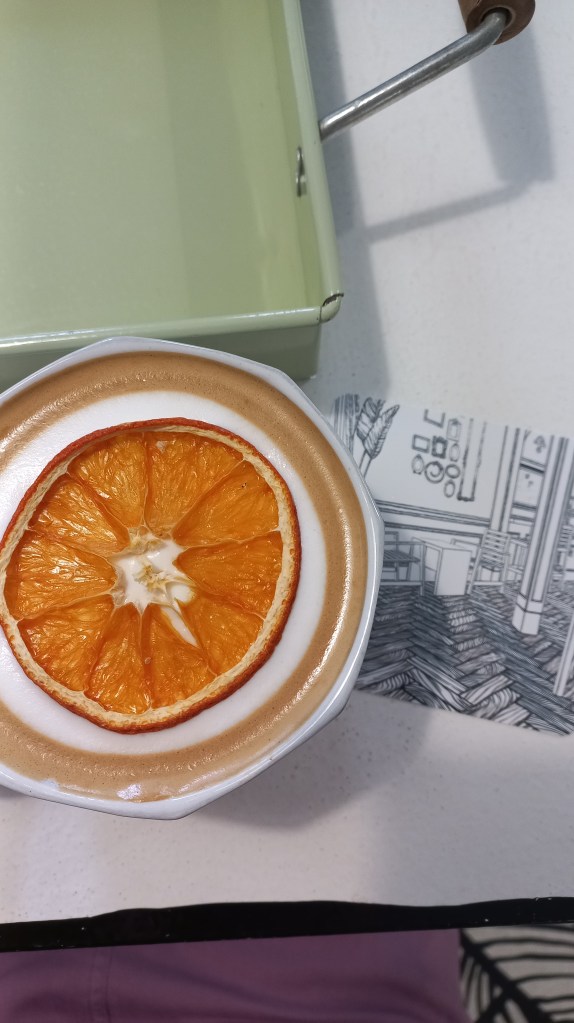
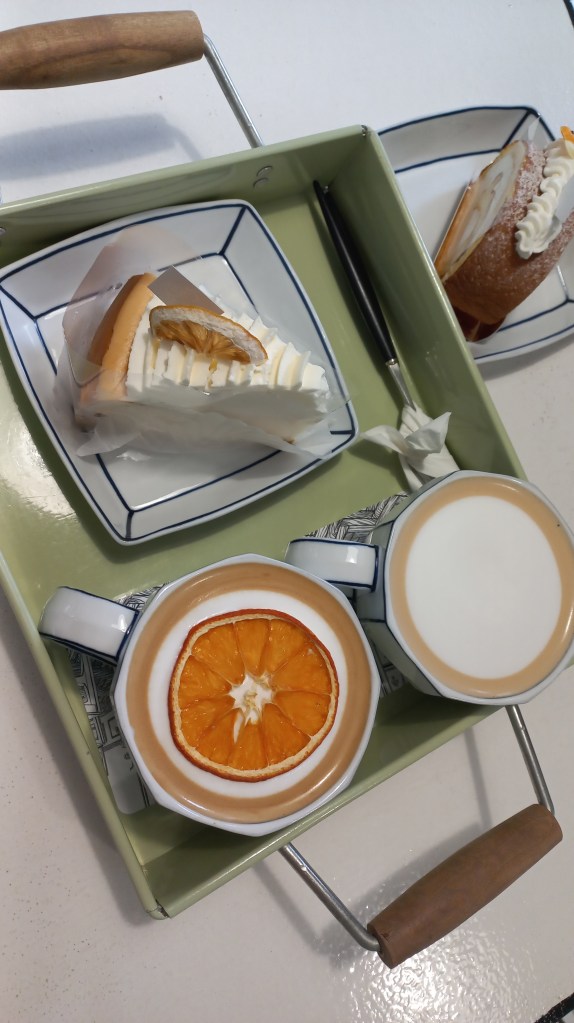
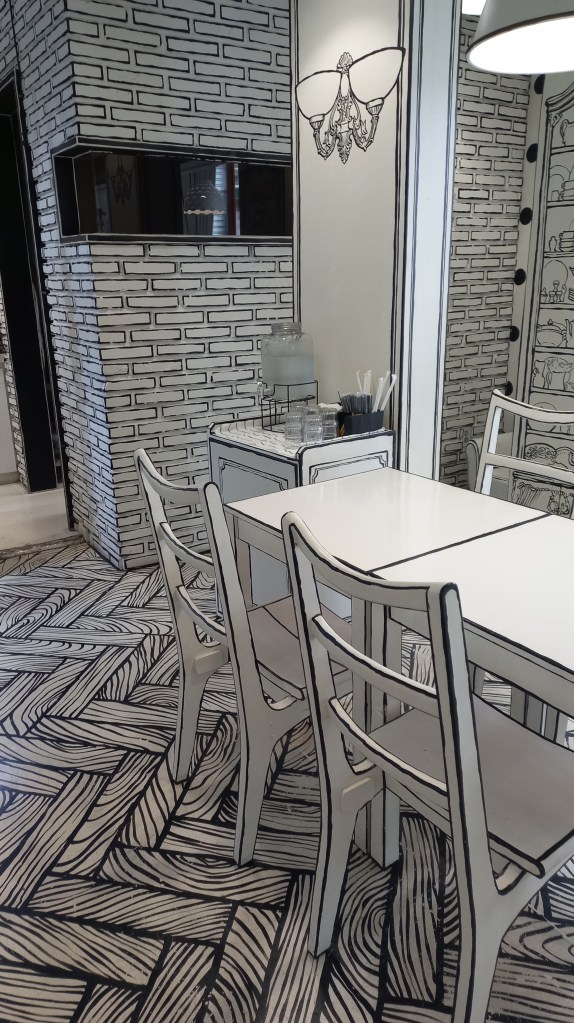
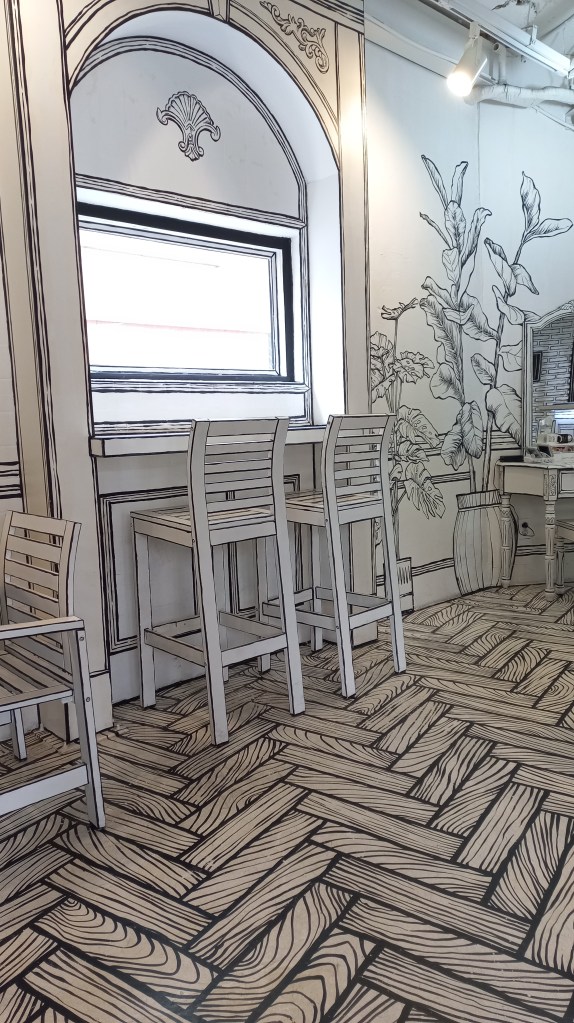
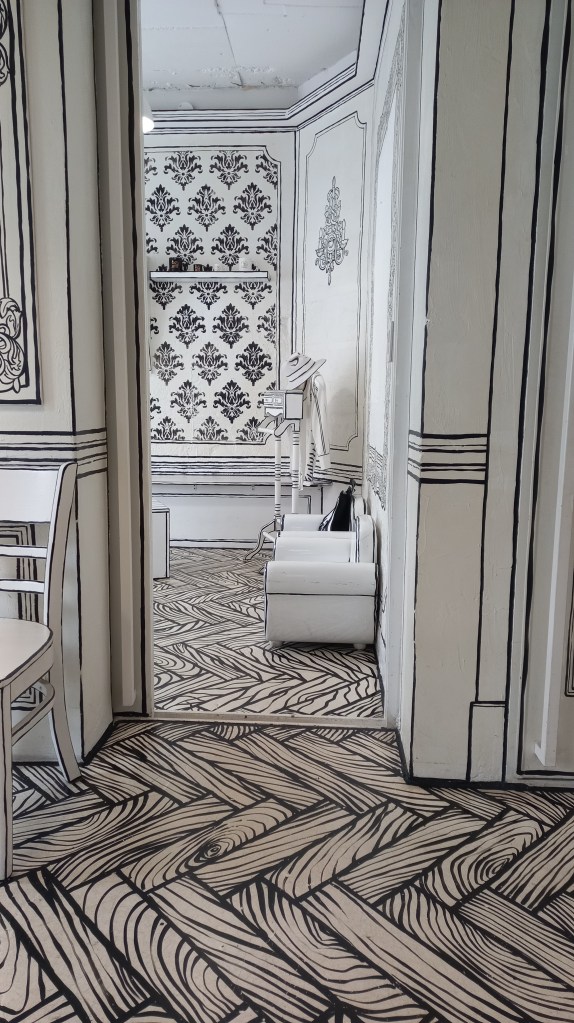
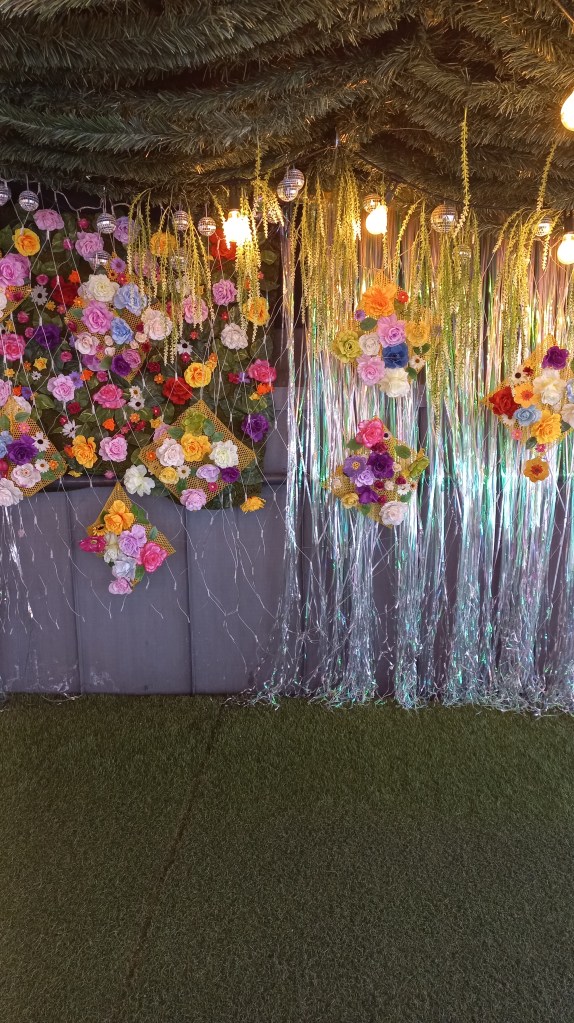
Coffee and cafe culture is huge in Korea. There are so many cafes everywhere and most of them if not all are aesthetic in one way or another. One cafe however, is not like the others and that is the Greem Cafe. The concept of this cafe is 2D. So everything in the cafe pretty much follows this theme from the floor, chairs and plates. It makes for an interesting and fun experience while being able to also get some cool photos.
Another thing about cafes, particularly the popular ones, avoid during weekends! There will be lines and a maybe even a long wait. It is best to try and go on a weekday if you can.
I went on a weekday during the school holiday and arrived quite soon after it opened. As you can probably tell from my pictures (lack of wide view pictures), there were already a few people there. The cafe serves mostly drinks and cafe although there was 1 type of sandwich on offer. It was a very cool cafe but due to the popularity of the place, probably not one that I would go back to.
Address: Seoul, Mapo-gu, Seongmisan-ro, 161-10 카페 1.5층
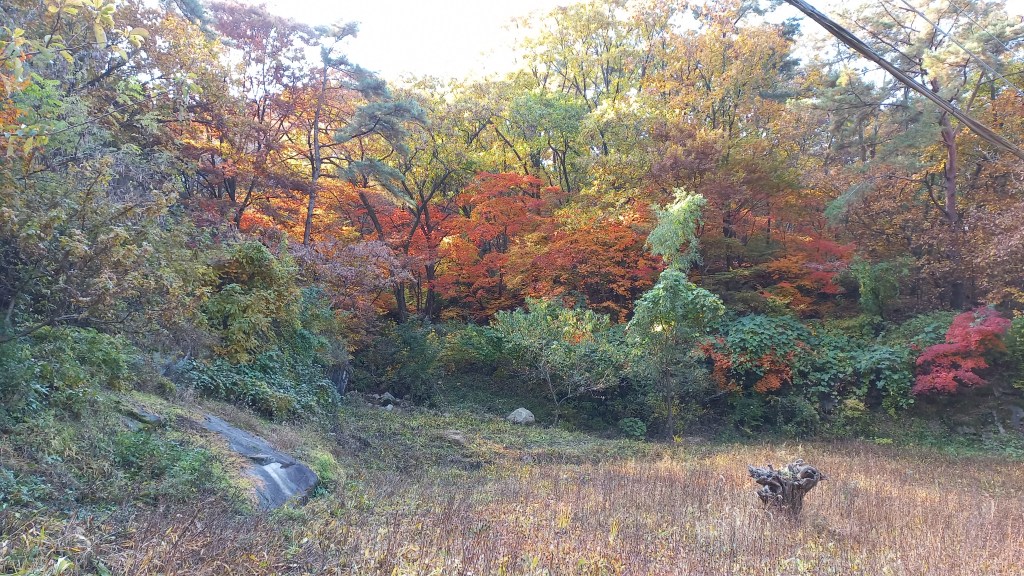
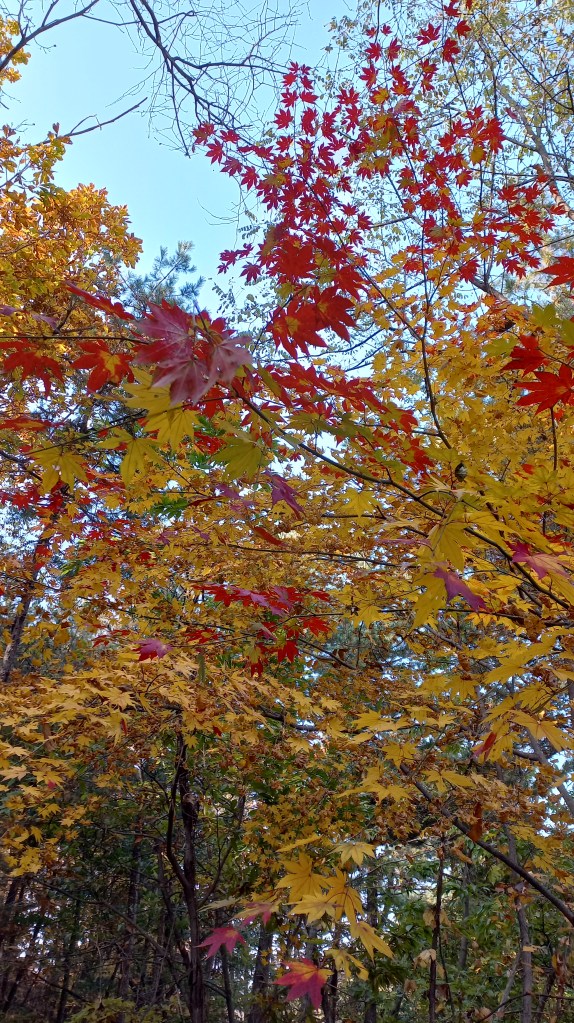
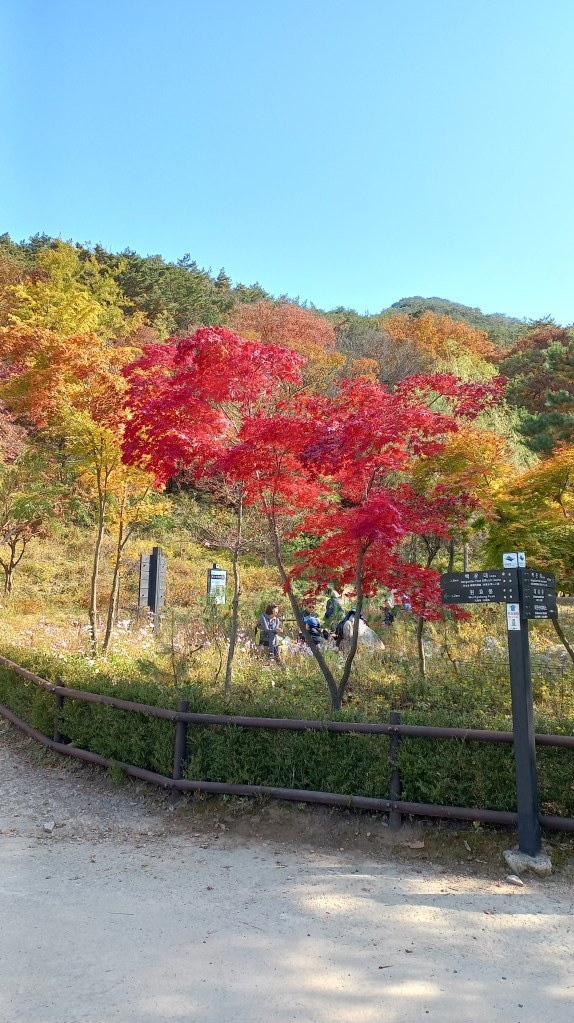
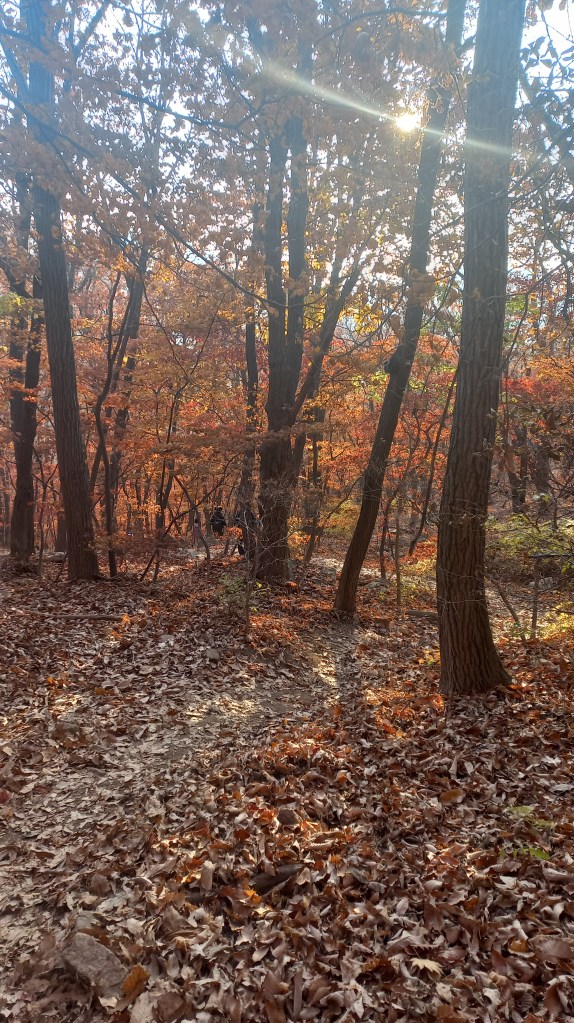
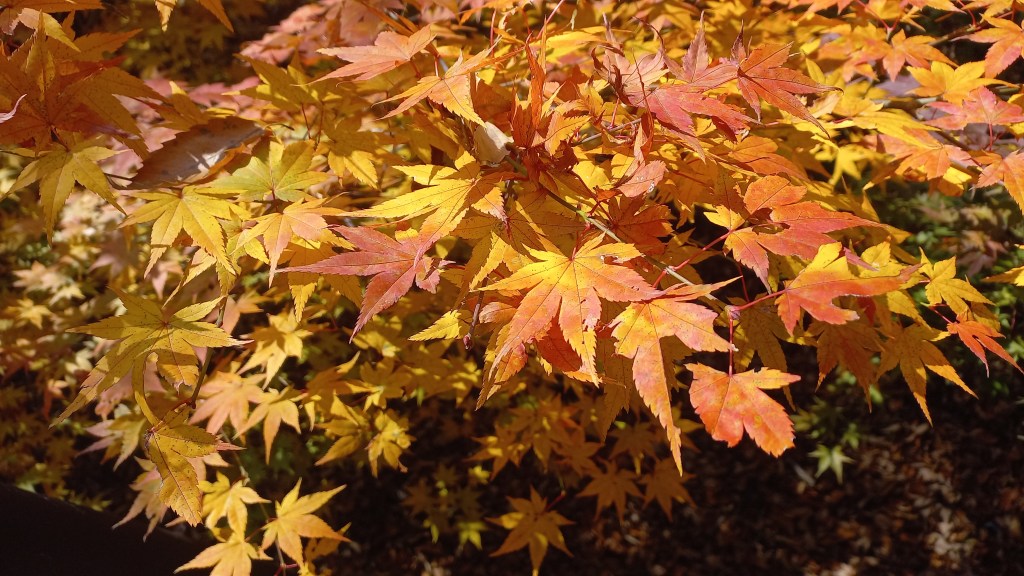
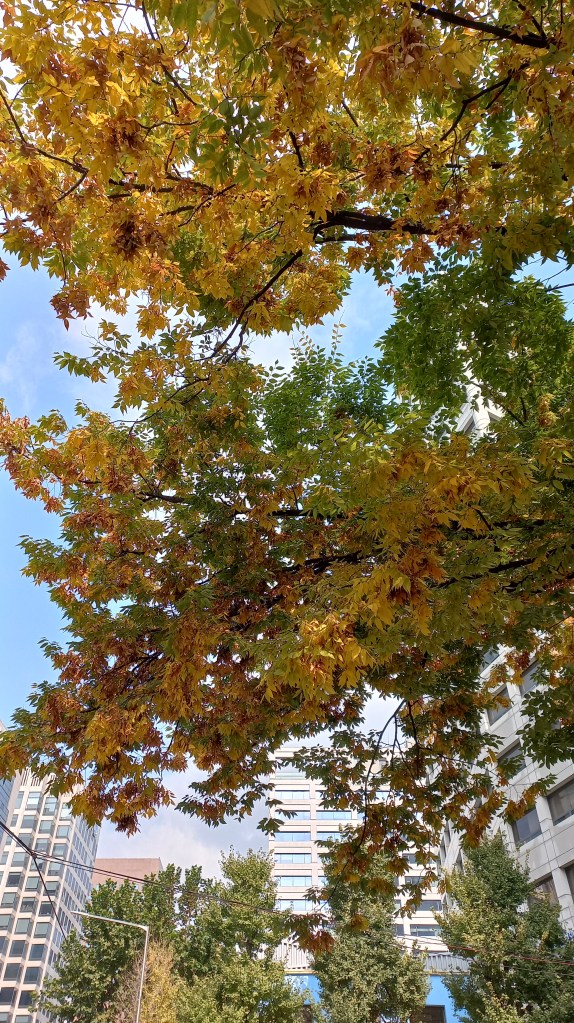
Autumn is here and in full swing. I think this is the first time I’m living somewhere where there is such autumn scenery everywhere. Back home, we don’t have many deciduous trees. South Korea is a lush and mountainous country and at the moment, the country’s landscape is a wash of reds, orange and yellows.
We have a few more weeks whilst the change in colours moves from the north of the country down south. We’ve had clear blue skies and some very crispy weather which has meant it is perfect to be outside.
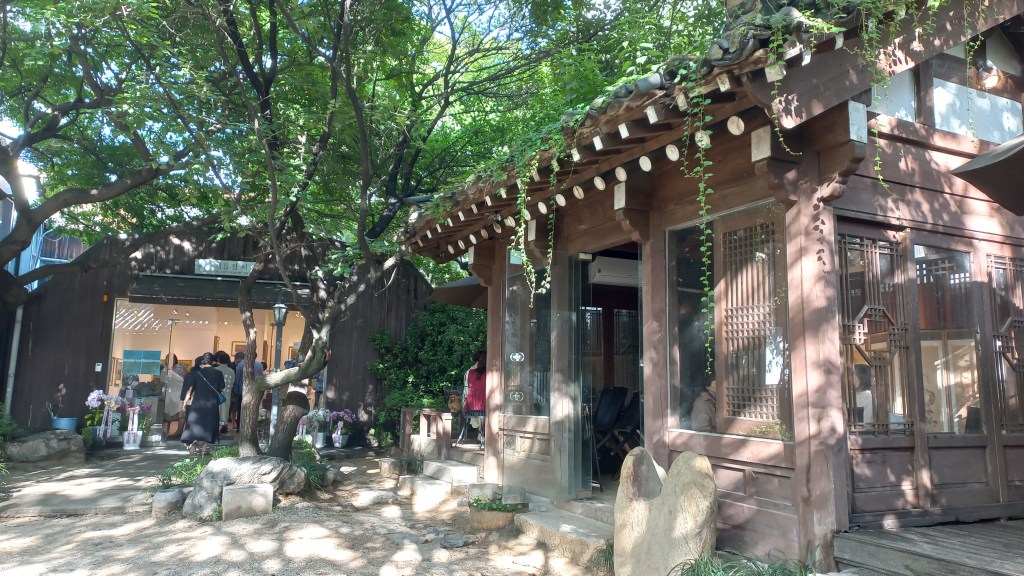
One of my favourite neighbourhoods in Seoul so far is Insadong. Located just about right in the middle of Seoul, this area contains traditional teahouses, crafts and craft products. This area also contains over 100 galleries and is one of the oldest culturally important areas of Seoul. This area use to be the point of antique trading when the Japanese occupation began and today has morphed into an area where art from past and present reside.
It’s sure to be on your list of things to do as it’s a very popular tourist spot for all those souvenirs. The plus side is that there are pottery and art supply stores here for that something different.
Kyung-In Museum of Fine Art
An alley way in Insadong
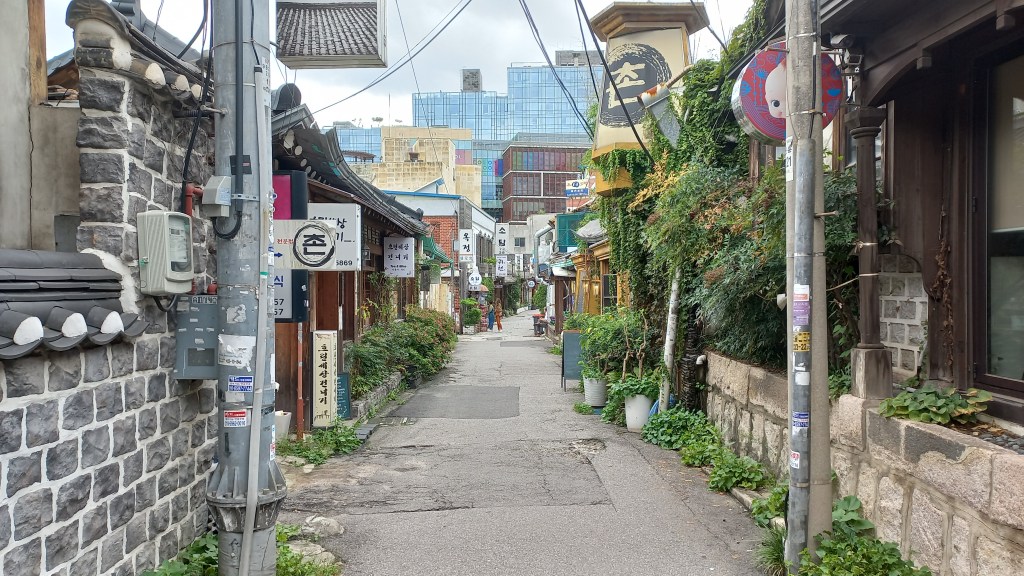
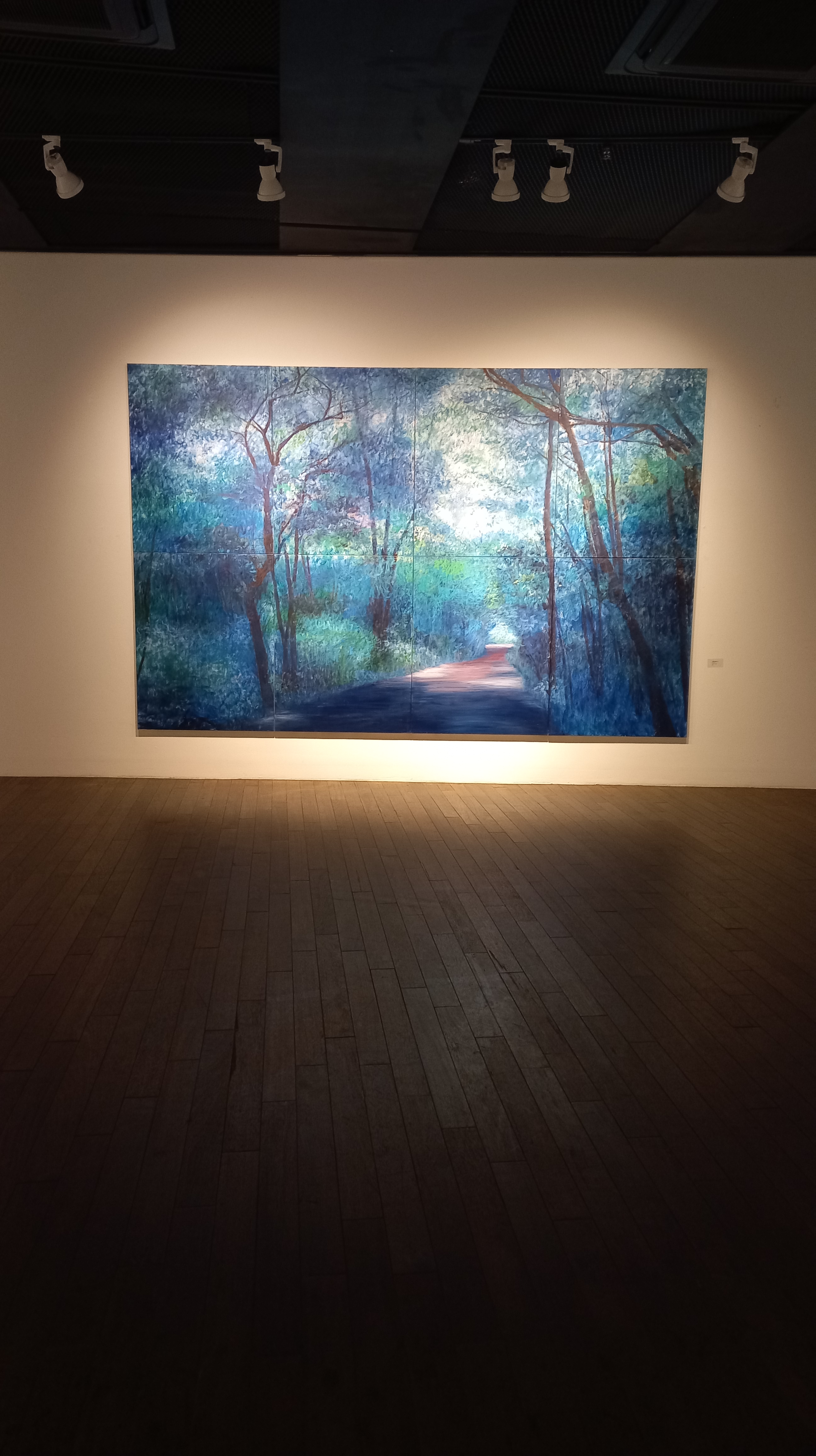
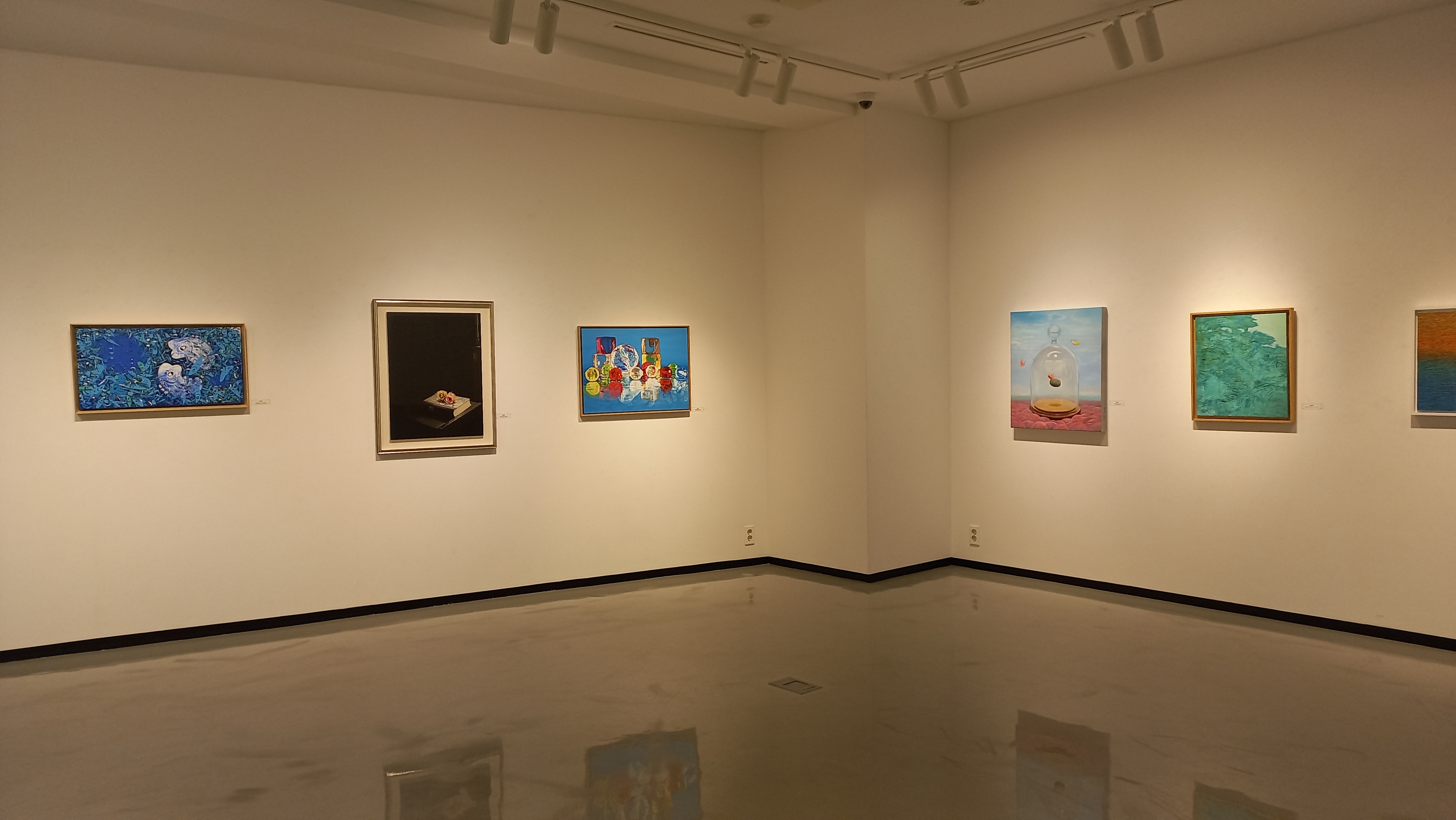
Getting lost in the traditional alleyways was a pleasure. Many restaurants are closed in the late afternoon so they can prepare for dinner. I came across this alleyway (got lost!) looking for the entrance to the Kyung-In Museum of Fine Art. I passed many beautiful tea houses which I have yet to stop at.
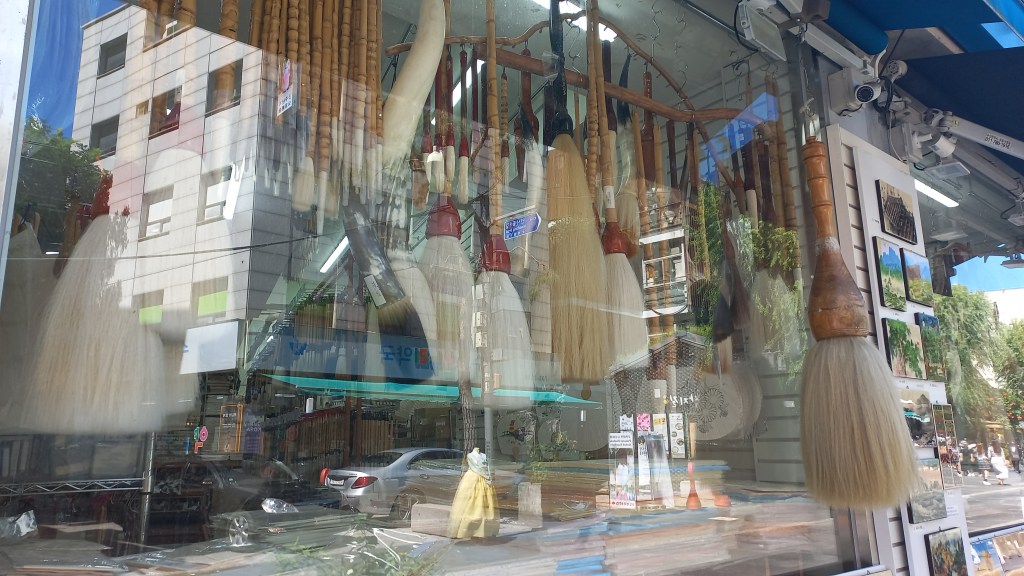
Calligraphy store
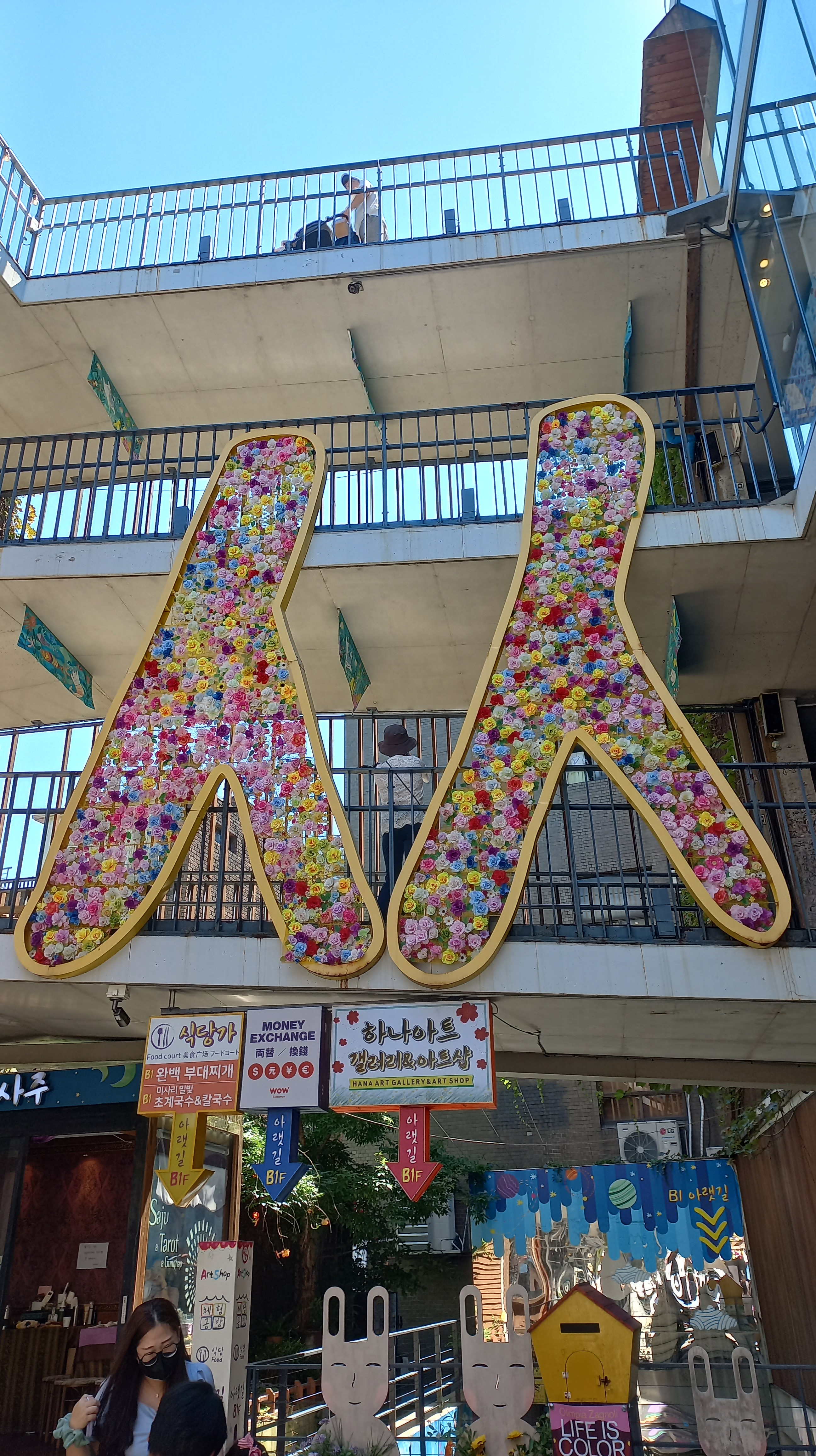
As you walk down the main strip, you’ll come across an outdoor mall called Ssamzie-gil. It won’t be hard to miss with greenery covering the walls on the outside. Inside, there are 4 storeys of craft stores to visit or stick you head into winding it’s way up to a small food court and look out. The staircases are covered in art as well.
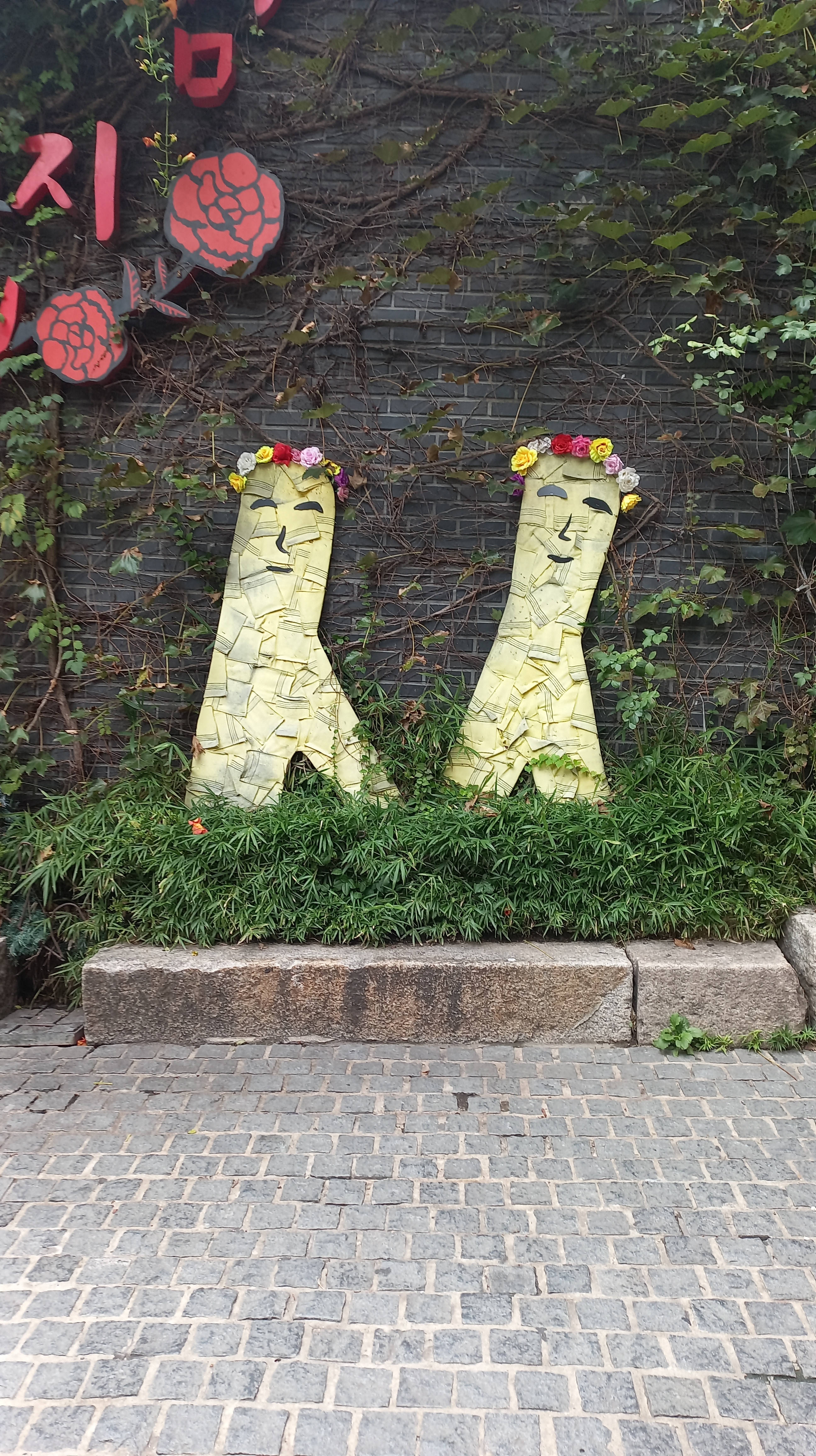
Photo op area in Ssamzie-gil
Having dinner in one of the restaurants in a hanok
How to get there: Closest metro stops are Jonggak, Anguk or Jongno 3-ga.
One of the places that frequently comes on the ‘must visit’ list in Busan is Jagalchi Market. Now, I’m wary. These ‘must see’ places tend to be targeted at tourists and I am sure this is the same due to the lack of locals inside. Still, where else can you get very fresh seafood and cooked for you?
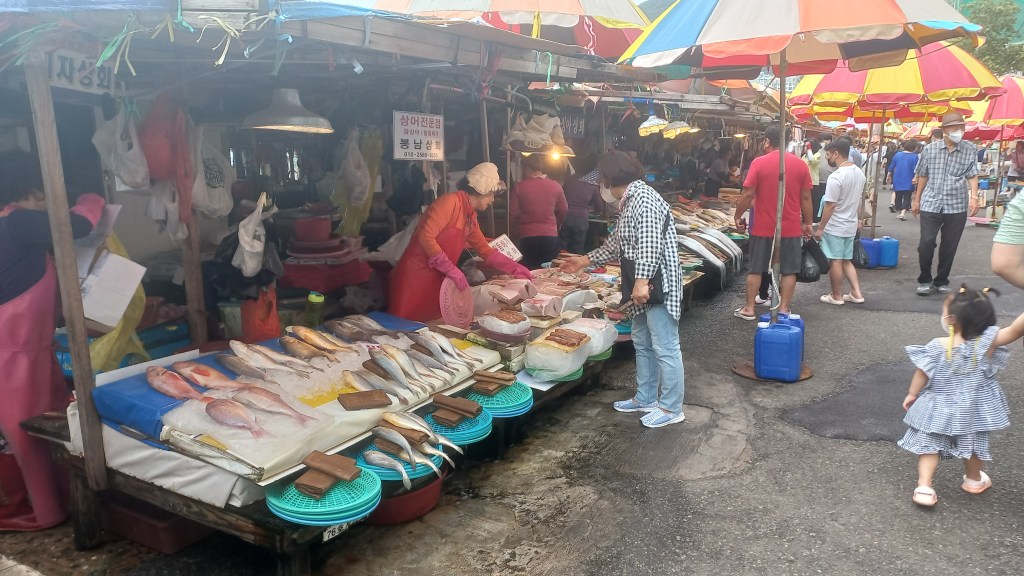
Jagalchi Market is reachable by metro, closest stop being Jagalchi. It is only a short walk from the metro station and inside, you will be greeted with rows of seafood vendors. I walked around and saw that many of them were selling the same types of seafood. There were of course, no prices displayed. My mind next jumped to being ripped off if they knew you were a tourist. You can haggle at the market but I thought the price I paid was ok. I’m also not a very good haggler.
I was stopped by a seller who spoke English. He asked if I was just 1 person and said he would give me the best price at the market. I just rolled with it. His mum was working at the stall next to him and picked out some seafood for me. Everything was still moving and very much alive. She grabbed a plate and picked out an octopus, 3 prawns, 2 scallops, 2 other cone shaped shells and an abalone. I paid 20, 000 won for it (did I get ripped off?).
Upstairs restaurant section
She then called someone. Upstairs from the market, there is a whole floor of restaurants. You can pick your seafood as I did and have it cooked upstairs or you can just head upstairs and pick a restaurant to eat at. She then took me upstairs to a stall and they cooked it all for me. At first she told me they would serve me octopus sashimi. As I am still not game, I asked her to tell them to cook it. I do want to try octopus sashimi one day but maybe only a piece or 2 and not a whole octopus! There is a small amount to be paid (a service charge) at the restaurant but I thought it was a nice experience to get your fresh seafood cooked for you.
All my side dishes and octopus
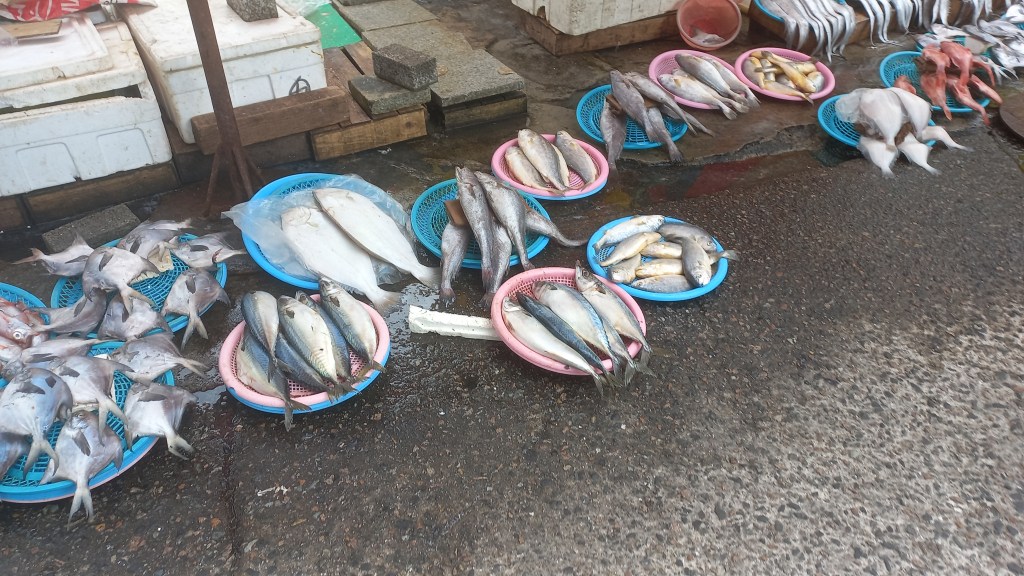
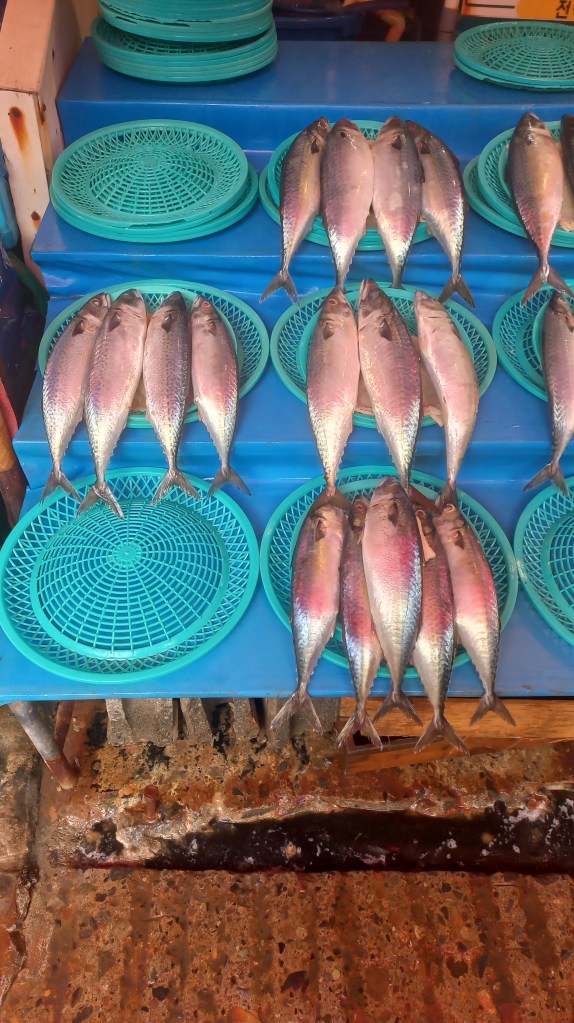
Outside though are where the photos are at. As I headed to the bus stop for my next destination, I walked through the outdoor seafood market. This is probably where all the locals buy their seafood. The fish honestly looked so fresh and it actually didn’t smell. I know what you’re thinking, how different it is from fish monger shops with ice covering everything.
Along with fresh fish, there were also plenty of dried fish and shrimps (small tiny dried shrimp is a popular soup and sauce additive here).
These are spoon worms on the bottom. I’m still not sure what the top red thing is.
Visiting the most heavily guarded border in the world is possible from Seoul. The Demilitarised Zone (DMZ) tours offer visitors a chance to go into the zone to see what the area is like on dedicated tourist buses in an area of the Korean peninsula that has existed since 1945. Visitors can only visit with a ticket purchased at Imjingak Park (if you’re on a tour from Seoul, your guide will purchase the tickets for you).
Your tour will take you to Imjingak Park northwest of Seoul in the province of Paju. This park is somewhat of a local and international tourist spot with big grounds and parks offering a venue for outdoor concerts and even has a camping group next to it. Here, facilities have been built including a complex with food outlets, rooftop observatory and even an amusement park.
There are specific buses heading into the zone which you can only board from here. Buses depart every hour from infront of building (containing food and the DMZ ticket booth). The last bus departs at around 3pm so many of the DMZ tours running from Seoul start fairly early.
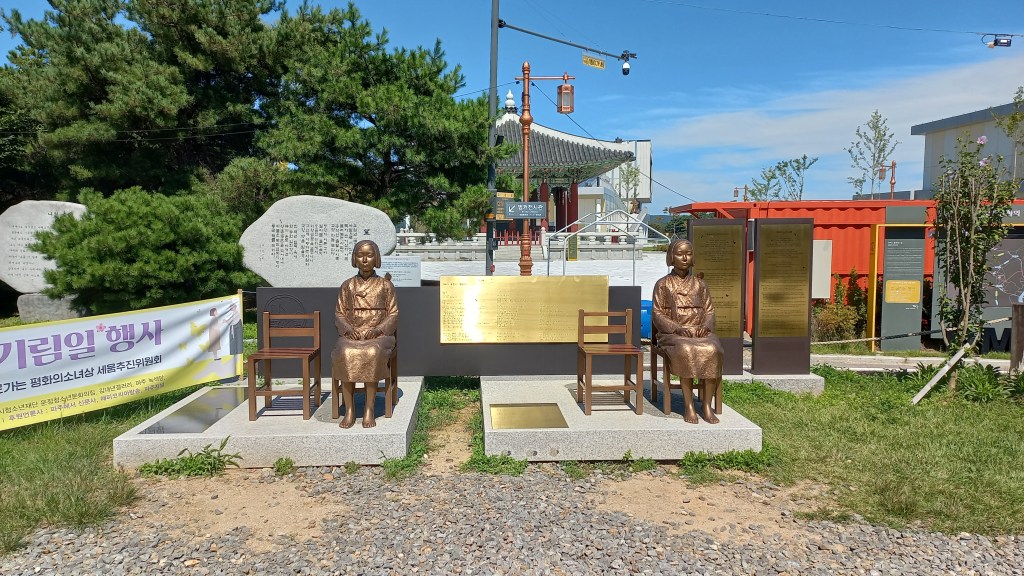
Two Comfort Women Memorial Statues at the Imjingak Park. One was destined for N.Korea but has not had the chance to get there yet.
Within Imjingak Park, of particular interest are these two Comfort Women Statues. These are memorial statues dedicated to the women who were enslaved as comfort women during the Japanese occupation. One statue was destined for N. Korea but has not yet had the chance to get there due the political situation of the two countries. It remains here in the hopes that one day, this statue is able to cross over the border so that the women can be remembered there too.
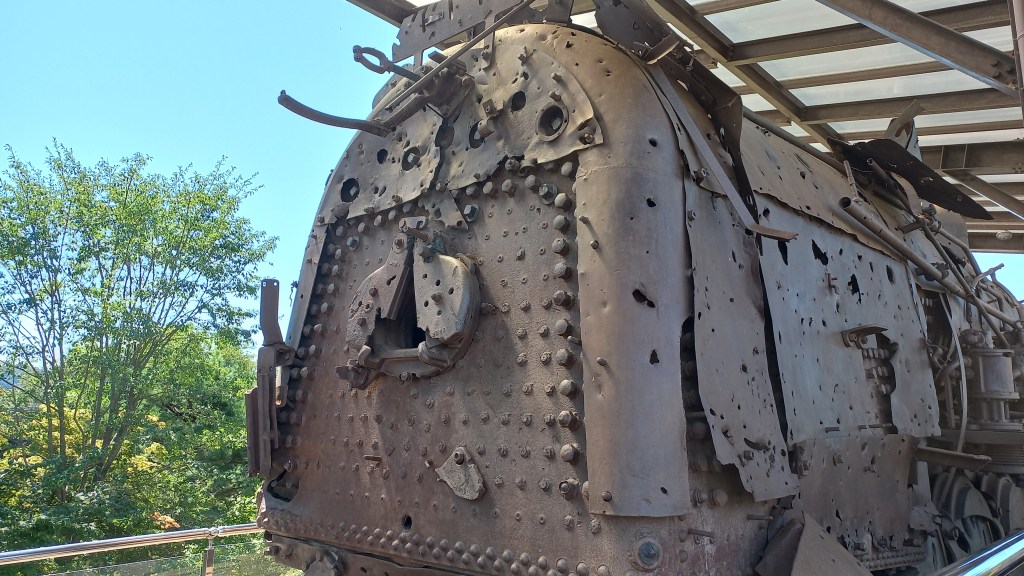
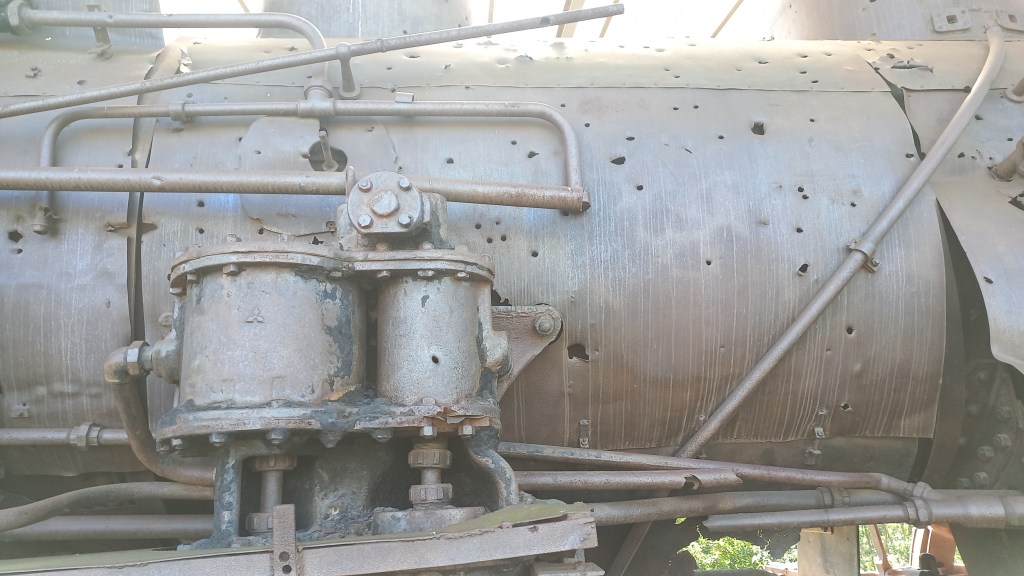
A bullet ridden locomotive train is also on display which is a remnant of the Korean War. The train once carried supplies along the region when South Korea and the US had pushed back to gain terriority well into the current day N.Korea. On return once, US soldiers took to shooting at the train to prevent it from working and falling into enemy hands. It lay in the DMZ abandoned until 2006 when it was moved to Imjingak Park.
A locomotive train on display in Imjingak Park
The railroad bridge on the left and pillars from the old bridge which was destroyed to prevent N.Korean troops using it to enter. There are bullet shots marked on the pillars.
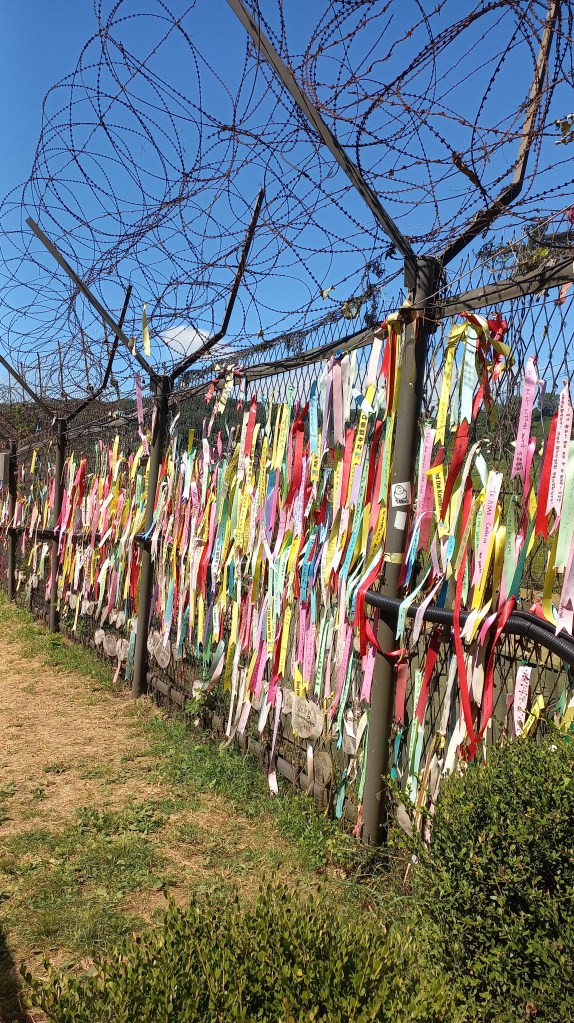
For separated families, many still come to shrines in the area to remember their loved ones who they have not been able to see.
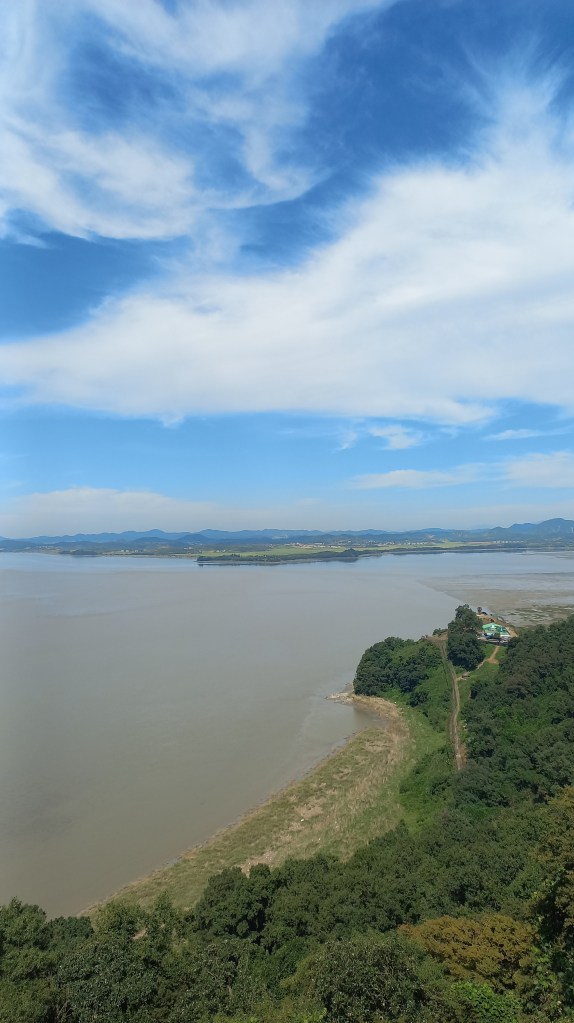
Land on the other side of the river is N.Korean territory.
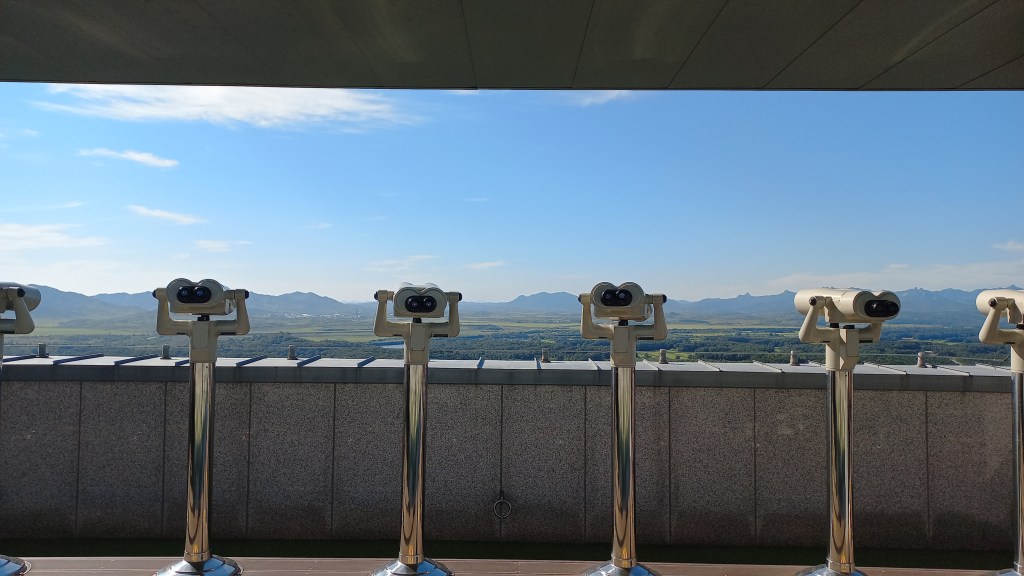
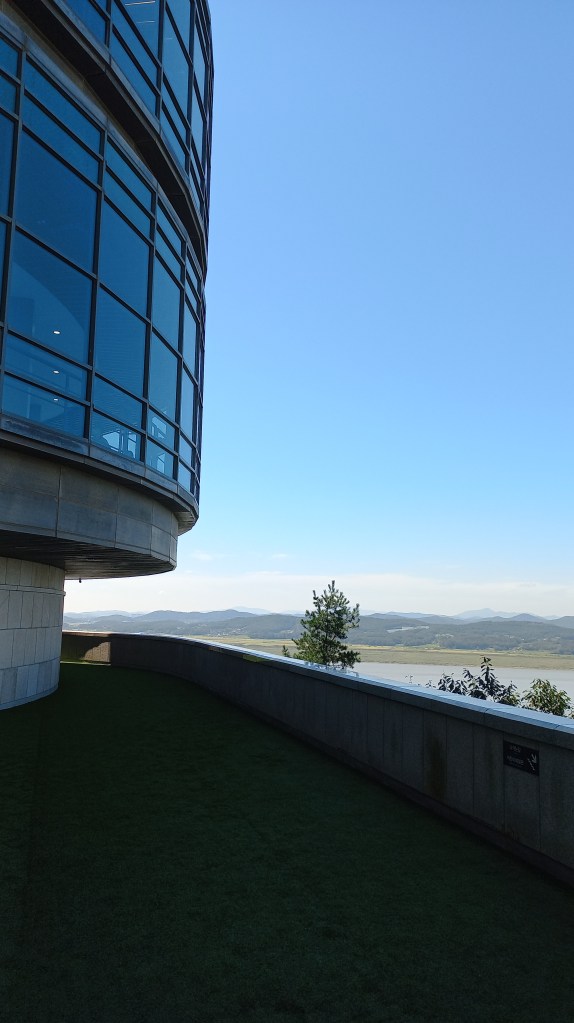
On this particular day, we were first taken to Odusan Unification Tower which contains a museum, cafe and observatory deck. It was quite empty when we were there. The binoculars are free to use where you can have a look at the other side of the river. There were what appeared to be some farmers about and farmlands.
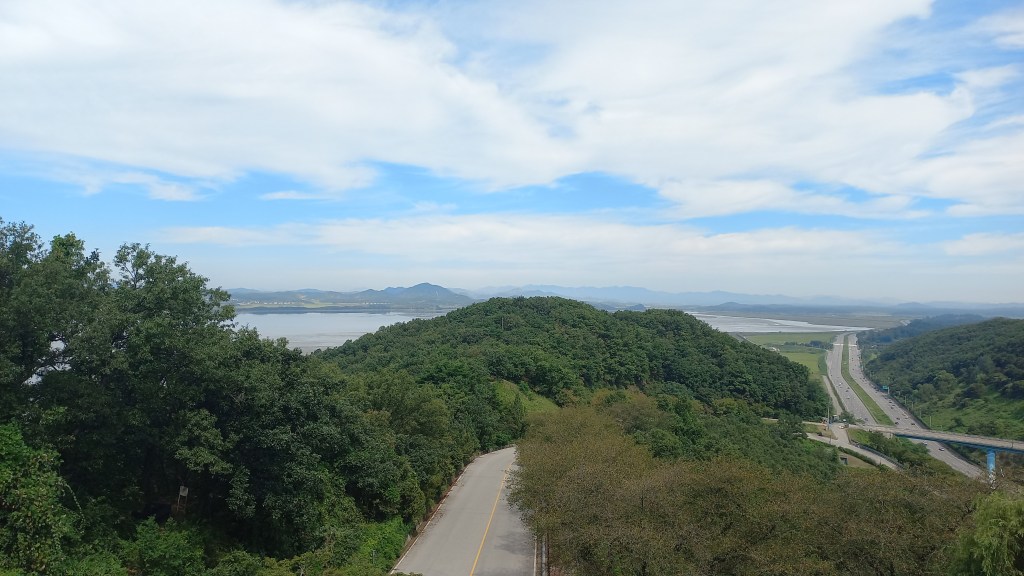
I can see how they’ve really turned this part of the country into a tourist site. It was interesting to be able to have a look to the other side and see some residents go about their business. I wonder if those on the northern side know and even care. If anything, it came with a good view of the Korean peninsula landscape whichever direction you looked.
It was finally time to enter the DMZ. At the checkpoint, soldiers board the DMZ bus to check ID. Earlier that morning we had a list circulating on our initial bus so that we could write our names down. The soldiers had this list and were checking people off.
Inside the DMZ, people actually do live there. As you can imagine, it’s not an attractive place to live so as a way to attract more residents, those who live within don’t need to pay taxes and we were told residents were mostly made up of farmers and retired soldiers. That being said, those who live here have a separate ID and have to show it going in or coming out at the checkpoint. There is also a curfew.
It goes without being said that pictures were not allowed of any military areas. Once inside, there was of course no traffic. There were few buildings scattered and farm lands. A lot of the vegetation areas are fenced off as there are still many land mines that have not been disarmed.
Dora Observatory
Our first stop was the Dora Observatory. Another observatory deck. In this area across the border, I think they know it is a spectacle area. Both sides have their flags up and this was once a competition on who could have the highest flag. For the record, the northern side does.
Here you can see the Kaesong Industrial Area on the other side which was once functional when relations between the two sides were better. It was a manufacturing site with a functioning train line across the border but is not longer functional due to the current situation. There is a checkpoint that you pass inside which the tours will point out. It is barricaded at the moment as this highway still connects the two sides today.
You can see the fake propaganda town as well as real apartment buildings on the other side.
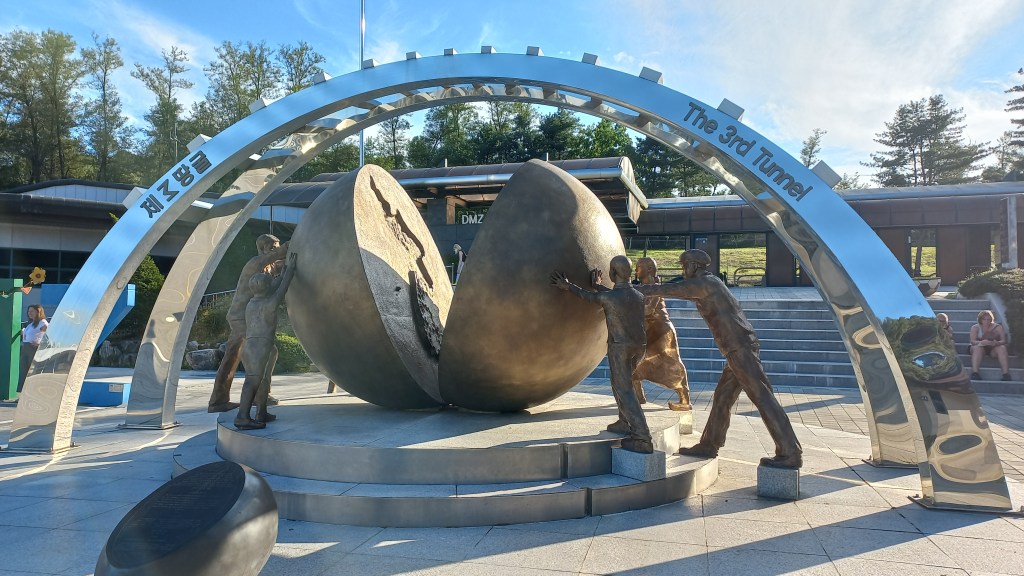
Our last stop was the 3rd Infiltration Tunnel which is open to tourists. This tunnel was discovered in 1978 and is 72m underground. There are no bags or cameras allowed and there are lockers to store your belongings. You are given a hard hat and then you start descending down a long ramp. If you have bad knees, you might want to reconsider! It’s not as claustrophobic as I had imagined down there although cool and also wet. At the very end, you are able to look through some glass to the other side before returning the way you came.
We also watched a short film about the area and the hopes of reunification one day. Attached to the tunnel entrance is a souvenir store for all your DMZ marked t-shirts, magnets, snacks and other knick knacks.
All in all, it was an interesting day in an interesting part of the world. It saddened me that separated families have been unable to see and even communicate with one another or were able to see each other but only once. For many it has been said that they would see each other in the next life. Tensions are still quite high and there have been many incidents in this zone that you can read about elsewhere online. At the time of writing, due to the pandemic, the DMZ trains and Joint Security Area are currently not open to the public.
Have you visited? What did you think? Would you like to visit one day?
Ice-creams are readily available on every street corner here in the plentiful convenience stores around the country. I also live and work near unmanned lolly stores which also sell ice-creams for 50cents! So a summer challenge for myself was to try as many ice cream flavours as my wallet and waistline allows.
I wanted to try as many as I could while summer lasted so here are some that I got around to trying so far.
Melona You may already be familiar with Melona and its infamous green melon flavoured ice-cream which tastes exactly like green melon. But here is another summer flavour combination that can’t do wrong- pineapple and coconut. Melona is just a classic and one of those reliable, you know you’re going to enjoy it brands. There was great flavour and the consistency of their ice creams is really nice. 10/10
Babambar Although it’s written as babamba in Korean (welp, I can read Korean now), the differences in naming makes no difference for this chestnut flavoured ice-cream. I was interested in what it would taste like and am not surprised that it wasn’t sweet. Korean desserts tend to be on the ‘not sickly sweet’ side. It was interesting and tasted alittle like chestnut but with many more ice cream flavours to try, I will not be reaching back for this one. 6/10
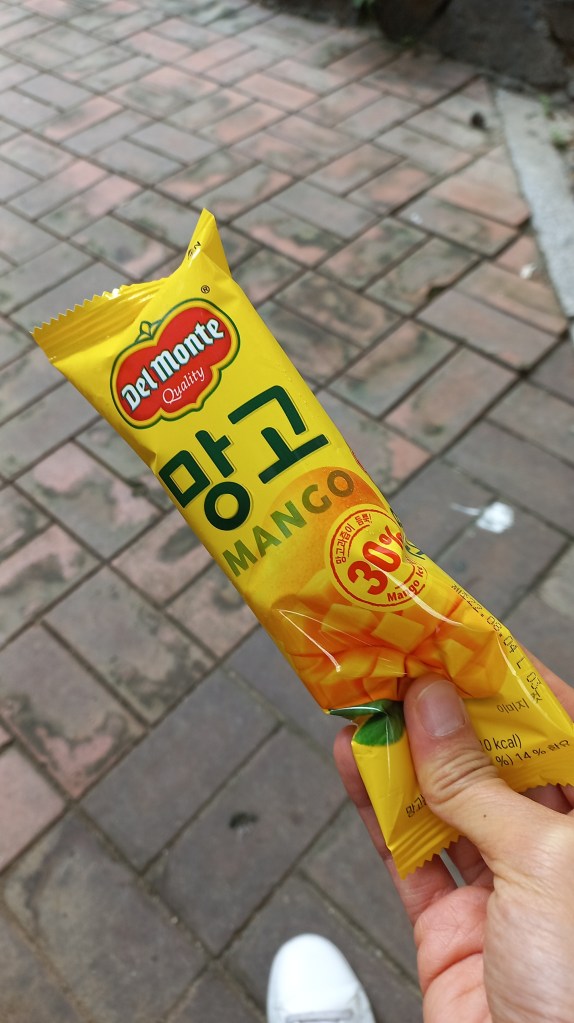
Del Monte Mango Another summer flavour that you can’t go wrong with is mango. As a proud Australian Weis Mango and Icecream bar fan, I was intrigued. Could this rival my #1 mango bar from back home? It could not. It didn’t even come close. It tasted like frozen mango juice so I guess the flavour was there but nothing beats the Weis Mango bar from back home. 6/10
Somanco The famous fish ice cream from Korea. Wafer on the outside, vanilla ice cream, red bean and mochi on the inside. This is honestly the best ice cream out of everything here and even maybe most of the ice cream from back home (except the Weis bar obviously). The vanilla ice cream in this is amazing. I’m also a fan of chewy things so with the wafer, red bean and mochi, this is hands down a must try when you’re here. 10/10
Taro Milk Tea Bar I didn’t have high hopes for this. I feel like anything bubble tea flavoured that actually isn’t a bubble tea drink just doesn’t meet expectation. It was ok, the taro flavour seemed pretty mild although it was as purple as pictured. There weren’t that many black pearls in it either so my love for chewiness wasn’t overly satisfied. 6/10
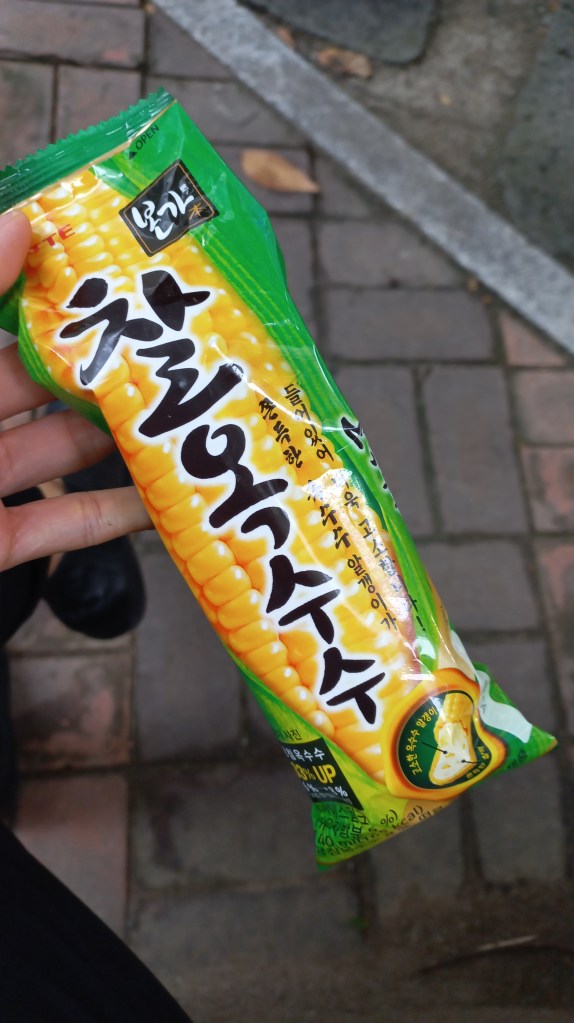
Corn Ice Cream I’m not sure what this is called exactly but it’s easy to spot. It is literally corn flavoured ice cream. Again, it’s wafer on the outside (in the shape of a corn, leaves, kernels and all), corn flavoured ice cream on the inside and with corn bits. I tried this back home in Australia because it was just such an interesting concept to me. Who would’ve thought that corn could be an ice cream flavour? Back then, I didn’t think I would actually actively go out to buy it again but after seeing it recently online, there I was, going out to actively buy it. Try it out of curiosity. I don’t know, maybe it’ll be your new found favourite. 8/10
Have you tried any of these ice creams before? What did you think? Which one would you like to try?

































 Lingo in Transit
You must be logged in to post a comment.